
Southeast Sulawesi Maritime Industry
Kendari vs Batam vs Surabaya Shipyards (and Bira): An Honest Comparison
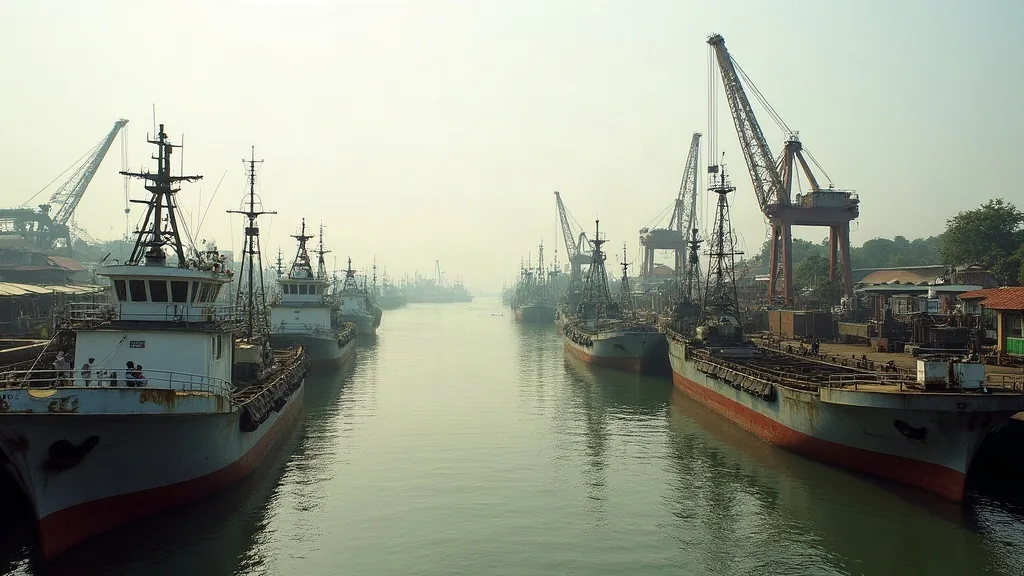
Comparing Kendari vs Batam vs Surabaya shipyards, plus Bira and its surroundings, shows that every Indonesian shipbuilding hub has real strengths and weaknesses that are rarely mentioned. This article compares the character of each from the standpoint of a vessel owner who has to choose, and explains how to choose by type of work.
The basic mistake in choosing a shipyard
Owners usually compare job prices between regions and pick the lowest. That comparison is almost always incomplete, because it ignores three costs that never appear in a quotation: the cost of moving the vessel there, the operating time lost during the voyage, and the cost of remote supervision while the work is underway.
For large, infrequent jobs such as new vessel construction, all three are acceptable. For recurring work such as scheduled dry docking, they often wipe out the entire price advantage.
The character of the four hubs
| Location | Strengths | Limitations | Best suited for |
|---|---|---|---|
| Batam | Large steel facilities, strong supply chain, close to international shipping lanes | Far from eastern Indonesia; small vessels get low priority | Large steel vessels, work to international standards |
| Surabaya | Established shipyard industry, full component supply | Crowded queues, higher site costs | Mid-size newbuilds, major repairs |
| Bira & surroundings | The deepest wooden-boat tradition in Indonesia | Specialized in wood, limited technical documentation | Phinisi and traditional wooden hulls |
| Kendari | Close to the Southeast Sulawesi workboat fleet, sheltered bay, both wood and steel available | Smaller facility scale than Batam/Surabaya | Fleet dry docking, completing stalled builds |
What you are really buying in each location
Batam sells scale and supply chain. If your vessel is large, built of steel and subject to strict written standards, the advantage is real. The weakness shows up precisely for owners of small vessels: at facilities used to handling large jobs, small projects tend to end up at the back of the queue.
Surabaya sells depth of supporting industry. The availability of components, specialist workshops and skilled people makes complex work easier to finish without waiting for shipments from other regions.
Bira and the surrounding area in South Sulawesi sell woodworking skills that cannot be replaced. For traditional hulls, that tradition is a real asset. What the owner needs to add is a layer of documentation and written supervision, because the tradition works from practice handed down through generations, not from technical drawings.
Kendari sells proximity to the real demand in this region and a combination of wood and steel skills within one working area. For tug and barge fleets operating in Southeast Sulawesi waters, that proximity means far shorter downtime. The industry background is in the Southeast Sulawesi shipyard industry guide.
Choosing by type of work
For scheduled dry docking and fleet maintenance, proximity almost always wins. The real cost is not the job price but the operating days lost, as explained on the tugboat and barge page.
For new vessel construction, the considerations shift to technical capability and contract discipline, not distance. A new vessel is built once, and supervision can be stationed at any location.
For completing a vessel whose construction has stopped, the question is different again: who is willing and able to assess someone else’s work honestly. This is a matter of method rather than facility size, and it is our focus on the stalled vessel completion page.
Calculating total cost, not the job price
The right comparison between locations is made on one combined figure, not on the quoted price. Five items must go into the calculation.
The job price itself. The cost of the vessel’s voyage to the site and back, including fuel, crew and insurance. The operating days lost during the voyage and while waiting in the queue. The cost of supervision while the work is underway, whether through periodic trips or a representative stationed on site. And the cost of warranty repairs if defects appear after the vessel is back in service far from that shipyard.
Once all five are added up, the ranking that looked obvious at the start often changes. For recurring work such as fleet dry docking, items two to five usually wipe out the entire difference in job price.
A combined strategy is often the most sensible
Owners do not have to pick one location for every need. The most efficient pattern is often to split the work by type.
Large, infrequent work — new vessel construction, full refits, main engine replacement — can go to the location with the best technical capability and supply chain for that type of vessel, because this work happens once and supervision can be placed anywhere.
Recurring work — periodic dry docking, fleet maintenance, quick repairs — is best done at the location closest to the operating area, because here the speed of getting back into service is worth more than the price difference.
Assessment and supervision work can stand alone anywhere, and is often most valuable when carried out by a party that is not doing the physical work. We apply this principle to vessel survey and valuation, and an assessment of this region’s facilities is in the Southeast Sulawesi shipyard map.
Five questions that apply anywhere
Regardless of location, a trustworthy shipyard will readily answer five things: whether it will write a detailed scope of work before the contract; whether it will tie payment milestones to physical progress; whether it will accept an independent supervisor on the owner’s side; whether it will hand over drawings and measurement reports; and whether it will share bad news early. The contract structure is on the costs and payment milestones page, and the warning signs in nine shipyard warning signs.
Frequently Asked Questions
Is a large shipyard always better?
No. Large shipyards excel at large-scale steel work and written standards, but small vessels often get low priority there, so their schedule can actually be less certain than at a mid-size shipyard.
What is the biggest factor often overlooked when choosing a location?
The cost and risk of moving the vessel to that location. The difference in job prices between regions is often used up, or even exceeded, by the vessel’s voyage costs and the operating time lost.
When should you choose a shipyard close to your operating area?
For recurring work such as scheduled dry docking and fleet maintenance, proximity almost always wins because it reduces downtime, which usually costs more than the work itself.
Further reading
-

Liveaboard Vessel ROI: An Honest Way to Calculate Charter Vessel Returns
Charter vessel investments are often judged with models that are too optimistic on revenue and too light on costs. This article sets out a more honest framework for calculating liveaboard…
-
Southeast Sulawesi Tugboat and Barge Fleets in the Nickel Downstreaming Era
Most discussion of Indonesia’s vessel industry centers on tourism and passenger vessels. The Southeast Sulawesi tugboat and barge fleet tells a different story: its daily reality is working steel, with…
-
Southeast Sulawesi Shipyard Map: How to Read Locations, Capacity and Permit Status
There is no single Southeast Sulawesi shipyard map: shipyard activity is widespread but almost undocumented. This article is not a list of company names but a framework for reading the…