
Stalled Boat Build First Steps: 9 Actions Before You Lose More
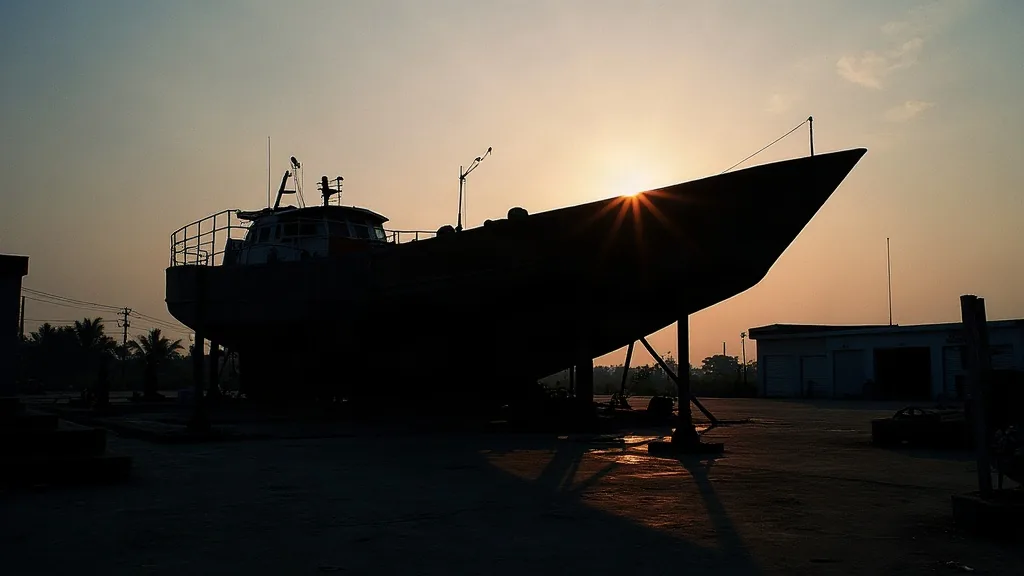
When a vessel build stops, the biggest loss is usually not the money already paid but the time that slips by before the owner acts. These stalled boat build first steps are set out in the order that most often protects a vessel owner’s position in Indonesia.
1. Confirm your access rights in writing
Before anything else, make sure you can enter the site and inspect the hull whenever you need to. This right sounds trivial until the relationship sours. Once a dispute starts, access is the first thing to be restricted, and without access you cannot document the condition, cannot assess the damage and cannot move anything. Send a written request, even while relations are still good, and keep the acknowledgment of receipt.
2. Stop further payments
As long as you keep paying, no one is under pressure to resolve the problem. Stop the flow of funds until the physical condition has been verified by a third party. This is not a hostile move; it puts everyone on the same information. If the yard really has completed work worth the payments it received, verification works in its favor.
3. Document the condition today
Photograph the entire hull from every side, including the interior, bulkheads, bottom and enclosed areas. Record a walk-around video of the vessel. Make sure the dates are recorded. This documentation becomes the single reference for proving the condition on a given date — useful in negotiation and if the matter goes to legal proceedings.
4. Inventory the materials you have paid for
List every material and item of equipment you have paid for but that has not yet been installed: plate, timber, engines, generator sets, shafts, propellers, navigation equipment. Record where each item is. This is the line that most often disappears in a dispute, because its status is unclear and others can easily claim it as yard stock.
5. Gather every document
Contracts, addenda, bank transfer records, receipts, design drawings, correspondence and chat messages. Arrange them chronologically. In our experience, many owners only realize that the scope of work was never written in detail once the file is laid out in order like this.
6. Check the status of the vessel’s documents
Some projects stop not because of money but because the vessel cannot legally be continued — the drawings were never approved, or the construction was never witnessed by a surveyor. If that is what happened, adding funds will not solve anything. The correct documentation route for BKI (Biro Klasifikasi Indonesia, the Indonesian Classification Bureau) class and Kemenhub (Indonesian Ministry of Transportation) certificates is set out on our BKI class and Kemenhub certification page.
7. Commission an independent condition survey
This is the turning point from guesswork to data. An independent survey measures plate thickness on a steel hull by ultrasonic thickness gauging (UTG) or tests the timber on a traditional hull, checks the quality of welds and joints, and assesses what has actually been completed against what has been invoiced. The results become both the basis for negotiation and the basis for calculating the remaining work. The method is explained on our vessel condition survey and valuation page.
8. Price three scenarios, not one
Once the data is in, do not jump straight to asking “what will it cost to finish?” Price three options side by side: continuing at the same yard, moving the hull to another yard, or stopping the project and selling what exists. Each has different costs, timelines and risks. Owners who price only one scenario almost always choose the most expensive one without realizing it. We set out the cost framework in our article what it costs to complete a stalled vessel.
9. Reset the payment structure
Whatever the final decision, do not repeat the structure that caused the first failure. Payment milestones must be tied to physical progress that can be photographed and signed off, not to calendar dates. Add retention and, where the contract value is large, an escrow mechanism. If the yard rejects every verification mechanism, that refusal is itself information. The structure is covered on our costs, payment milestones and escrow page.
What owners most often regret
Across the patterns we see repeatedly, the three most common regrets are: waiting too long in the hope that the yard would resume work on its own; paying extra invoices without verification to “keep the relationship”; and not photographing the hull before relations broke down. None of the three costs anything to avoid — it only takes a quick decision.
Mistakes that weaken the owner’s position
Beyond the steps you should take, four actions consistently weaken an owner’s position and are best avoided from the start.
The first is paying extra invoices to “keep the relationship” without verification. Payments like these rarely restore progress; they only widen the gap between the money paid out and the work in place, which weakens your position in any later settlement.
The second is removing the vessel or materials unilaterally without a written agreement. This can create a new dispute that overshadows the whole process, and it usually costs far more than the time it saves.
The third is handing all the original documents to anyone without keeping a complete set of copies. Original documents are both bargaining leverage and evidence.
The fourth is relying on the yard under dispute to assess the condition. Even if they are honest, a report from an interested party cannot be used in negotiation or in formal proceedings.
Preparing for settlement talks
When you finally sit down with the original yard to discuss a settlement, a prepared owner brings three things: a well-organized payment chronology, an independent condition report stating the value of the work actually completed, and a list of paid-for materials with proof of ownership. With all three, the conversation shifts from arguing about who is at fault to calculating how large the gap is.
Most of the successful settlements we have witnessed ended in a single figure agreed by both parties, not in an admission of fault. That is a realistic goal. The assessment procedure that produces that figure is on our condition survey and valuation page.
After the nine steps
If the survey shows the hull is still sound, completion is usually far cheaper than a newbuild and worth pursuing. If not, stopping is the right decision, not a defeat. The takeover and completion procedure we run is set out on our stalled vessel completion page.
Frequently Asked Questions
How long can I delay acting after a build stops?
The sooner the better, especially for an exposed wooden hull. Damage from rainwater and shipworm continues regardless of the status of the dispute, and the cost of recovery rises every season.
Am I allowed to enter the shipyard to inspect my vessel?
Access rights depend on the contract terms and the payment status. That is why the first step we recommend is to confirm your access rights in writing before the relationship with the yard deteriorates further.
Should I pay the final invoice to get the vessel released?
Do not pay until the physical condition has been verified by a third party and the value of the work actually completed has been calculated. Additional payments without verification usually weaken your position rather than strengthen it.
Further reading
-
Buying a Half-Finished Phinisi Hull: A Due Diligence Checklist
A half-finished phinisi hull can be an excellent purchase or an expensive trap, and the difference is almost never visible in photographs. This checklist covers what to verify before money…
-
What To Do When Your Indonesian Boat Builder Goes Bankrupt
When an Indonesian boat builder goes bankrupt or a yard simply stops work, the foreign owner faces two separate problems at once: protecting a physical asset thousands of kilometers away,…
-
What Is the Cost to Complete a Stalled Vessel? An Honest Estimating Framework
There is no standard rate for the cost to complete a stalled vessel, and anyone who quotes one before a survey is guessing. What can be standardized is the framework:…