
Kendari Shipyard & Docking Guide (2026)
Kendari Shipyard Guide: Docking Facilities in Southeast Sulawesi
This Kendari shipyard guide is compiled by Kendari Shipyard Desk, a shipyard selection and docking supervision desk for Kendari and Southeast Sulawesi. We do not own a dock facility; our role is to select the right facility, lock in the slot and safeguard the quality of the work through to handover.
- 2
- Main haul-out routes
- 30–300
- GT range of local facilities
- 1–2 hrs
- By road to Moramo–Lapuko
- >1,000
- DWT referred to large docks
Short answer
This Kendari shipyard guide covers two main haul-out routes: coastal slipways around Kendari Bay for fishing vessels, speedboats and small workboats, and the Moramo–Lapuko yard cluster in South Konawe for small to mid-size wooden and steel vessels. Large steel vessels above about 1,000 DWT are usually referred to large eastern-route docks, with Kendari as the planning and supervision base.
- Kendari Bay coastal slipways — fishing vessels, speedboats, small workboats
- Moramo–Lapuko yard cluster, South Konawe — small to mid-size wooden and steel vessels
- Traditional haul-out points around Torobulu — small boats and wooden fishing vessels
- Large eastern-route docks — the referral for steel vessels above roughly 1,000 DWT
Facility map
Map of docking facilities in Southeast Sulawesi
-
Kendari Bay coastal slipways
Kendari Bay is an enclosed and relatively calm body of water, which suits small-scale haul-out facilities. Along the bay shore and nearby, slipways and haul-out sites operate that typically serve wooden and fiberglass fishing vessels, speedboats and support workboats. The usual methods are simple rail slipways and airbag haul-out on gently sloping beaches. Capacity is limited — generally for vessels below roughly 30–100 GT, depending on the facility and tidal conditions.
-
Moramo–Lapuko yard cluster
On the coast of Moramo District, South Konawe Regency — about one to two hours by road from Kendari city — lies a cluster of traditional boatyards and boat workshops known as the Moramo–Lapuko yard cluster. The cluster has historically been strong in building and repairing wooden vessels, and some facilities also handle fiberglass vessels and light steel work. Common services include hull plank replacement, re-caulking, stem and keel repair, and repainting. Slot availability depends heavily on the season; verifying directly before mobilizing a vessel is a step we always take.
-
Torobulu and the South Konawe coast
Besides Moramo–Lapuko, the South Konawe coast — including the area around Torobulu, the ferry crossing point to Muna Island — has traditional haul-out points for the local fishing fleet. Facilities in this segment are the most basic: suitable for routine maintenance of small wooden vessels, not for steel work or classed vessels.
Gallery
Shipyard work up close
Most docking decisions are easier to understand once you have seen what the work actually looks like. These three photos represent woodwork, hull work and the finished result.
-
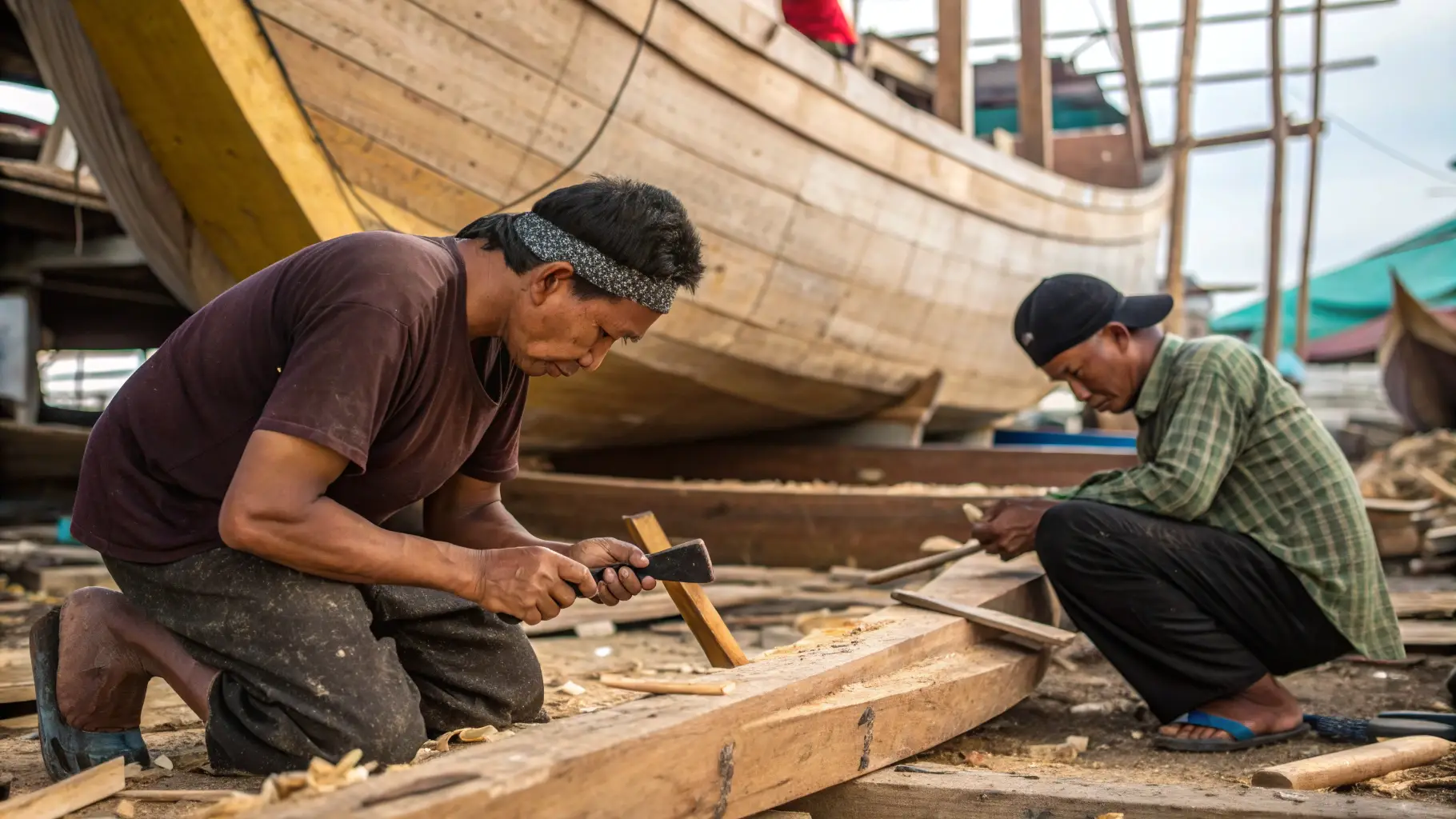
Wooden components being worked in the yard area -
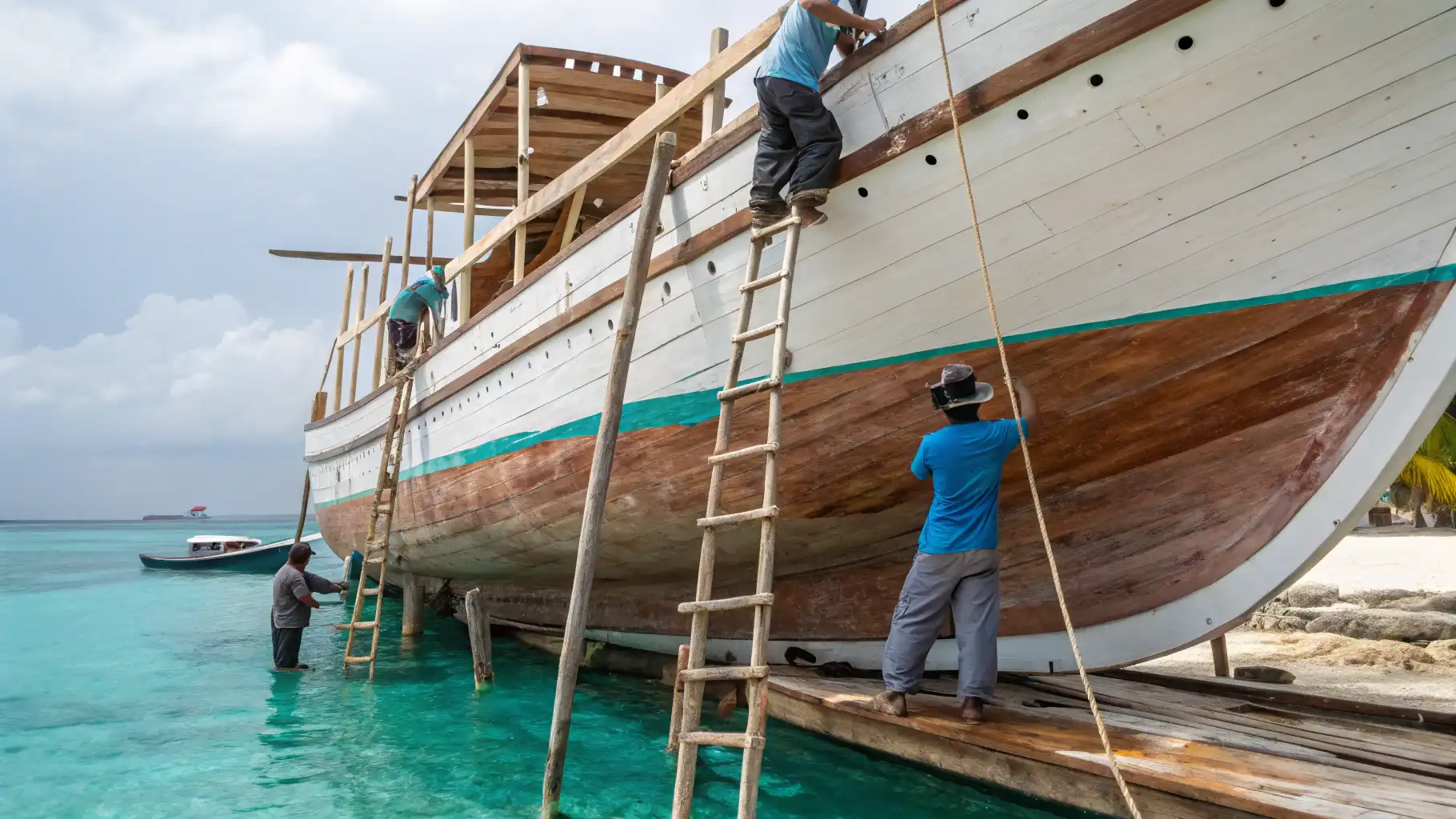
Hull repair and painting -
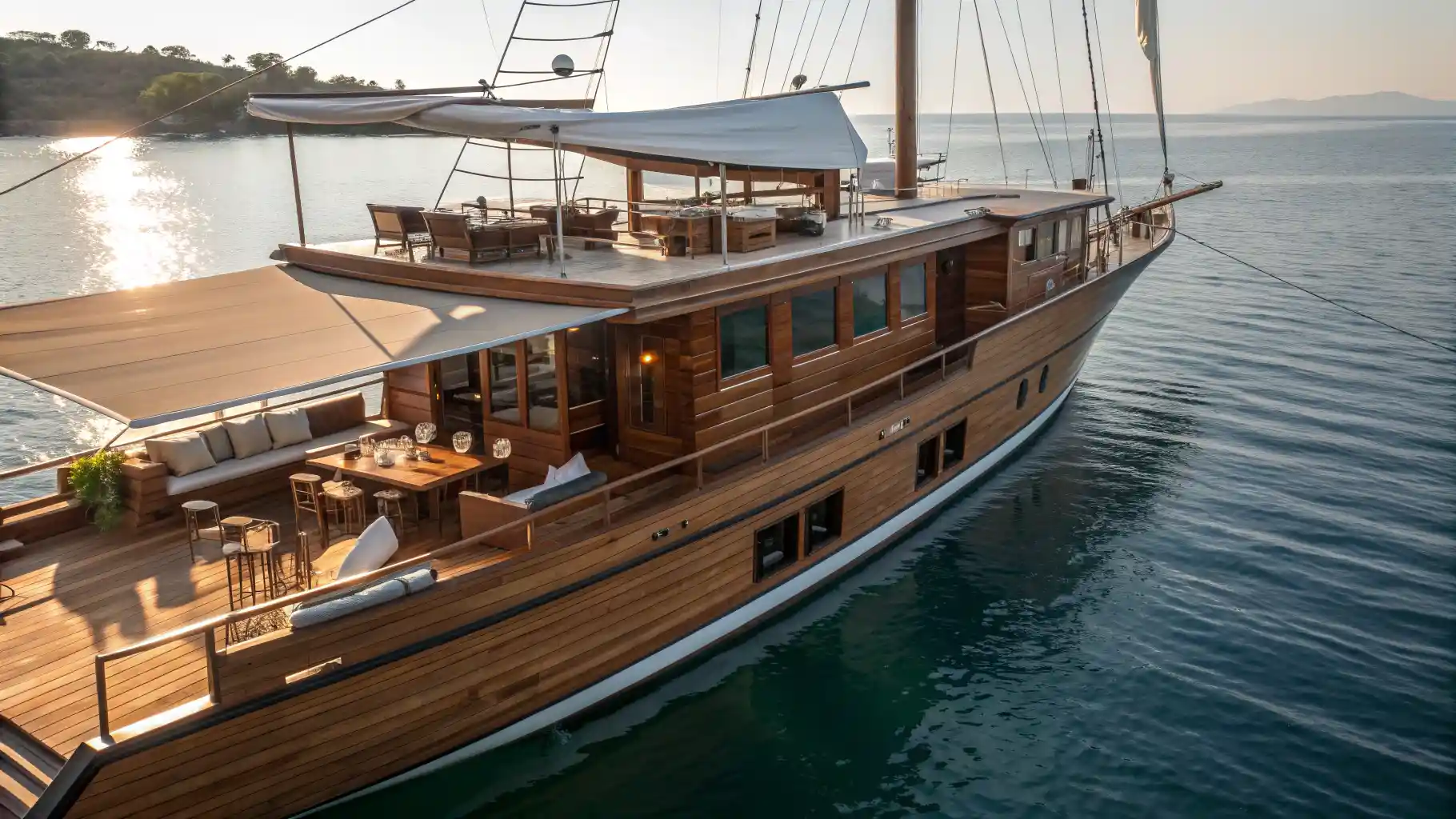
A phinisi vessel after the work is complete
Capacity
Capacity per facility
| Facility type | Method | Approximate size limit | Suitable vessel types |
|---|---|---|---|
| Kendari city coastal slipways | Rail slipway / airbag | ± up to 30–100 GT | Fishing vessels, speedboats, workboats |
| Moramo–Lapuko yard cluster | Rail slipway, beach hauling, airbag | ± up to 100–300 GT (wood/light steel) | Wooden and fiberglass vessels, small steel vessels |
| Traditional haul-out points around Torobulu | Beach hauling | Small craft | Small boats & wooden fishing vessels |
| Large eastern-route docks (referral) | Graving dock / floating dock | >1,000 DWT | Large steel vessels, tankers, cargo ships |
The figures in this table are planning indications, not official facility specifications. Before booking, we always verify the condition of the rails, winch and cradle and the draft at the haul-out area against your vessel’s data.
Fit
Which vessel fits where
-
Wooden and fiberglass fishing vessels
Fishing fleets based at the Kendari Ocean Fishing Port (PPS Kendari) and in the coastal regencies are the largest users of local facilities. For routine maintenance — caulking, plank inserts, antifouling, zinc anode replacement — the city slipways or the Moramo–Lapuko yard cluster are almost always sufficient. We cover the technical detail on the hull repair & painting page.
-
Tugboats, barges and workboats
Nickel mining activity in Southeast Sulawesi brings a large population of tugboats and barges. For tugboats, a local haul-out is possible at facilities with adequate hauling capacity; for barges, the options are more limited, and the work is often more realistically done afloat (on the water) or referred to a large dock. See slipway & haul-out in Kendari for the size-versus-method matrix.
-
Yachts and dive boats on the Wakatobi–Banda route
For dive tourism operators and charter vessels working in Wakatobi and the Banda Sea, Kendari is the nearest repair base with big-city logistics access: an airport, a port and material supply. We summarize the docking scenarios on the Wakatobi & Banda fleet support page.
-
Steel vessels over 1,000 DWT: realistic options
Our honest answer: full dock facilities for large steel vessels are not yet available in Kendari. For a class renewal (special) survey or major replating, such vessels are usually directed to large docks on the eastern route — and this is where our desk still plays a role: drawing up the defect list, comparing quotations between docks and placing a supervisor on site during the work, so the owner is not buying blind.
Compliance & working model
Facility permits, working model and cost estimates
Facility permits and compliance (TUKS/Tersus, KSOP)
Shipyard facilities with their own jetty or water area generally operate under a TUKS (private-use terminal) or Tersus (special-purpose terminal) permit scheme, supervised by the local KSOP (Port Authority and Harbor Master Office). Permit status differs from facility to facility and can change; we do not publish claims about any company’s permit status without documents. What we do on every assignment is verify the operating legality of the facility to be used, as part of due diligence before the vessel is hauled out.
How we work: dock selection + supervision
Our model is simple and transparent. First, a vessel condition assessment and defect list. Second, facility selection — a city slipway, the Moramo–Lapuko yard cluster or a referral to a large dock — based on size, material, scope and schedule. Third, a structured USD quotation. Fourth, daily supervision with photo reports. Contracts run through PT Komodo Galangan Nusantara. The full workflow is on the process page, and common questions are answered in the FAQ.
Cost estimates
As a first indication: a slipway haul-out for a 30 GT fishing vessel at a local facility generally falls in a band from several hundred to around two thousand US dollars for haul-out, refloating and dock days, excluding repair work. We present all estimates in USD with an itemized breakdown — the full bands per size class and per type of work are in the Kendari docking cost guide.
FAQ
Frequently asked questions
Where is the nearest slipway or dock in Kendari for wooden vessels and fishing vessels?
For wooden vessels and fishing vessels, the nearest options are the coastal slipways around Kendari Bay, followed by the Moramo–Lapuko yard cluster in South Konawe. The choice depends on vessel size, type of work and the slot queue — small vessels with a light scope are usually well served at the city facilities, while major woodwork is better handled at the Moramo–Lapuko yard cluster.
Which shipyards are in the Moramo–Lapuko yard cluster, and can they repair small vessels?
The Moramo–Lapuko yard cluster in South Konawe consists of traditional boatyards and boat workshops that build and repair wooden, fiberglass and light steel vessels — including plank inserts, caulking, keel repair and painting. Capacity and slot availability differ by facility and shift with the seasons, which is why we always verify directly before a vessel is mobilized.
Is there a shipyard near Kendari that can take 1,000–3,000 DWT vessels?
For full dry docking of 1,000–3,000 DWT steel vessels, the honest answer is that there is no adequate facility around Kendari yet. We refer vessels of this class to large docks on the eastern route, while certain afloat work — engines, electrical, welding above the waterline — can still be done in Kendari under our supervision.
What is the TUKS/Tersus permit status of shipyards around Kendari?
Facilities with their own jetty or water area generally operate under a TUKS (private-use terminal) or Tersus (special-purpose terminal) permit scheme supervised by KSOP (Port Authority and Harbor Master Office). Permit status is specific to each facility and can change, so we make no public claims per company; verifying a facility’s legality is part of our due diligence before booking a slot.
Where is the largest traditional boatyard in Southeast Sulawesi for wooden boats?
The largest concentration of traditional boatyards for wooden vessels in Southeast Sulawesi is on the South Konawe coast, particularly the Moramo–Lapuko yard cluster. For high-value work, we recommend supervision support so that material specifications and workmanship are documented — the service at the core of our desk.
Where to go from this guide
Ask about dock slots and estimates
Compiled by Kendari Shipyard Desk — a specialist maritime brand under Juara Holding Group. Service contracts through PT Komodo Galangan Nusantara.