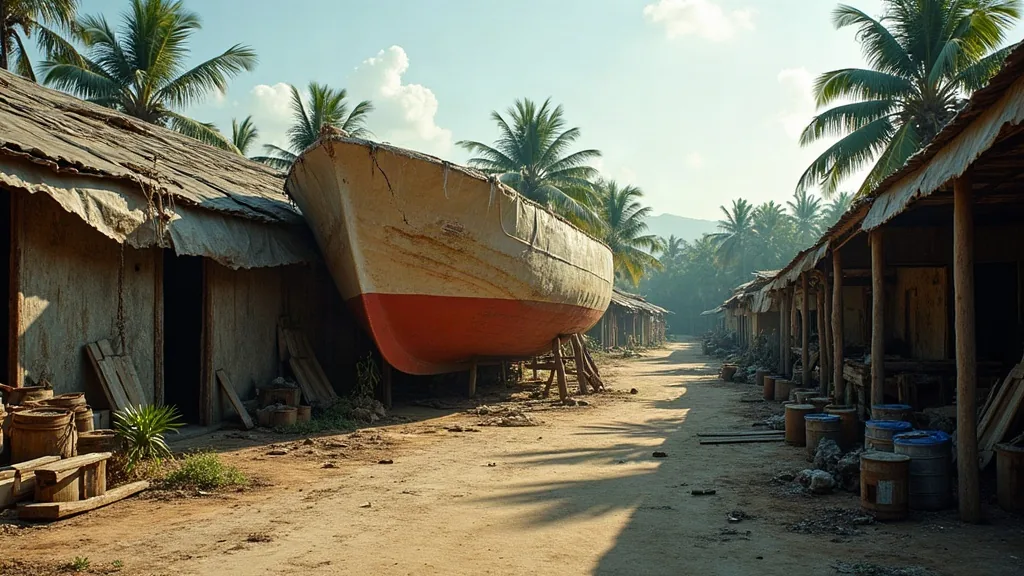
When an Indonesian yard stops work or fails financially, the foreign owner faces two separate problems at once: protecting a physical asset thousands of kilometres away, and preserving the evidence that will govern every negotiation afterwards. Both need action within days, not months.
Understand what has actually failed
Before acting, establish which of three situations you are in, because the responses differ. The yard may have run out of working capital while still intending to finish — the most recoverable case. It may have lost the workforce or technical capability to continue, which usually means the project must move. Or it may be insolvent with multiple creditors, in which case your priority shifts almost entirely to asset protection.
Owners often assume the third case when they are in the first. A yard that stops answering messages is frequently avoiding an uncomfortable financial conversation rather than disappearing. Establishing which situation applies changes what you should spend money on next.
Secure access in writing
Your ability to inspect, photograph and eventually move the hull depends on physical access, and access is the first thing restricted once relations sour. Request written confirmation of your right to enter and inspect while relations are still workable, and keep the acknowledgement. This single step has saved more foreign-owned projects than any legal action taken later.
Record the condition today
Photograph every side of the hull, the interior, bulkheads, bottom and any enclosed compartment. Record a continuous walk-around video. Ensure dates are captured. From this point onward, any damage that appears will be argued over, and only dated evidence settles the argument. If you cannot attend in person, appoint an independent surveyor to do it — this is not the moment to rely on photographs supplied by the yard.
Separate your materials from the yard’s stock
Engines, gensets, plate, timber, shafting and equipment you have paid for but which are not yet installed sit in a dangerous grey zone: physically in the yard’s possession, economically yours. If the yard has multiple creditors, anything you cannot document may be treated as yard property.
Assemble three matching records for each significant item: payment evidence, delivery documentation naming your project, and dated photographs on site. Where the yard is still cooperative, a short written acknowledgement of ownership is worth requesting immediately.
Establish what was really completed
Every settlement discussion eventually reduces to one number: the value of work genuinely performed versus the amount already paid. Neither party to a dispute can produce that number credibly. It has to come from independent inspection — ultrasonic thickness measurement on steel, exploratory opening on timber, mapping of completed work and assessment of its quality against the approved drawings, if drawings exist.
That report serves twice. It underpins the settlement position, and it becomes the technical basis for costing the remaining work if the project continues elsewhere. Our method is described under condition survey and valuation.
Decide between three futures, not two
Owners typically frame the choice as finish here or move. There is always a third: stop and recover value from what exists. Price all three before committing. Continuing at the original yard may be cheapest if the failure is purely financial and can be restructured. Moving carries lift, transport, insurance and temporary strengthening costs, set out in moving a partially built hull to another yard. Stopping is not defeat when the alternative is paying new-build money for a vessel with an uncertain history.
Do not rebuild the same contract
Whatever you decide, the payment structure that produced this outcome must not be repeated. Tie every instalment to a physical milestone that can be photographed and signed for. Add retention against the warranty period. On larger values, hold funds in escrow released only on verified progress. If a yard refuses every verification mechanism, that refusal is itself information. The structure we use is set out at cost, payment terms and escrow protection.
Actions that weaken your position
Alongside the steps worth taking, four common reactions consistently make things worse.
The first is paying further instalments to preserve goodwill without verification. This rarely restores progress; it simply widens the gap between money paid and work performed, which is the figure any settlement will eventually turn on.
The second is removing the vessel or materials unilaterally. Even where the moral case is obvious, acting without a written agreement can create a second dispute that overshadows the first.
The third is handing over original documents without retaining complete copies. Originals function simultaneously as leverage and as evidence.
The fourth is accepting a condition assessment produced by the yard in question. Even where it is honest, a report from an interested party cannot carry weight in negotiation or in any formal process.
Preparing for the settlement conversation
When the settlement discussion finally happens, owners who are prepared bring three things: an ordered payment chronology, an independent condition report establishing the value of work genuinely completed, and an inventory of paid-for materials with ownership evidence. With those, the conversation shifts from arguing about fault to calculating a difference.
Most successful settlements we have seen end in an agreed number rather than an admission of blame, and that is the realistic target. Trying to win the argument usually costs more than the amount in dispute.
If the vessel must move
Where relocation becomes necessary, sequence matters more than speed. Settle or formally secure the previous yard’s claim, document condition before anything is touched, calculate lift points and fit temporary strengthening, arrange movement permits and transit insurance, and only then move. Skipping any one of those steps typically costs more than the yard work itself. The full procedure is set out at moving a partially built hull, and the assessment that precedes it at condition survey and valuation.
A note on scope
This article covers asset and evidence protection from a technical standpoint; it is not legal advice, and the position in your case depends on your contract, the yard’s corporate status and any insolvency process underway. Engage your own legal adviser for formal steps and use technical documentation as their raw material. For assessment and completion of the vessel itself, see stalled vessel completion or reach us via the contact page.
Frequently Asked Questions
Can I simply remove my vessel from the yard?
Rarely without agreement. A yard generally has grounds to hold a vessel against unpaid invoices, so unilateral removal risks creating a second dispute. Settle or formally secure the claim in writing before moving anything.
How do I prove which materials are mine?
Through three matching records: proof of payment for those items, delivery documents naming your project, and dated photographs of the goods on site. Missing any one of the three makes ownership easy to contest.
Should I keep paying to maintain goodwill?
Not before an independent party verifies what has actually been completed. Additional payment without verification usually weakens your position rather than protecting it.