
Airbag vs Rail Slipway Haul-Out: Cost, Risk, Limits
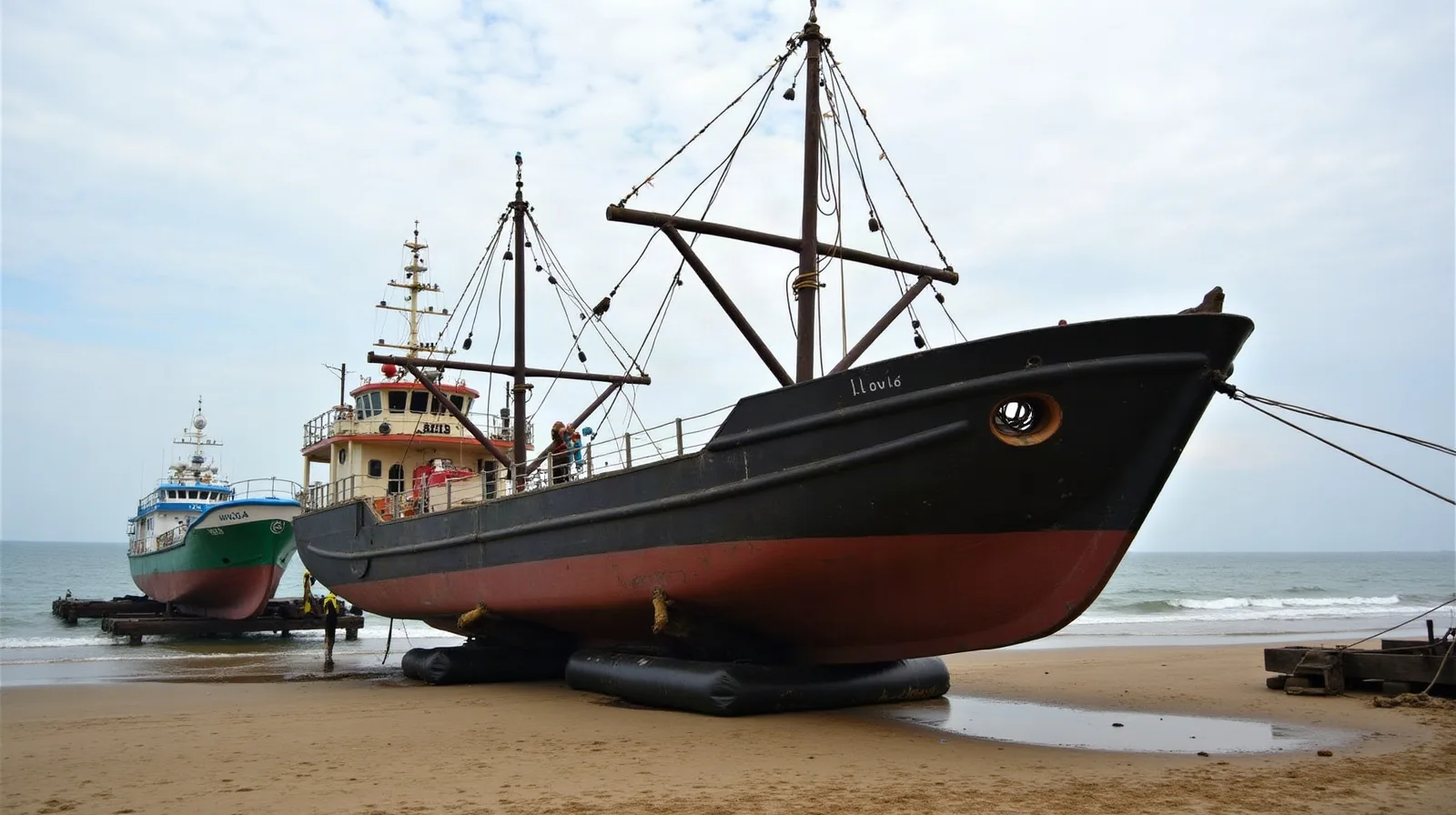
Airbag vs rail slipway haul-out is the real choice for small to mid-size vessels in Southeast Sulawesi. A rail slipway winches the vessel up on a rail-mounted cradle; airbags roll it up on pressurized rubber balloons. Rails suit long, stable, heavy work; airbags offer site flexibility and lower entry cost but need the right beach and an experienced operator.
Both methods are equally safe when done properly — and both can break a vessel when done carelessly. Kendari Shipyard Desk compiled this comparison from the facilities we coordinate along the Kendari Bay shoreline and in the Moramo–Lapuko yard cluster, where both methods are used side by side.
How each method works
Rail slipway
The vessel moves onto a cradle (dock carriage) submerged at the end of the rails, is positioned precisely over the keel blocks, and is then winched up onto land. The vessel’s weight is spread over the cradle’s blocks, which have been set to follow the shape of the hull. Once up, the vessel sits stable for as long as the work lasts — even weeks are no problem.
Airbag haul-out
Cylindrical rubber airbags are slipped under the hull and inflated, and the vessel is then winched ashore, rolling over the airbags up a gently sloping beach. Relaunching is the same process in reverse. The same method is popular for launching new vessels. Its advantages: no permanent rails are needed, it can be done at many beach sites, and capacity depends on the number and size of the airbags — even fairly large vessels can be handled by an experienced team.
Head-to-head comparison
| Aspect | Rail slipway | Airbag |
|---|---|---|
| Stability during the work | Very good — the vessel sits on the cradle and shores | Needs keel blocks once ashore; less ideal for very long jobs |
| Load on the hull | Concentrated on the blocks — the blocking plan is critical | Spread across the airbags — kind to older hulls if the pressure is right |
| Suitability for heavy work (replating, replacing large planks) | Very suitable | Possible, with careful blocking |
| Site availability | Limited to facilities with rails | Flexible — a prepared, gently sloping beach |
| Slot queue | Depends on the number of cradles | Capacity is easier to add |
| Typical risks | Poorly maintained cradle/rails, old winches | Airbags bursting/slipping, uneven beach, wrong pressure |
Which is safer for a wooden vessel?
Both can be safe; what decides it is load distribution. An old wooden vessel whose frames are starting to weaken is often actually better off on airbags during the haul-out itself (the load is spread), but once ashore it still has to be blocked at the hull’s strong points — and that is where the operator’s experience is tested. On a rail slipway, the key is the blocking plan: the blocks must land on the keel and strong bulkheads, not in the middle of a plank span. Before your vessel is hauled out by any method, make sure the list in our pre-docking inspection checklist has been worked through.
On the cost side
In general, at facilities in this area, airbag haul-out and relaunch is competitively priced and often cheaper for small vessels, while a rail slipway charges a haul-out and relaunch fee plus a daily cradle rental that reflects its infrastructure. But the difference in haul-out fees is rarely decisive — what matters more is how well the method fits the scope: a three-day job on airbags can be cheaper; a three-week job with replating is clearly more efficient on rails. USD bands for both methods are in our Kendari dry docking cost guide.
How we choose the method for you
We use four questions: (1) What are the vessel’s weight and length — which facility’s winch and airbag capacity do they fit? (2) What is the scope — light and quick, or heavy and long? (3) What condition is the hull structure in — can it take concentrated loads, or does the load need to be spread? (4) What do the slot queue and the tides look like on the target dates? The answers to those four questions almost always make the choice clear. The full haul-out process we supervise — from blocking plan to relaunch — is on our slipway and haul-out in Kendari page, and the guide to choosing a facility by vessel size is in our article on vessel size vs dock options in Southeast Sulawesi.
The bottom line: don’t choose a method out of habit or because “cheapest is what counts.” Choose it because it fits the vessel, the scope and the facility — all three of which we can verify for you before you move your vessel a single meter.
Questions to ask the facility before you agree
Whatever the method, verification starts with the right questions. For a rail slipway: when were the rails and cradle last inspected, what is the certified or tested winch capacity, what condition is the wire in and how old is it, and what is the heaviest vessel hauled out in the past year? For airbags: how many airbags are available and of what diameter, what is their working pressure and when were they last tested, what is the beach profile like (slope, firmness, free of rocks), and who leads the operation — the experience of the person commanding the haul is half the safety of an airbag operation. A facility that answers fluently with evidence is a facility you can trust; one that answers “it’s always safe” without data is a signal to dig deeper.
Preparing the vessel before haul-out day
Haul-out safety is also determined on the vessel side: tell the facility where the bulkheads, tanks and hull strong points are so the blocks or airbags are placed correctly; empty or balance the tanks so the vessel’s trim matches the haul plan; secure loose items on deck and in the engine room; and make sure there is a docking plan drawing, or at least a sketch — for vessels without drawings, an experienced supervisor can map the strong points from an internal inspection. On the day, one person must hold sole command and the vessel’s crew follow that person’s signals — not two sources of orders. Almost every haul-out incident we have heard of in this area began with one of two things: equipment that was not verified, or conflicting communication during the haul. Both are entirely preventable with orderly preparation.
The final conclusion bears repeating: the right haul-out method is the one that fits the vessel, the scope and the facility — not the one that happens to be available or is cheapest on paper. Set aside one day for verification before moving your vessel; it is the smallest investment with the biggest protection in the entire docking process. And if you want that verification done by experienced eyes — winch condition, wire age, beach profile, blocking plan — our desk does it every week at facilities across Southeast Sulawesi, and we put the results in writing before you commit to an agreement with anyone.
FAQ
Airbag or rail slipway: which is safer for an old wooden vessel?
During haul-out, airbags spread the load, which is kind to older hulls; but once ashore the vessel still has to be blocked at the hull’s strong points. On a rail slipway, the key is a blocking plan that puts the blocks on the keel and strong bulkheads.
Which method is cheaper?
Airbag haul-out and relaunch fees are generally competitive for small vessels, but what decides it is the fit with the scope: short jobs are efficient on airbags, while heavy jobs lasting weeks are more efficient on a stable rail slipway.
What are the typical risks of each method?
Rail slipway: poorly maintained cradles, rails and winches. Airbag: airbags slipping or bursting, an uneven beach, and incorrect airbag pressure. Both are safe in the hands of experienced operators with verified equipment.
Prepared by Kendari Shipyard Desk — specialist maritime brand under Juara Holding Group. Service contracts through PT Komodo Galangan Nusantara. Slot and estimate inquiries: WhatsApp 6281139414563 or bd@juaraholding.com.
Further reading
-
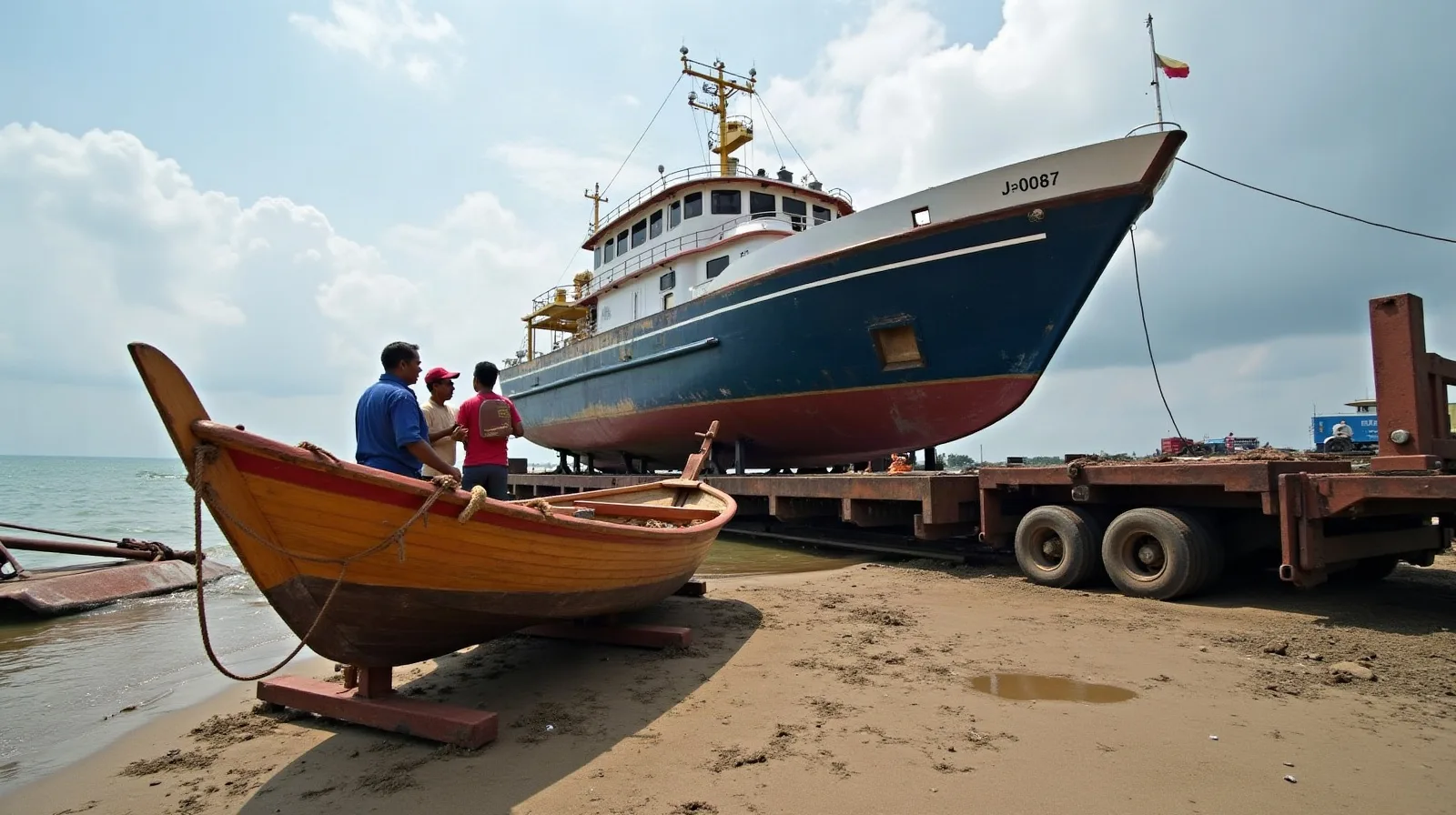
Vessel Size and Dock Options in Southeast Sulawesi
In Southeast Sulawesi, matching vessel size and dock options comes before price: small wooden and fiberglass vessels (below the 30–100 GT range) use Kendari’s coastal slipways; large wooden and light…
-
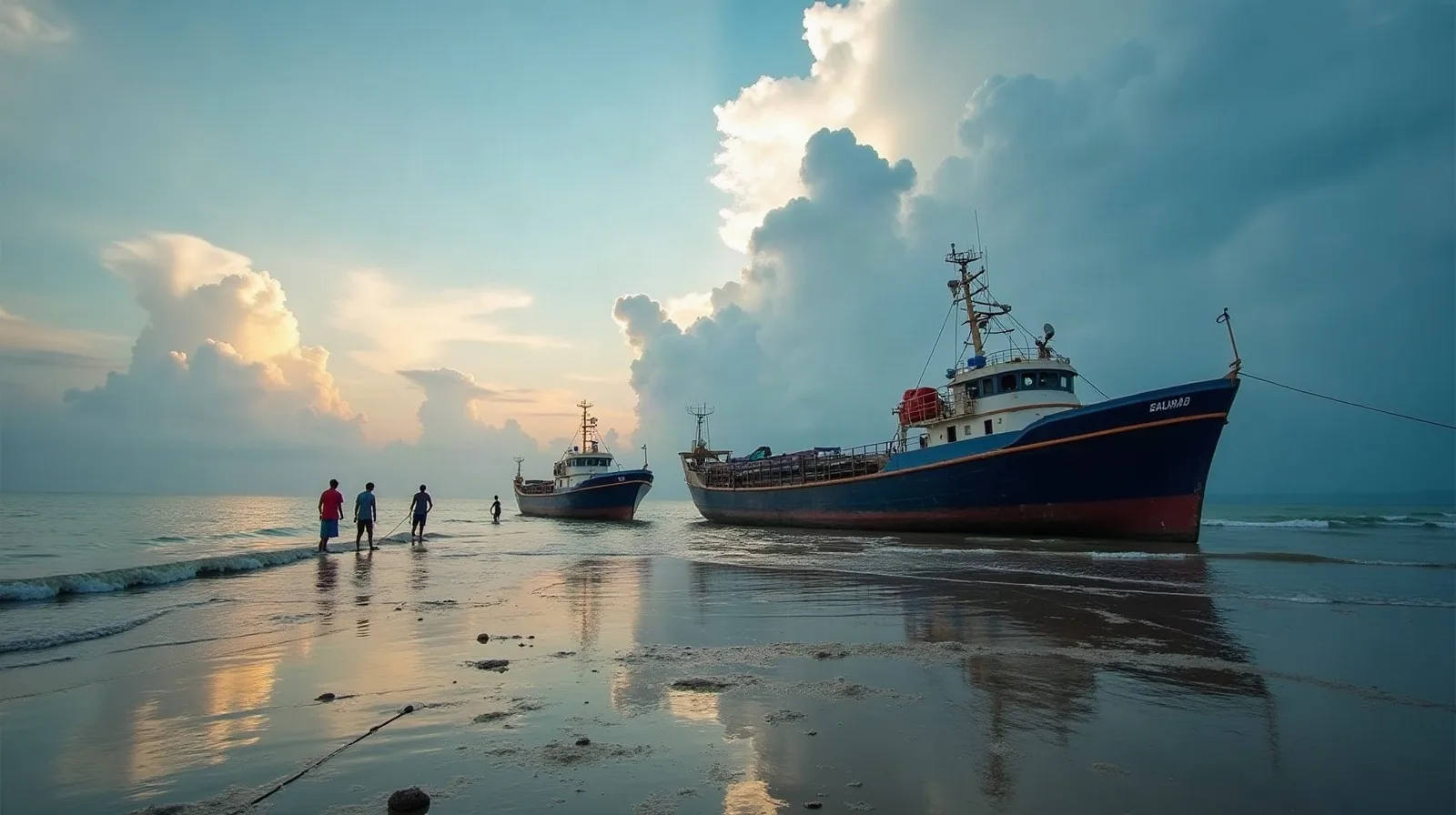
Grounded Vessel: First 24 Hours in Southeast Sulawesi Waters
For a grounded vessel, or one that is leaking, the first 24 hours follow an order of priorities that must never be reversed: save people → stop the water →…
-
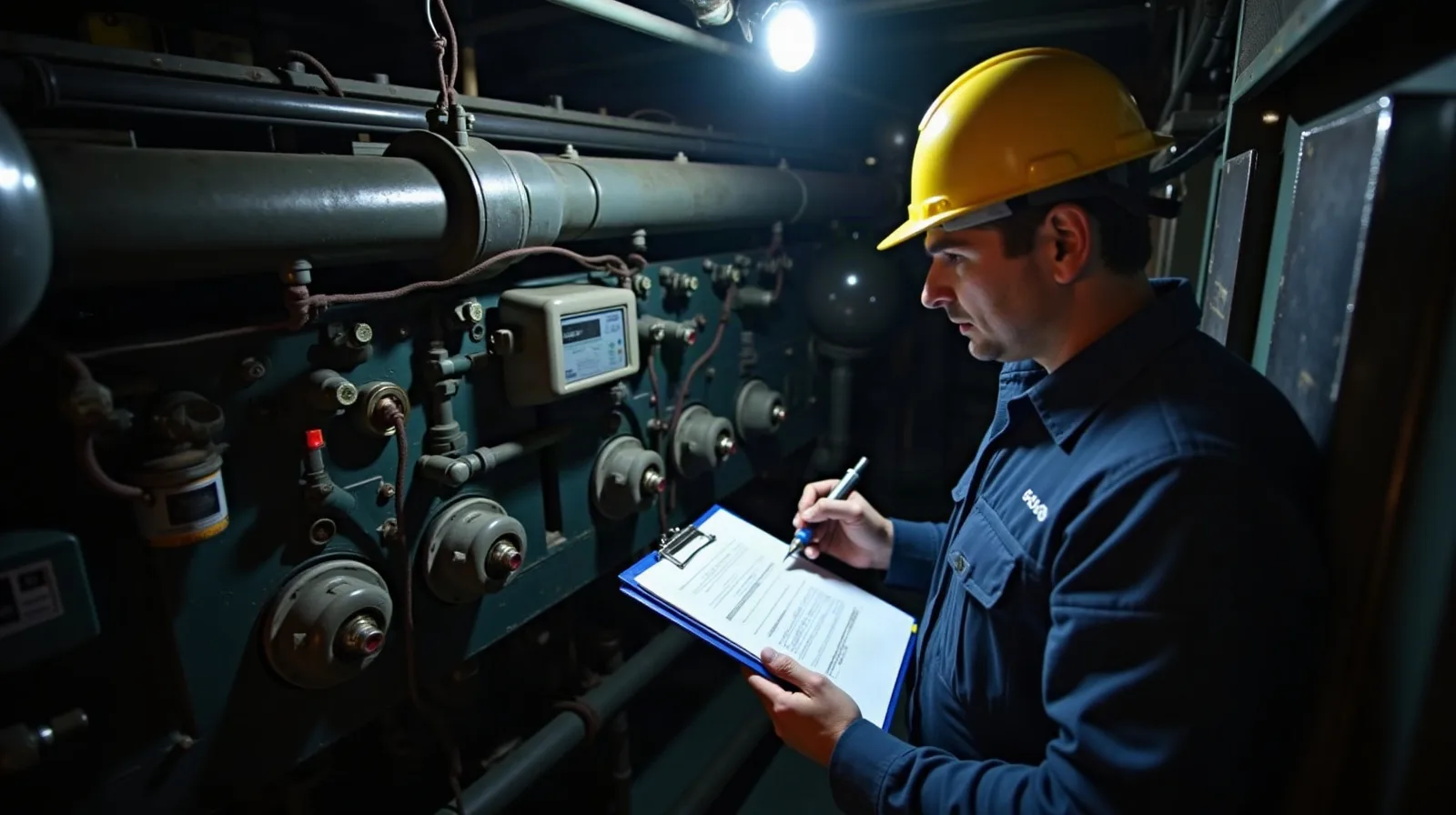
Pre-Docking Inspection Checklist: A Supervisor’s 40 Points
A good pre-docking inspection checklist answers one question: what must be known, prepared and ordered before haul-out, so dock days go to work rather than finding problems and waiting for…