
Hull, blasting & painting
Hull Repair and Painting Kendari: Steel, Wood and Fiberglass
The hull is both a vessel’s biggest asset and its biggest risk. This page breaks down hull work by material, the quality standards we hold to, and what it costs. For facility context — the city slipways versus the Moramo–Lapuko yard cluster — see the Kendari shipyard guide.
- SA 2.5
- Target blasting standard
- 20–25%
- Wastage that goes on the renewal list
- 12–24 mo
- Realistic antifouling interval
- Per kg
- Replating, installed
Short answer
The hull repair and painting Kendari facilities can take on covers steel replating verified by ultrasonic thickness gauging (UTG), plank replacement and caulking for wooden vessels, fiberglass relamination, leak repair, surface preparation up to abrasive blasting, and full painting with tropical-water antifouling. We coordinate every scope at the right facility and supervise it against measured QC checkpoints.
Scope
Hull work by material
-
Ultrasonic thickness gauging (UTG)
Replating decisions must rest on numbers, not guesswork. Before any work is agreed, plate thickness is measured ultrasonically on a documented grid — ballast areas, the waterline, the bilge and the area around the sea chest get extra attention. A rule of thumb widely used in the industry: plate with wastage approaching or exceeding roughly 20–25% of its original thickness goes on the list for renewal; for classed vessels, the limit follows the classification society’s rules.
-
Welding standards
Replating is only as good as its welding. We require the correct work sequence: old plate cut out cleanly, backing and fit-up checked, welders of known qualification, and welds inspected visually and — on critical scopes — by dye penetrant or UT. Local welding capacity is detailed on the Kendari ship welding and fabrication page.
-
Materials & certificates
Replacement plate must have a clear grade and origin. For classed vessels, the material mill certificate becomes part of the handover documents; even for non-classed vessels, we document the specification of the material installed so the vessel’s history stays clean when it is sold or surveyed.
-
Plank replacement & caulking
For the wooden vessel fleet of Southeast Sulawesi, the core work is replacing planks that are rotten or eaten by shipworm, repairing frames and keel, then recaulking with the right material. Shipwrights in the Moramo–Lapuko yard cluster are experienced in this work; our role is to make sure the replacement timber is the right species and properly dried, and that caulking is finished completely before the hull is painted.
-
Fiberglass relamination
Speedboats and fiberglass vessels face different problems: gelcoat cracking, delamination and osmosis in hulls that have spent a long time in the water. The repair runs from grinding out the damaged area, drying and relaminating with the right resin and mat, through to fairing and a gelcoat finish. We refuse cosmetic patching over wet laminate — it is a recipe for delamination again within months.
-
Abrasive blasting to SA 2.5
The life of a paint system is decided by surface preparation. For major steel work, the standard we target is abrasive blasting to SA 2.5 cleanliness before primer — we verify the availability of blasting equipment at the local facility on each project, and where the scope is small, power-tool cleaning to St 3 can be an alternative, stated honestly in the quotation. Surface roughness profile and moisture are checked before the first coat goes on.
-
Paint systems & tropical-water antifouling
Eastern Indonesian waters are warm all year round — fouling grows fast. The system we recommend: anticorrosive primer, intermediate coat, then antifouling at a measured film thickness (DFT measured per coat). A realistic antifouling renewal interval in these waters is generally 12–24 months, depending on the paint type and the vessel’s operating pattern. Grand claims about paint life without DFT data are the sign of a quotation that deserves suspicion.
-
Leak repair & emergency hull work
Active leaks — a split plank, cracked plate, loose rivets — go through our fast track: temporary stabilization (soft patch, cement box, doubler), then a haul-out for permanent repair. The first-hours protocol and contact route are on the Kendari emergency ship repair page.
Gallery
The hull work sequence
Hull work always runs in the same order: clean back until the base material shows, repair what is damaged, then recoat. Skipping the first stage is the most common reason paint peels early.
-
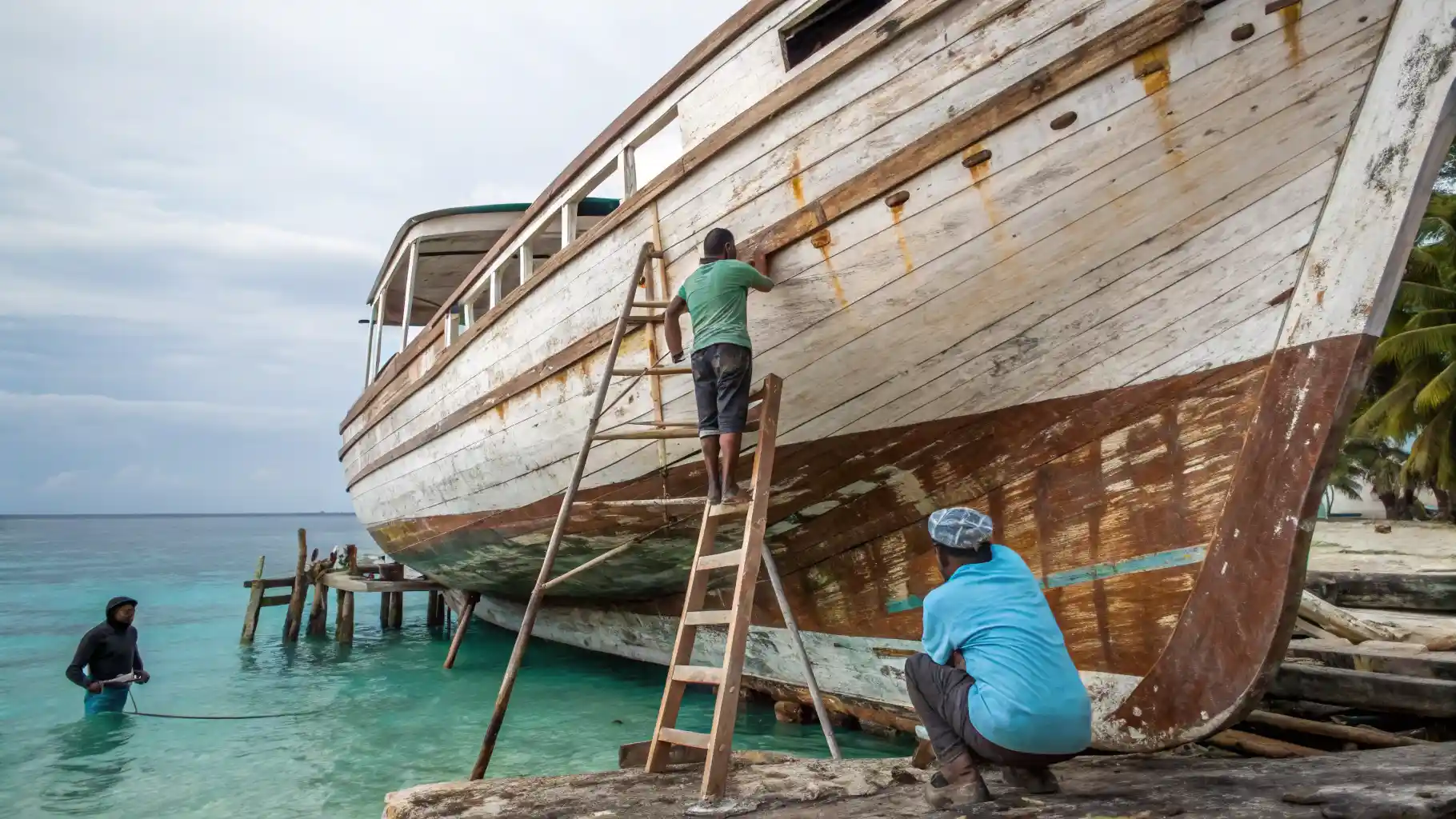
Scraping until the old coating lifts -
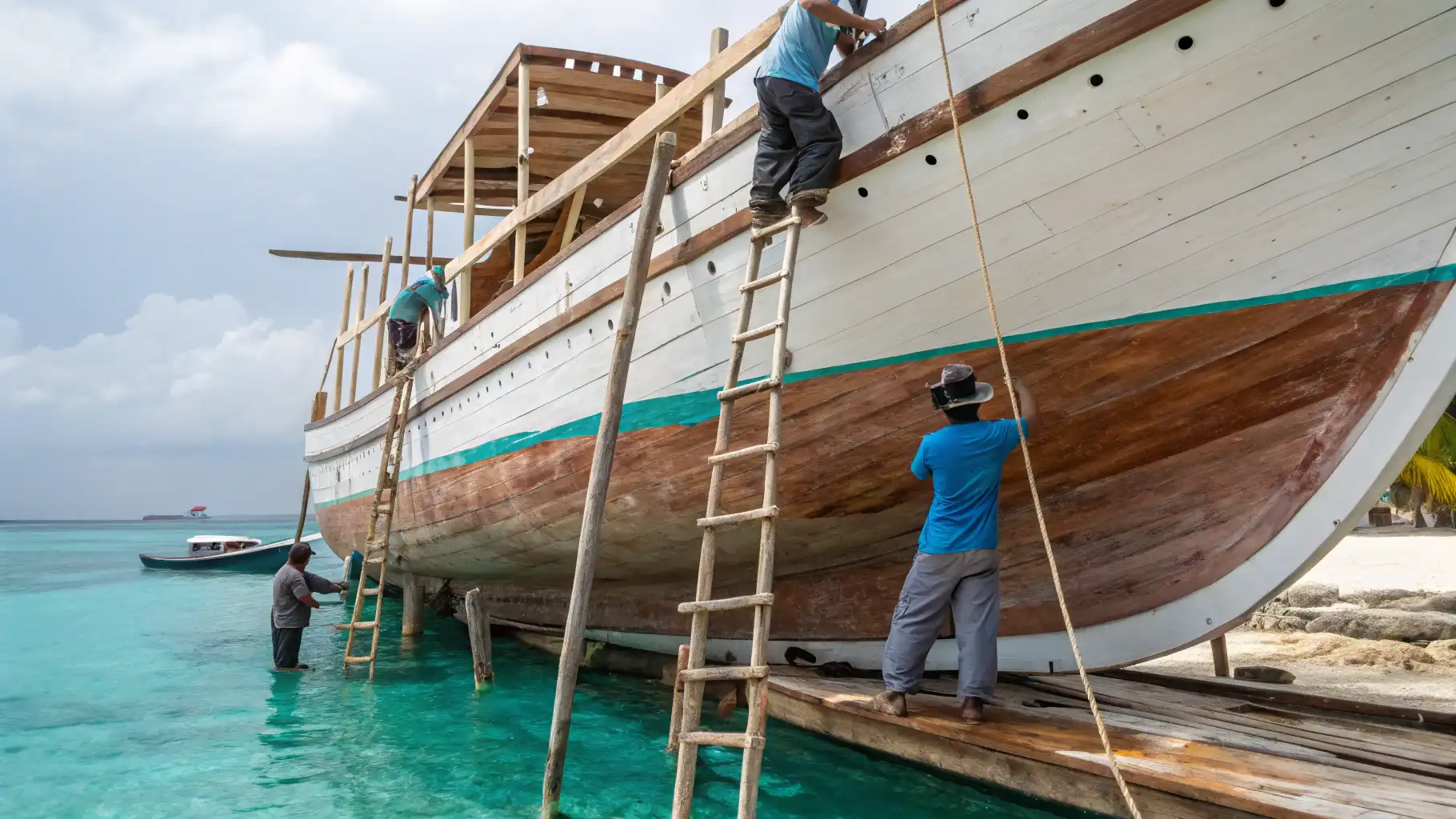
Repair and repainting -
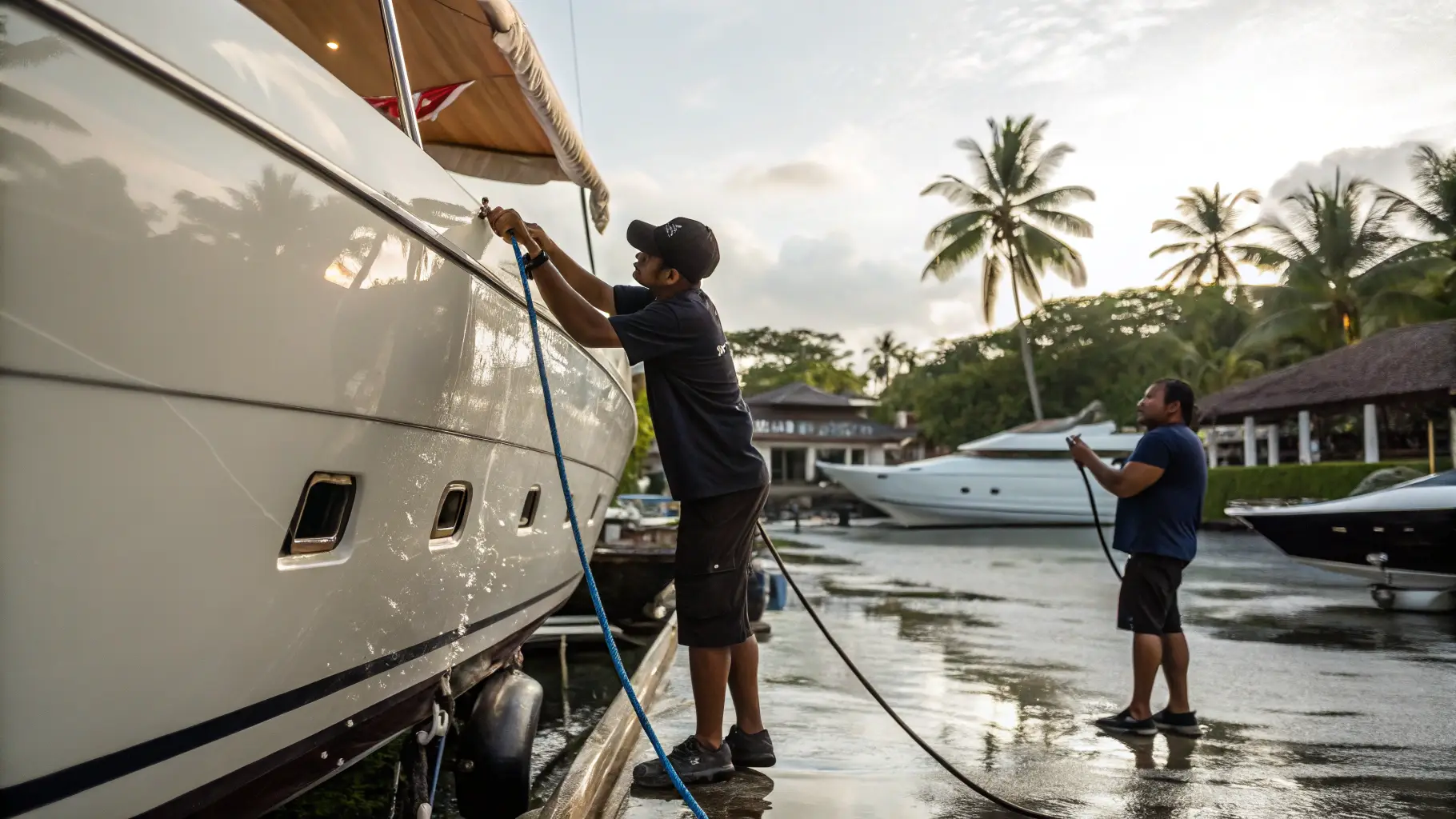
Washing and routine maintenance afterwards
Quality & cost
The QC we run and how cost is calculated
The QC we run as supervisor
On every hull project, our supervisor works from a checklist: a photo baseline before work starts, thickness readings before and after, fit-up verification before welding, visual/NDT weld inspection, DFT measurement of each paint coat, and a leak test before launching. Everything goes into a daily photo report you receive by WhatsApp or email — the full format is explained in how we work.
Cost per item
Quick orientation in USD: replating is priced per kilogram installed, blasting and painting per square meter, woodwork per plank or per running meter, and every final figure follows the assessment. The full bands and how to read a quotation are in the Kendari dry docking and repair cost guide.
Work sequence
The right sequence for hull work
A well-run hull project follows a sequence that must never be reshuffled. First, cleaning and inspection: fouling is removed while still wet, the hull is rinsed with fresh water, then a visual survey and thickness gauging map its real condition. Second, scope decisions based on data: what gets replaced, what gets repaired and what only needs repainting — decided with the owner, figures in hand. Third, structural work: replating, plank replacement or relamination is done and inspected before a single drop of paint goes on. Fourth, surface preparation to the promised standard — and inspected, because this is where paint life is decided. Fifth, the paint system coat by coat, with DFT measured and the weather watched; painting just before a tropical downpour is the fastest way to throw money away. Sixth, the other underwater items are finished in the same window: new zinc anodes, sea chests cleaned, valves serviced, propeller polished.
The most expensive mistake we routinely prevent: painting over a surface that is not ready in order to hit a launch date. It looks good on handover day and peels within three months. Our supervisors hold this sequence firmly precisely because the temptation to cut it is always there — from the weather, from the facility queue, sometimes from owners themselves who want it done fast. Hull work done right once is far cheaper than hull work done half right twice.
FAQ
Frequently asked questions
My vessel has a hull leak — can it be handled in Kendari, or does it have to go to Makassar?
Most leaks on wooden, fiberglass and small steel vessels can be fully repaired at the facilities in Kendari and Moramo–Lapuko. What needs referring elsewhere is major replating on steel vessels beyond local haul-out capacity, or repairs that demand a full dry dock with heavy-lift facilities. We assess from photos and vessel data, then give an honest recommendation before you move the vessel.
What is the minimum plate thickness before replating becomes mandatory?
The industry rule of thumb: wastage approaching 20–25% of the original thickness puts a plate on the renewal list; for classed vessels, the official limit follows the classification society’s rules and the surveyor makes the call. That is why we make documented ultrasonic gauging a condition before approving any replating scope.
Which antifouling holds up in the warm waters of the Banda Sea?
For warm waters with aggressive fouling, a self-polishing antifouling applied at the DFT the manufacturer specifies gives the most consistent life — realistically 12–24 months depending on the operating pattern. Vessels that sit on a mooring for long periods need a shorter interval. We choose the system based on your vessel’s operating pattern, not on whatever paint happens to be in the facility’s store.
Is SA 2.5 abrasive blasting available at Kendari shipyards?
Blasting equipment is available at some local facilities and contractors, but not at every haul-out point — we verify availability on each project during facility selection. Where full blasting is not economical for a small scope, we state the alternative surface preparation honestly in the quotation, together with its consequences for paint life.
Continue from this page
USD estimate for hull work
Prepared by Kendari Shipyard Desk — specialist maritime brand under Juara Holding Group. Contracts via PT Komodo Galangan Nusantara.