
Refit & conversion
Vessel Refit in Kendari: Accommodation, Structure & Conversion
A refit is the project most likely to blow its budget when it is carried out without planning. This page explains which vessel refit scopes can realistically be executed in Kendari, the engineering sequence behind them, and how we keep the project on track. Facility context is in the Kendari shipyard guide.
- 6–12 mo
- Ideal planning window
- 3–8 wks
- Accommodation refit, 10 crew
- 4
- Sources of budget overrun
- VO
- Every deviation recorded
Short answer
A vessel refit in Kendari suits workboat accommodation and interior upgrades, wheelhouse modifications, tank replacement and additions, cargo-deck layout, and small-to-medium conversions. Large refits needing a full dock, major structural replacement or high-end yacht finishing we plan in Kendari, then refer to the right facility — still supervised by our desk.
Scope
Accommodation, structure & change of function
-
Workboat accommodation & interior refit
For workboats, large fishing vessels and local passenger vessels: reconfigured crew cabins, pantry and mess, proper toilets and showers, insulation and ventilation, through to air conditioning. Our principle is simple: materials that withstand the marine environment (not household furniture that falls apart within a year), work that does not compromise the structure, and added weight calculated against stability. Accommodation upgrades are most economical when done during a docking window, so wet and dry work run in parallel.
-
Wheelhouse
Raising or enlarging the wheelhouse, replacing windows with weather-resistant glazing, rearranging the instrument console, and improving visibility. Wheelhouse modifications change windage and the center of gravity — on classed vessels, drawings must be approved before execution; on non-classed vessels we still produce working drawings so the result is measurable.
-
Fresh-water & fuel tanks
Added tank capacity to extend operating range — a common need for fleets operating far to the east. New tanks are fabricated with proper baffles, leak-tested before installation, and positioned with the vessel’s trim calculated. The fabrication is handled by the welding & fabrication team with full weld QC.
-
Lashing & cargo deck
Deck reinforcement, lashing points and cargo-space layout for vessels switching to project cargo or mining logistics — including point-load calculations and reinforcement below deck.
-
Change of function: fishing to cargo, cargo to support vessel
The most common conversions in Southeast Sulawesi: fishing vessels into local cargo vessels, and cargo vessels into mining support vessels. A conversion touches three things at once — structure (holds, deck, access), systems (pumps, electrical, safety) and legal status (certificates, tonnage, registered function). The correct order: regulatory consultation first, then working drawings, then execution. Conversions done the other way round — cut first, sort out the paperwork later — almost always end up costing more.
-
Yacht & dive boat refits for the Wakatobi–Banda route
For dive boats and small yachts operating in Wakatobi and the Banda Sea, Kendari is the nearest functional refit point: structural repairs, systems, repowering and hull work can be executed locally under our supervision. For premium charter-standard interior finishing or a full refit, we act as planner and supervisor, with execution referred to the Juara Holding Group maritime ecosystem’s network of shipyards that handle tourism vessels of that class. More on eastern fleet scenarios in Wakatobi & Banda fleet support.
Gallery
Refits in progress
A refit touches three layers at once: structure, systems and final finish. These photos represent all three.
-
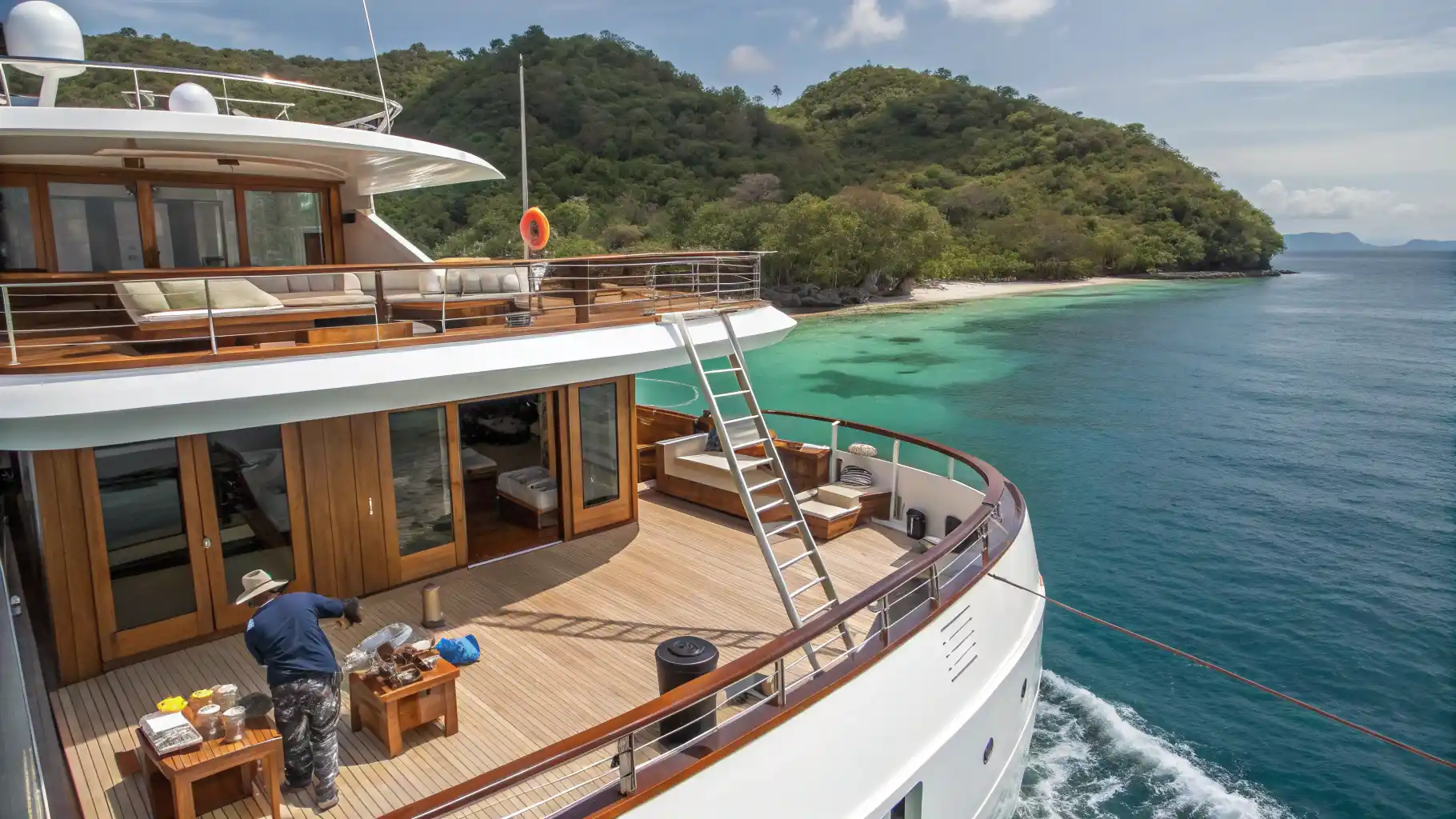
Refit equipment and work area on deck -
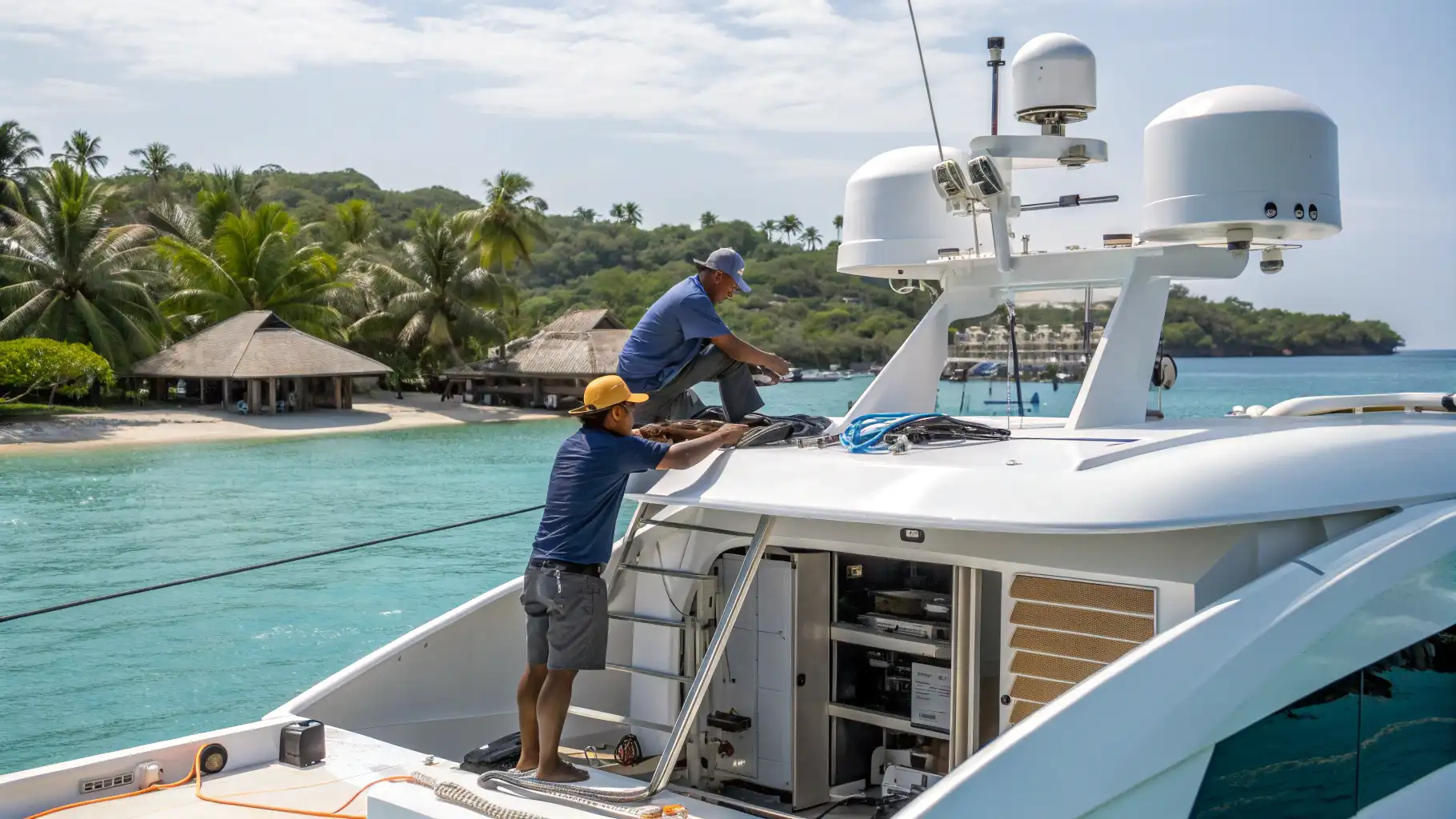
Upgrading electrical and electronic systems -
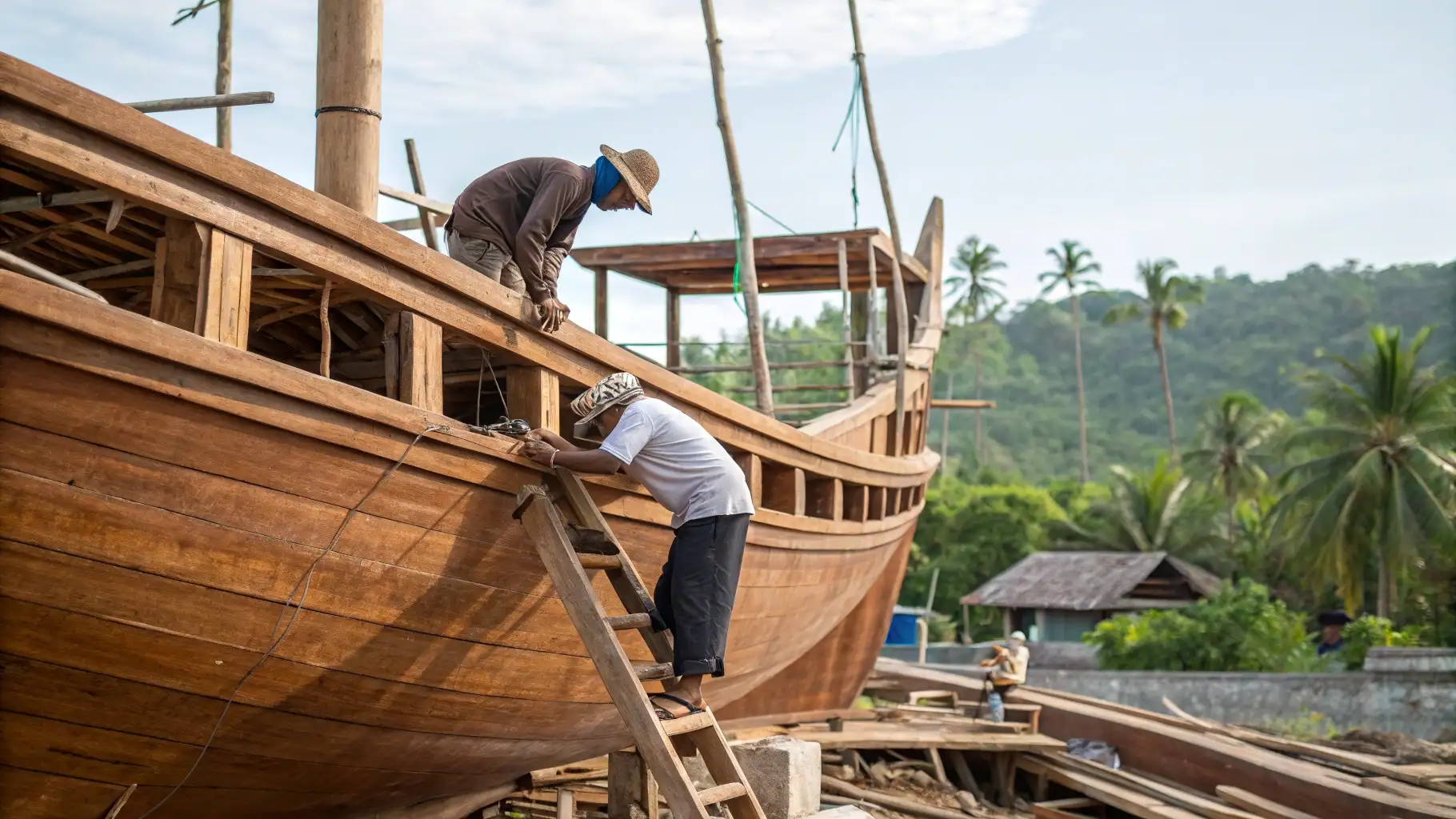
Structural and hull planking work
Engineering
Engineering & working drawings before execution
Every refit we take on starts with documents: a survey of existing conditions, working drawings (layout, structure, systems), a material list with specifications, and the work sequence. The itemized USD quotation is built from these documents — so changes along the way are measured as approved variation orders, not runaway overruns. The full workflow is in how we work; the cost framework is in the USD cost guide.
Budget
Controlling a refit budget: where overruns come from
Refits have a bad reputation for budgets, and the causes can be counted on one hand. First, scope that grows quietly: a wall is opened to replace a panel, rotten frames are found, and a two-week project becomes two months without anyone explicitly approving it. Second, materials decided halfway through: items that have to be shipped in from Surabaya or Jakarta take time to arrive, and the vessel waits at the facility while paying rent. Third, work done in the wrong order: the interior is fitted before the systems behind it are finished, then torn out again. Fourth, slow owner decisions: every day spent waiting for an answer is a day the facility runs without progress.
How we close those four gaps: an initial opening-up survey that deliberately exposes risk areas before the final quotation (so surprises are found while they are still cheap); a complete material list with brand decisions made up front and orders placed before the vessel stops operating; a written work sequence that the supervisor enforces; and a decision protocol — every new finding is reported the same day with photos, options and a price, with an agreed decision deadline. A refit managed this way can still overrun, but by a percentage — not by a multiple.
When is the best time to plan a refit? Six to twelve months before the execution window — enough time for surveys, drawings, regulatory approval if needed, and material procurement without rush rates. A refit planned in the low season and executed just before the high season pays off twice: costs stay under control and the vessel is back in service exactly when the market needs it.
FAQ
Frequently Asked Questions
Does a vessel conversion change its certificates & tonnage?
Yes. Changes in function and structure affect tonnage remeasurement, safety certificates and — for classed vessels — drawing approval by the classification society. The correct order: consult the authorities and class on the plan first, get clarity on the requirements, then start the physical work. We guide this document process as part of the project scope.
Refitting a small yacht in eastern Indonesia — Kendari or take it to Bali?
It depends on the scope. For structural, engine, systems and functional hull work, Kendari has the edge because it is close to the operating area — saving weeks of repositioning. For premium interior finishing and a full charter-standard refit, specialist facilities in the west are a better fit, and we prepare the planning and supervision. We give a case-by-case answer after seeing your defect list.
How long does a 10-crew accommodation refit take?
Realistically three to eight weeks, depending on the starting condition, the toilet, shower and ventilation scope, and how quickly materials can be procured. The biggest single factor is materials that have to be brought in from outside Southeast Sulawesi. With working drawings and materials ordered before the vessel stops operating, the effective duration can be cut significantly.
Are approved drawings needed for structural modifications?
For classed vessels: yes, structural modification drawings must be approved by the classification society before work starts, and the welding is inspected by the surveyor. For non-classed vessels there is no formal obligation — but we still produce working drawings because they are the only way to control quality, weight and cost. Drawings also raise your vessel’s resale value.
Where to go next
Discuss your refit
Written by Kendari Shipyard Desk — a specialist maritime brand under Juara Holding Group. Contracting entity: PT Komodo Galangan Nusantara.