
Engine & genset overhaul
Marine Engine Overhaul Kendari: Main Engines and Gensets
Kendari Shipyard Desk coordinates marine engine overhaul in Kendari — main engines, generators and gensets — for Southeast Sulawesi fleets, from fishing vessels to mining tugboats. We are not a workshop; we select the right technicians and workshop, structure the job, and supervise until the load test is passed. Full facility context is in the Kendari shipyard guide.
- 6,000–12,000
- Hours: top overhaul window
- Per HP
- Cost orientation
- 2–6 wks
- Realistic major overhaul
- Afloat
- Most engine scopes
Short answer
The rule of thumb for any marine engine overhaul Kendari owners plan: a top overhaul is considered when performance drops — weak compression, heavy smoke, rising lube oil consumption — typically every few thousand running hours by engine class; a major overhaul when wear reaches the crankshaft and main bearings, usually at a much longer multiple per the manufacturer’s manual.
Scope
Main engine, generator & genset overhaul scope
-
Dismantling & measurement
A proper overhaul starts with measurement, not blind replacement. After dismantling, components are measured against the manufacturer’s limits: liner diameter and ovality, piston-ring clearance, the condition of crankpins and main journals, and bearing clearances. The results are written on a data sheet that drives the decision: which components are reused, which are remachined and which must be replaced. The sheet also belongs to the owner — it is part of the handover documents.
-
Spare parts: OEM vs aftermarket
We are straight with you about spare parts. For critical components — bearings, liners, pistons, injectors — OEM or top-tier aftermarket brands are our standard; for consumables such as gaskets and seals, quality aftermarket parts can be accepted with the owner’s approval. Every brand and part number is listed in the quotation, so you know exactly what goes into your engine. Parts lead time often decides the project duration; we order early, based on the measurement results.
-
Assembly & running test
Assembly follows the manufacturer’s torque values and sequence, with the supervisor verifying final clearances before the engine is closed up. After assembly, the engine is tested at idle, then stepped up to load — exhaust gas temperature per cylinder, lube oil pressure and coolant temperature are recorded as your vessel’s new baseline.
-
Scheduled genset servicing
A vessel’s genset is often the neglected stepchild until it dies completely at sea. We structure scheduled servicing: filter and oil changes, injector calibration, cooling system checks and a light load test — work that can be done afloat without waiting for a dry docking slot.
-
Rewinding & AVR
For electrical faults on the generating side — unstable voltage, a burnt-out alternator — rewinding and AVR replacement are available through partner workshops. Faults rooted in the vessel’s distribution system (not in the generator) we route to the marine electrical scope so the problem does not recur.
-
Post-overhaul load test & sea trial
An overhaul is not finished until it has been tested. Our standard: a stepped load test at the quay, then a sea trial with parameters recorded — maximum RPM reached, stable temperatures, lube oil pressure within limits, normal vibration. If the vessel is dry-docked at the same time, the sea trial is combined with steering and propulsion tests. The results are signed jointly as proof of handover.
Gallery
Engine work and its components
An overhaul is judged by the components that are opened, measured and recorded, not by an engine that runs again.
-
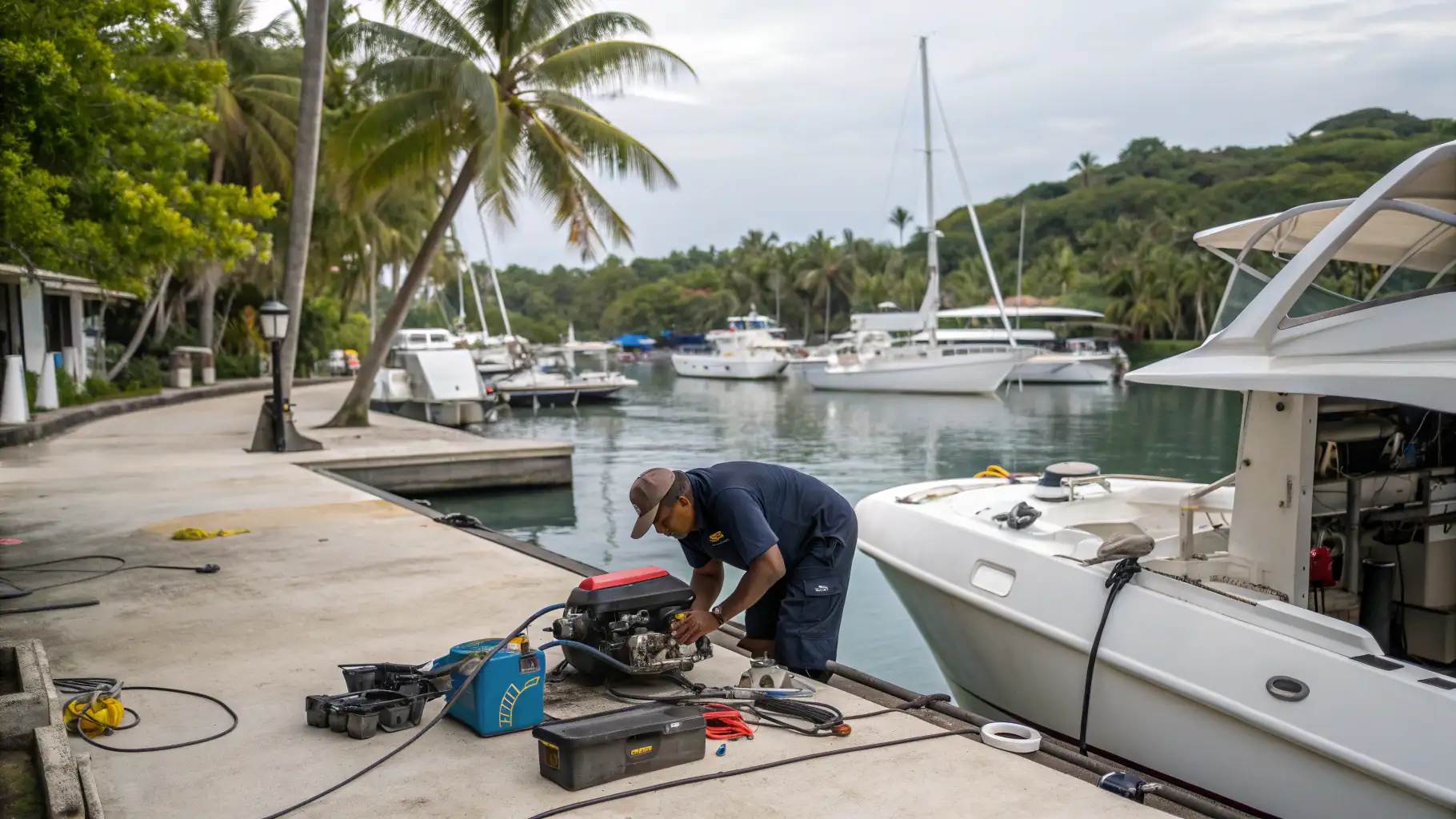
Engine components opened and inspected one by one -
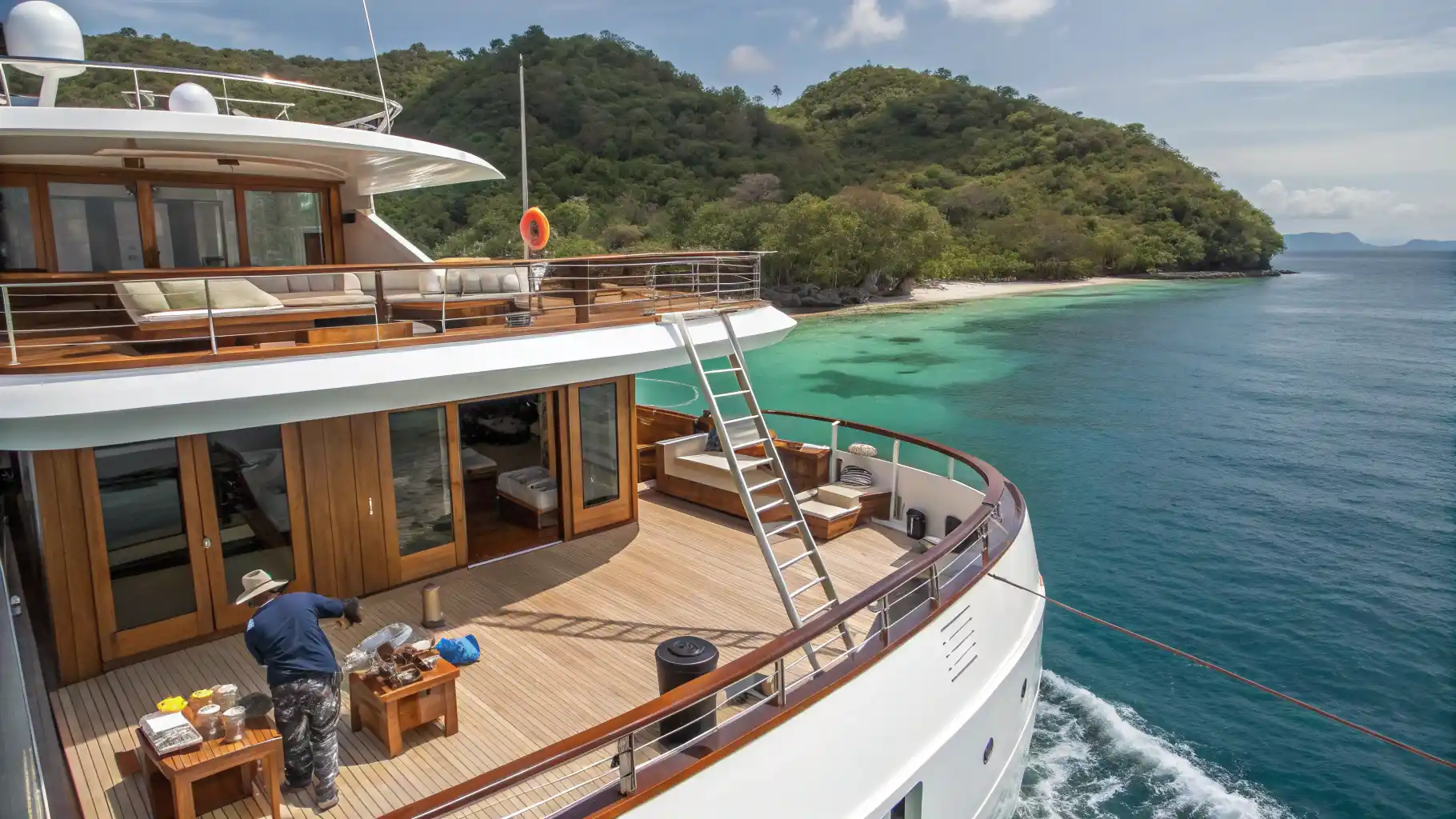
Support systems work on deck
Scheduling & cost
Aligning with the dry docking schedule, cost, and the value of supervision
Aligning with the dry docking schedule
The most efficient way to cut idle time: carry out the overhaul while the vessel is on the dock for hull work. One docking window, two major scopes finished. We build this schedule from the start — spare parts arrive before the vessel hauls out, and engine technicians work in parallel with the hull team. For fleets with several vessels, this pattern becomes part of the fleet maintenance contract.
Overhaul cost
Overhaul cost is usually oriented per engine HP: a top overhaul generally sits in a band from a dozen or so to several dozen US dollars per HP, and a major overhaul can cost several times that — with spare parts as the largest component. The final figure always follows the measurement results; we do not sell a fixed figure before the engine is opened. The quotation structure and full bands are in the USD cost guide.
Why overhaul through our desk
The engine-service market in the regions varies widely in quality. Without supervision, an “overhaul” can mean nothing more than new rings and gaskets. Our supervisor makes sure measurements are actually taken, the parts installed match the parts paid for, and the load test is run — all documented. Contracts are through PT Komodo Galangan Nusantara, with USD quotations per item.
Symptoms
Signs an engine needs an overhaul — don’t wait for it to stop completely
Engines rarely die suddenly without warning; they send signals for months beforehand. The easiest to read is a change in exhaust smoke — dense black indicates incomplete combustion or overloading, blue means lube oil is burning too (worn rings or seals), and persistent white means water is getting into the combustion chamber. A significant rise in lube oil consumption between trips, oil pressure slowly falling at working RPM, temperatures creeping up at the same load, starting that gets harder in the morning, and new vibration that was not there before — all of it is data. Crews who log daily parameters give owners the luxury of planning an overhaul on their own schedule, not on the breakdown’s.
The economics almost always favor acting early. A planned top overhaul replaces top-end components at a controlled cost; an engine forced to run until its bottom-end bearings fail turns into a major overhaul plus collateral damage — a crankshaft that has to come out for machining, sometimes a cracked block — at several times the cost, with the vessel out of service for weeks in the wrong season. In the fleets we manage, overhaul decisions draw on two sources: running hours against the manufacturer’s reference, and the trend in daily parameters. If you are unsure how to read your vessel’s engine symptoms, send video and data via WhatsApp — the initial remote diagnosis is free of charge.
FAQ
Frequently asked questions
At how many running hours should a vessel engine be overhauled?
Use the manufacturer’s manual as the main reference: high-speed diesel engines generally enter the top overhaul window at several thousand hours (often 6,000–12,000 hours depending on make and load), and the major overhaul at a longer multiple. Symptoms — falling compression, smoke, heavy oil consumption — can bring the schedule forward. We help you read running hours and symptoms before deciding the scope.
Are engine technicians available in Kendari, or are they brought in?
Honestly: a combination. Local Kendari technicians handle the common engines of fishing fleets and workboats; for specialist makes or scopes — modern injection pumps, certain high-speed engines — we mobilize specialists from outside. Mobilization costs are written openly in the quotation, so there are no surprises.
Can an overhaul be done without hauling out?
Yes — most engine and genset work can be done afloat at the quay, as long as engine room access is adequate and the weather cooperates. Work that requires a haul-out is anything that penetrates the hull: the shaft, stern tube, sea chests and valves below the waterline. Combining the two is most economical when scheduled in a single dry docking window.
How long does a main engine major overhaul take?
Realistically two to six weeks: one week to dismantle and measure, two to four weeks waiting for and fitting spare parts (the biggest factor), and the rest for assembly and testing. Engines with parts available in Indonesia are faster; makes whose parts must be imported take longer. We give a realistic schedule after measurement, not before.
Continue from this page
Engine overhaul consultation
Send engine video and data via WhatsApp — the initial remote diagnosis is free of charge.