
Vessel types
Vessel Types We Service in Kendari & Southeast Sulawesi
If your vessel type is not listed on this page, just ask — the list below covers the vessels we handle most often, not the limit of the facility network we coordinate.
- 6
- Vessel type groups
- 100–300
- GT local haul-out limit
- Afloat
- Option for large steel vessels
- 1 desk
- For mixed fleets
Short answer
Vessel types serviced in Kendari: wooden, fiberglass and steel fishing vessels; tugboats and barges; speedboats and patrol boats; local passenger vessels; dive boats, small yachts and tourism vessels; and mining support workboats. Local haul-out reaches a few hundred GT depending on the facility — larger steel vessels are serviced afloat or referred to a large dock under our supervision.
Matrix
Vessel type vs dock method vs size limit
| Vessel type | Common method | Practical local limit | Notes |
|---|---|---|---|
| Wooden/fiberglass fishing vessel | Rail slipway, airbag, beach haul | up to ±100–300 GT | City facilities & the Moramo–Lapuko yard cluster |
| Steel fishing vessel | Rail slipway | depends on winch capacity | Verify per facility |
| Tugboat | Rail slipway / airbag | harbor & coastal tug class | Check hauling capacity |
| Barge | Airbag on open ground / afloat | limited | Full dock → referral to a large dock |
| Speedboat/patrol boat | Beach haul, trailer, davit | almost any size | Aluminum & fiberglass |
| Local passenger vessel | Rail slipway | local service class | Follows the statutory cycle |
| Dive boat / small yacht | Slipway, airbag | eastern Indonesia tourism vessel class | Schedule follows the guest season |
| Steel vessel >1,000 DWT | Afloat locally / large dock | afloat only in Kendari | Kendari = planning base |
The facility map behind this table — city slipways, the Moramo–Lapuko yard cluster, traditional hauling points — is covered in full in the Kendari shipyard & docking guide.
By vessel type
Damage patterns and maintenance cycles by fleet
-
Fishing vessels (wood, fiberglass, steel)
The backbone of the Southeast Sulawesi fleet. Typical damage patterns: shipworm and rotten planking on wooden vessels, osmosis and delamination on fiberglass, waterline corrosion on steel, plus shafts and propellers worn by long working hours. The cycle we recommend: routine haul-outs timed to the fishing season, scheduled caulking and antifouling, and a propulsion check at every haul-out — scope details are on the hull repair and propeller & shaft pages.
-
Tugboats & barges
Southeast Sulawesi’s nickel industry drives a large population of tugs and barges. Tugboats: extreme propulsion loads make the propeller, shaft and engine the main points of attention, plus fenders and towing gear. Barges: deck and hull plating battered by cargo, winches and fenders — much of the scope can be done afloat, while full docking is referred out. For tug-and-barge fleets, the fleet maintenance contract model gives priority slots and locked rates.
-
Speedboats & patrol boats
Fast fiberglass and aluminum craft: gelcoat and laminate repair, aluminum welding with the right equipment, electrical systems and instruments, and both outboard and inboard engines. Hauling is light — trailer or beach haul — so the work can move quickly when materials are ready.
-
Passenger vessels & local ferries
Passenger vessels are bound by a strict statutory inspection cycle — docking is not optional but a periodic obligation. We help operators schedule docking around certificate validity, prepare the vessel for the inspection items and oversee the repair of findings; survey support is covered on the BKI (Biro Klasifikasi Indonesia, the Indonesian Classification Bureau) docking survey & certification page.
-
Dive boats, small yachts & Wakatobi-route tourism vessels
Tourism vessels live on reputation and schedules: docking has to be tidy, fast and must not slip outside the season window. Kendari is the nearest repair base for the Wakatobi–Banda fleet — the full scenario is on the eastern-route fleet support page. Typical scope: antifouling, propulsion, genset and light interior repairs; major refits are planned from Kendari and carried out at the right facility.
-
Workboats & mining support
The industry facts are clear: Southeast Sulawesi is one of Indonesia’s nickel hubs, and a fleet of workboats operates around the mining terminals — crew boats, small LCTs, survey vessels, bunker vessels. Their needs: fast repairs with tidy documentation for company reporting, schedules that respect work rotations, and cost certainty in a quotation structure that can be audited.
Gallery
Hull types we handle
Traditional wooden hulls and modern hulls demand different handling, from how the vessel is hauled out to the repair materials.
-
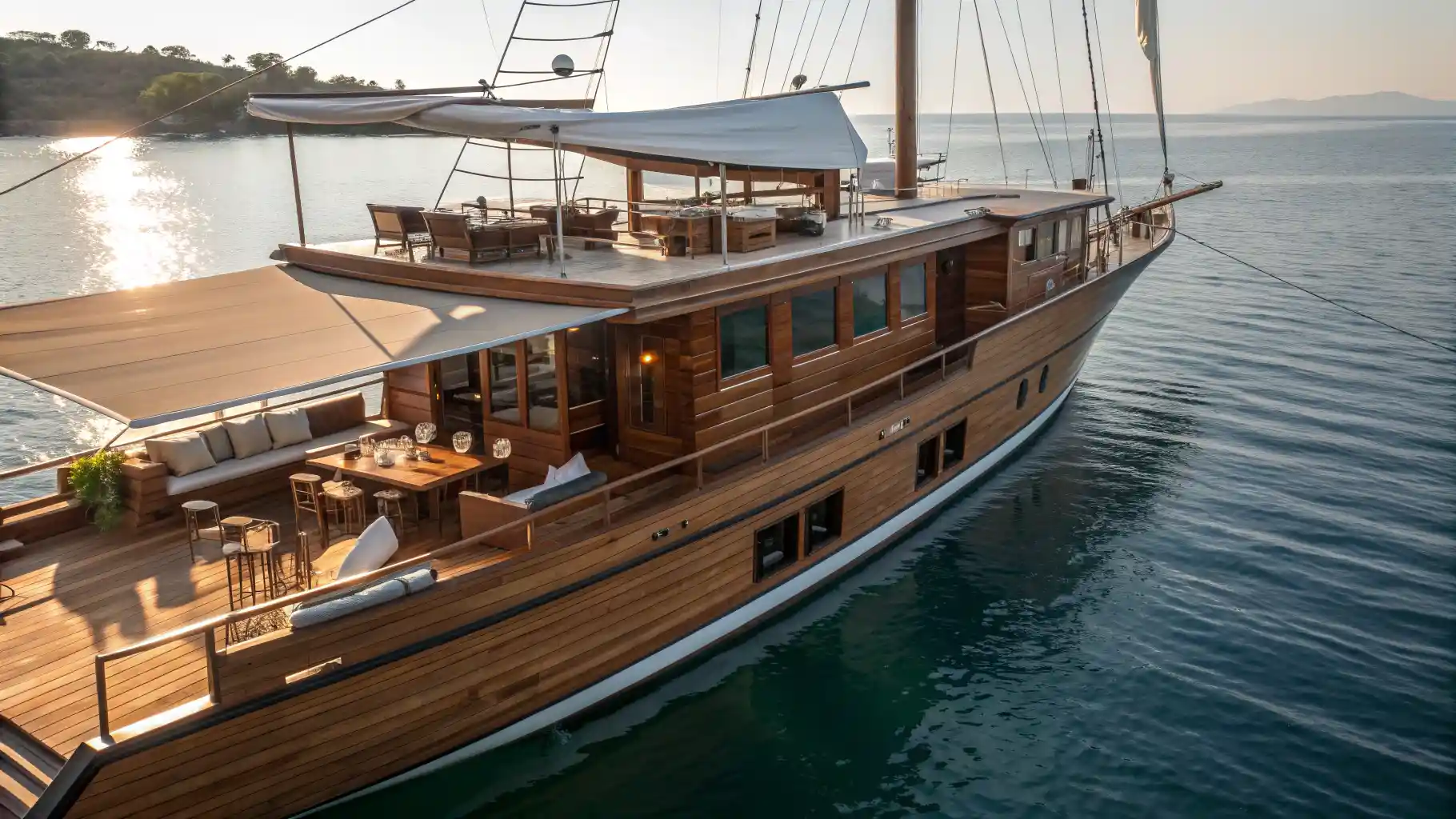
Wooden phinisi: planked hull on closely spaced frames -
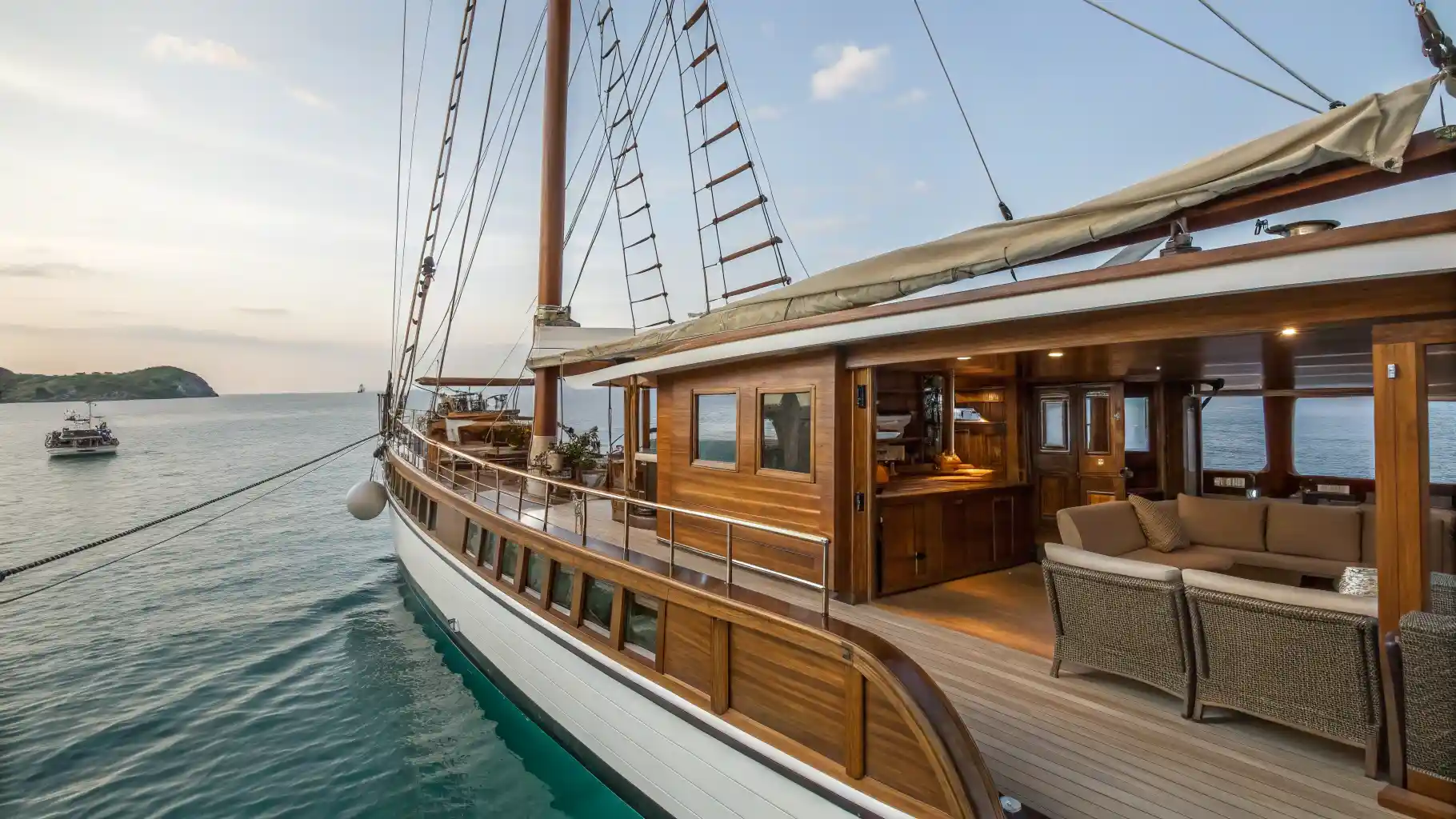
Phinisi hull seen from the water -
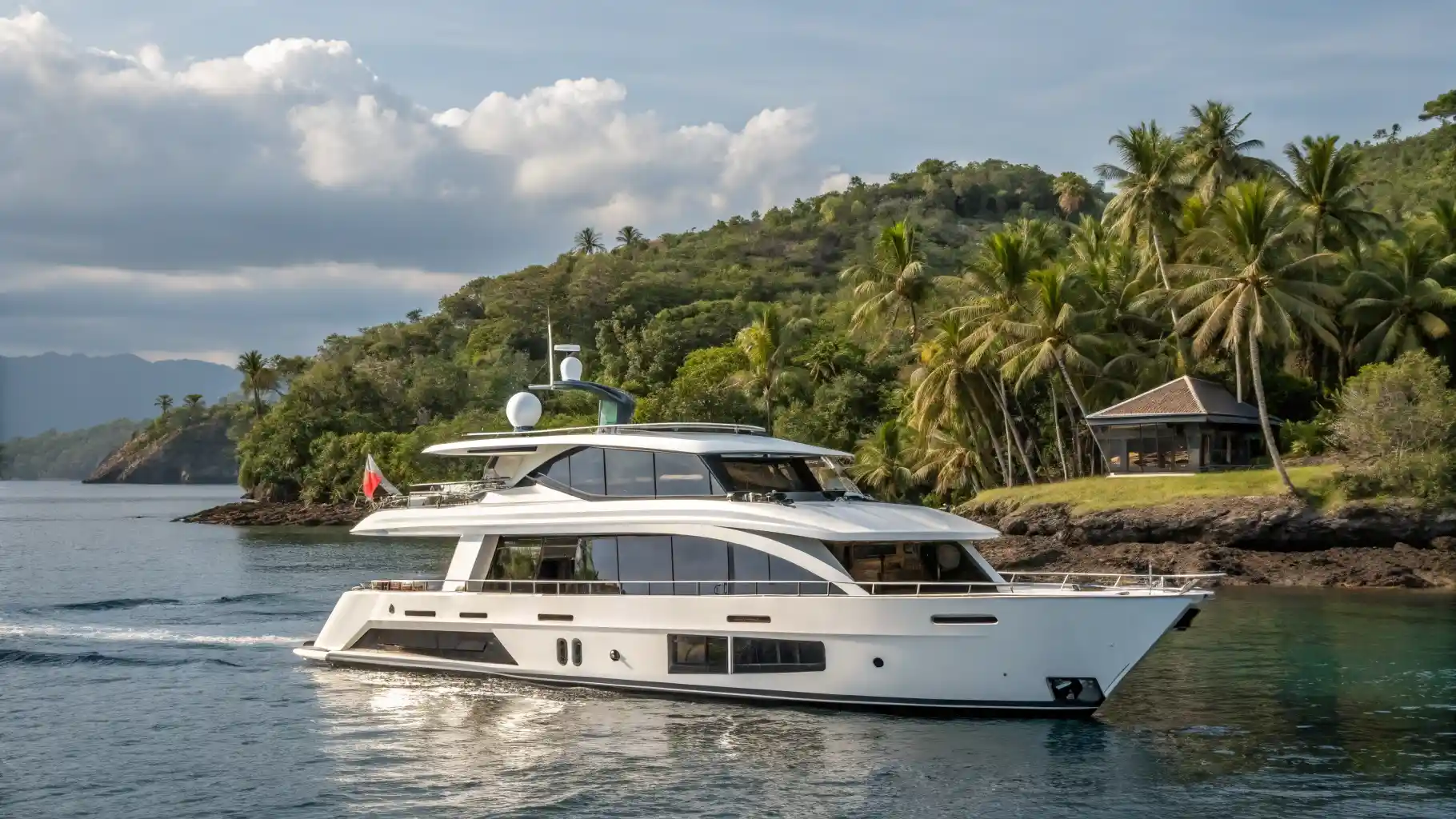
Modern motor vessel with a fiberglass or steel hull
Mixed fleets
One desk for mixed fleets
Many operators in Southeast Sulawesi do not own a single type of vessel — they own a mix: two fishing vessels, an operational speedboat, sometimes a small tugboat or a project workboat. Maintaining a mixed fleet through a different workshop for each type means four quality standards, four invoice formats and no complete picture of the fleet’s condition. Our desk model brings it together: one point of contact, one standard of supervision and reporting, one USD quotation format — with the work still done at the facility and by the team best suited to each vessel type. Wooden vessels go to the best shipwrights, aluminum to aluminum welders, engines to their engine technicians.
If your vessel type is not listed on this page, just ask — the list above covers the vessels we handle most often, not the limit of the facility network we coordinate. Send your vessel details on WhatsApp and we will answer honestly: it can be done in Kendari, it can be partly done, or it is better referred elsewhere — with our reasons.
Practical value
Three places where one desk makes the difference
The practical value shows in three places. In the budget: the whole fleet reads as one cost projection, not sporadic invoices that cannot be planned. In the schedule: docking is rotated between vessels, so operations never stop entirely. In the documents: every vessel has a history file in the same format, which simplifies internal audits, insurance and asset sales.
For fleets of three or more vessels we usually formalize this structure as an annual maintenance contract; for owners of one or two vessels the way of working is the same — just without a full calendar commitment. Whatever the make-up of your fleet, start with your vessel details and we will draw up its maintenance map.
FAQ
Frequently asked questions
Can smelter-support vessels of 1,000–3,000 DWT be handled?
Afloat scope can be done in Kendari: engines, gensets, electrical, welding above the waterline and deck repairs. A full dock for this size class is not yet available locally — we refer the vessel to a large facility on the eastern route and still handle the planning, the quotation comparison and the supervision of the work.
Can a fiberglass vessel go up a rail slipway?
Yes, with an adapted cradle: more supports, padded in layers so that pressure does not concentrate on one point of the hull. Gelcoat cracking becomes a risk when the vessel sits on hard supports in the wrong position — the mitigation is a blocking plan calculated before hauling, a standard part of our supervision on slipway & haul-out jobs.
Do you service government and patrol vessels?
Yes, through a contract or tender arrangement with the PT Komodo Galangan Nusantara entity. We prepare the technical specifications, schedule and work documentation to meet the agency’s accountability requirements — details of that support are on the fleet maintenance contracts page.
How often must a passenger vessel be dry-docked?
Passenger vessels follow the statutory and class rules that apply to them — annual periodic inspections and underwater inspections on a longer cycle, with the details depending on size, operating area and the vessel’s certification. We read your vessel’s documents and draw up a docking calendar that meets the obligations without sacrificing the operating schedule.
Continue from this page
Send your vessel details
We will answer honestly: it can be done in Kendari, it can be partly done, or it is better referred elsewhere — with our reasons.