
9 Shipyard Warning Signs Your Vessel Build Is in Trouble (Early Detection)
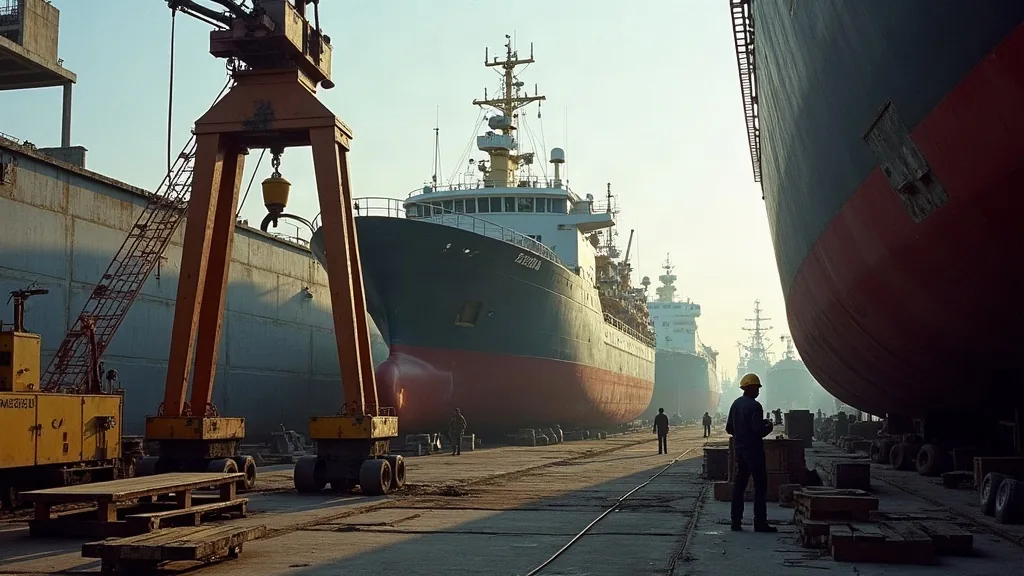
Vessel construction projects rarely stop suddenly. There is almost always a series of shipyard warning signs over the preceding months, and the owner who recognizes them early has far cheaper options than the owner who only realizes something is wrong after work has stopped completely.
1. Payment requests run ahead of progress
This is the earliest and most reliable signal. When the yard asks for the next payment before the milestone has been reached, citing material purchases or an urgent need, its cash flow is in trouble. Once such a request is met, the pattern almost always repeats, with growing amounts.
2. Answers shift from specific to vague
Pay attention to the language. A healthy yard answers technical questions with numbers: how many panels are fitted, how many meters of welding are done, when the engine arrives. A struggling yard answers in general terms — it’s in progress, nearly there, next week. A shift in how questions are answered usually comes before a shift in physical progress.
3. The workforce on site shrinks
Headcount is the most honest indicator of cash flow, because wages are the hardest obligation to defer. If the number of people on site falls without an explanation tied to the stage of work, that is not efficiency.
4. Your materials are used on other projects
Materials you have paid for moving to another project at the same yard is a serious sign. It shows the yard is covering one project’s shortfall with another project’s resources — a pattern that ends with several projects stopping at once. How to secure the materials that belong to you is covered in our article when a shipyard disappears or goes bankrupt.
5. Reports stop including photos
Dated photo reports are light work for a yard that is genuinely working. When reports turn into text only, or the photos sent start repeating from the same angle, verification is being avoided.
6. Scope changes are requested verbally
Requests for extra money without a written variation order (VO) show the yard is avoiding a paper trail. Any legitimate change can be written down along with its cost and time consequences. This mechanism is part of the contract structure on our costs, payment milestones and escrow page.
7. Site access starts to be restricted
The usual reasons given are safety or a new internal policy. Sometimes that is true; often it is not. Restricted access almost always means there is something you are not meant to see, and once access is gone, your ability to document the condition goes with it.
8. Suppliers start contacting you
When material suppliers or subcontractors start asking the owner about payment, the yard is already in arrears to third parties. This is a late signal but still actionable, and it usually comes only weeks before work stops.
9. The schedule is revised without explaining why
A slipping schedule is normal in shipbuilding. What is not normal is a revised schedule with no explanation of the cause and no recovery plan. A well-managed yard reports delays early, along with the reasons; a struggling yard waits to be asked.
Telling temporary problems from structural ones
Not every signal means the project will fail. Even a healthy yard runs into late material deliveries, bad weather and seasonal labor shortages. What makes the difference is how the problem is managed.
A temporary problem is usually reported early, with an explanation of the cause and a specific recovery plan, and is not followed by payment requests outside the milestones. A structural problem is usually acknowledged only after someone asks, explained with reasons that keep changing, and almost always accompanied by an urgent need for extra funds.
A simple test helps: ask for a photo progress report taken from the same angles as the previous month. A yard that is genuinely working treats this as a reasonable request. A yard that is avoiding verification will offer reasons why it is difficult.
Setting up an early-warning system
Owners do not need to be on site every day to detect problems. Four simple mechanisms give warning long before work stops.
First, regular photo reports from fixed angles with a list of the work completed in that period. Second, a visit by an independent supervisor at every milestone before payment is released. Third, a log of the materials arriving on site, because a drop in material deliveries comes before a drop in progress. Fourth, a rule that any payment request outside the milestone schedule automatically triggers an inspection, not a discussion.
All four are cheap and almost entirely administrative. What is expensive is not having them. The payment structure that underpins this system is in our article safe shipyard payment terms, and what to do once work has stopped is on our stalled vessel completion page.
Reading the signals early in a project
Some signals appear even before the contract is signed, and these are the cheapest to act on because the owner is not yet bound to anything.
Watch whether the yard is willing to write the scope of work in detail or prefers to hand over a single lump-sum figure. Watch whether they ask for detailed vessel data or give a price straight away, because a price given without data is a price that will be revised. Watch whether they are willing to show similar work in progress. And watch how they respond to a request for an independent supervisor.
A yard that is uncomfortable with these four points at the quotation stage rarely becomes more open after the down payment has been received. Assessing them at the start is far easier than fixing them halfway through the project.
What to do as soon as the signs appear
| Step | Purpose |
|---|---|
| Stop non-milestone payments | Stop the gap between payments and work from widening |
| Request dated photo reports | Test the yard’s willingness to be verified |
| Commission an independent inspection | Turn suspicion into data |
| Secure the materials you own | Protect the assets most easily lost |
| Restructure the payment milestones | Restore the incentive to finish |
Acting while the signals are still weak is almost always far cheaper. If work has already stopped, the recovery sequence is in our article the first steps when a boat build stalls and on our stalled vessel completion page.
Frequently Asked Questions
What is the earliest sign an owner can detect?
A change in how the yard answers questions. When answers shift from specific to general, and from figures to promises, the problem usually already exists before it shows up in physical progress.
Does a delay always mean a serious problem?
No. A delay reported early, with an explanation and a recovery plan, is a sign of healthy management. The dangerous kind is a delay acknowledged only after the owner asks about it.
What should I do as soon as the signs appear?
Stop any payment not tied to a verified milestone, ask for photo progress reports and carry out an independent inspection. Acting while the signals are still weak is far cheaper than acting after work has stopped.
Further reading
-
Boat Building Cost in Indonesia vs Vietnam vs Turkey: A Buyer’s Reality Check
Judging boat building cost — Indonesia vs Vietnam vs Turkey — by headline price is the fastest way to reach the wrong conclusion. Total delivered cost is determined by factors…
-
Shipbuilding Stages: From Keel Laying to Sea Trial
The shipbuilding stages run in a sequence that must not be reversed, and most delays come from a stage skipped to save time. This article sets out each stage, from…
-
Wood vs Steel vs Fiberglass Hull: Choosing a Hull Material for Eastern Indonesian Waters
The wood vs steel vs fiberglass hull decision shapes a vessel’s costs for decades, far beyond the difference in build price. This article compares wood, steel, aluminum and fiberglass from…