
Shipbuilding Stages: From Keel Laying to Sea Trial
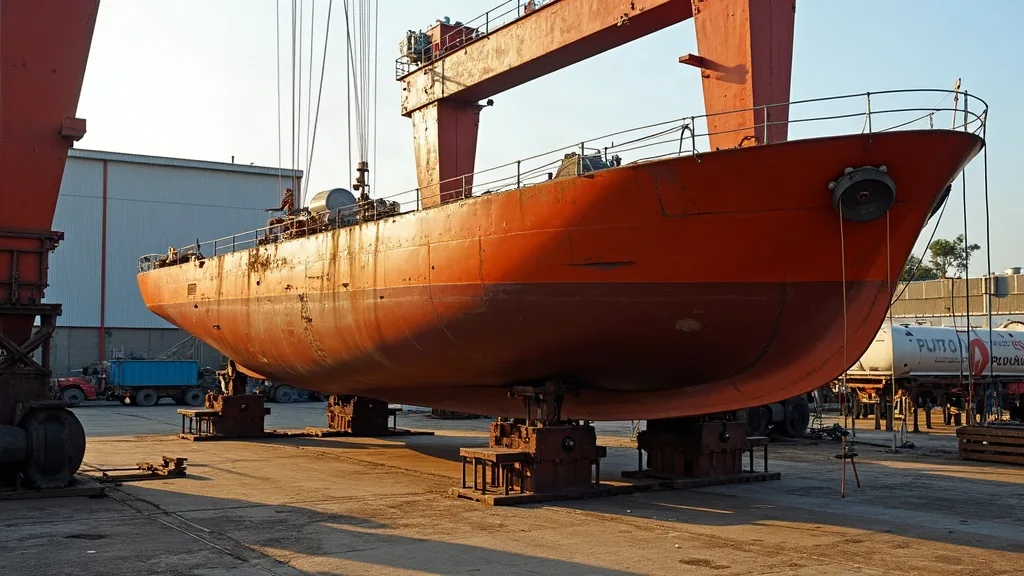
The shipbuilding stages run in a sequence that must not be reversed, and most delays come from a stage skipped to save time. This article sets out each stage, from specification through to handover, together with the evidence of progress the owner should receive at every point.
Stage 0: specification and general arrangement
Before any technical drawings, there must be agreement on what vessel is being built: cargo or passenger capacity, operating area, target speed, crew size and the level of interior finish. This document looks administrative but in fact does more than anything else to set the final cost, because almost every scope dispute is rooted in a lack of clarity at this stage.
Stage 1: design and drawing approval
General arrangement, preliminary weight and stability calculations, construction drawings, system drawings. For a vessel that will be classed, drawings must be approved before physical work begins. Reversing this order is the most common reason a vessel is finished but cannot be certified, and correcting it once the structure has taken shape always costs far more than revising on paper. The document path for BKI (Biro Klasifikasi Indonesia, the Indonesian Classification Bureau) class and Kemenhub (Indonesian Ministry of Transportation) certificates is explained on the BKI class and Kemenhub certification page.
Stage 2: procurement
Hull materials, main engine, gearbox, shaft, propeller, generator set (genset) and navigation equipment. This stage often sets the real schedule, because engine lead times are outside the shipyard’s control. An owner who demands a tight schedule without finalizing the list of main equipment is asking for the impossible.
Stage 3: keel laying and hull construction
Keel laying marks the official start of construction. After that, the structure is built up: frames, bulkheads, hull shell, deck. For steel hulls, the work proceeds in blocks that are then joined; for wood, it runs from the keel to the frames and then to the planking. Progress at this stage is the easiest to verify visually, which is why it carries the densest set of payment milestones.
Stage 4: watertightness testing
Before anything is closed in, watertightness must be proven. Finding a leak after the interior is fitted means tearing out work that has only just been finished. This is one of the points where rushing costs the most.
Stage 5: engine and systems installation
Main engine, shaft alignment, rudder, piping, electrical, cooling and exhaust systems. Shaft alignment is precision work that determines bearing life and the vessel’s vibration level for years to come, and it cannot easily be corrected once the surrounding structure is closed in.
Stage 6: outfitting
Accommodation, interior, safety equipment, navigation, deck fittings. This is the stage with the largest number of items, and therefore the stage whose scope most easily balloons. The discipline that saves projects here is simple: every addition is recorded as a written variation order (VO) with its cost and schedule consequences, not a verbal agreement billed later. The mechanism is on the costs and payment milestones page.
Stage 7: launching
The vessel is put into the water by slipway, airbags or graving dock, depending on the facilities available. The three methods are compared in the article airbag launching vs slipway vs graving dock.
Stage 8: sea trial
Tests of speed, maneuvering, fuel consumption, steering, emergency systems and vibration. A sea trial is not a ceremony; it is the final check before the last major payment is released. Findings at this stage must be closed out before handover, not recorded as promises to fix afterward.
Stages that run in parallel, not in sequence
A stage-by-stage description gives the impression that the work proceeds one step at a time. In practice several tracks run simultaneously, and recognizing which ones run in parallel helps the owner read the schedule realistically.
The documentation track runs from start to finish, separate from the physical work and subject to the queues of the issuing authorities. The procurement track runs from the moment the specification is finalized, and engine lead times often set the real schedule. The module fabrication track — electrical panels, accommodation units, piping systems — can be worked on ashore while the hull is still being formed, so installation goes much faster when the time comes.
A project scheduled as a strict sequence almost always takes longer than it needs to. A project run in parallel without planning almost always ends with trades colliding in tight spaces.
The evidence of progress an owner should receive
At every stage, the owner is entitled to specific evidence, not narrative reports. At design: the drawing set with its approval status. At procurement: proof of orders and a list of materials delivered to site. At hull construction: dated photos taken from fixed angles plus material measurement reports. At watertightness testing: a signed progress record of the test results. At engine installation: shaft alignment records and turning test results. At outfitting: a list of items installed against the specification. At sea trial: a trial report with measured figures.
This chain of evidence is not an administrative formality; it is the basis for releasing payment milestones, and also the archive that will be used years later when the vessel is hauled out for dry docking or refitted. How it links to the payment structure is covered in the article on safe shipyard payment terms.
Stage 9: handover
| Item | Must be complete at handover |
|---|---|
| Defect list | Closed, or scheduled and covered by retention funds |
| Vessel documents | Surat Ukur (tonnage/measurement certificate), registration, certificates |
| As-built drawings | Handed over to the owner |
| Manuals & warranties | Engines and main equipment |
| Initial spare parts | As listed in the contract |
A vessel handed over without as-built drawings will complicate every future maintenance job, including scheduled dry docking and refits years later. The full sequence for a new project is on the new vessel construction page.
Frequently Asked Questions
Which stage has the biggest effect on the overall schedule?
Drawing approval and engine procurement. Both are entirely outside the shipyard’s control and have their own queues, so delays here push back every stage that follows.
What does keel laying mean in practice?
Keel laying marks the official start of construction and is an important reference point in the vessel’s documents, so this stage is usually also one of the payment milestones.
Can outfitting start before the hull is finished?
Partly, and it is often beneficial, for example by preparing system modules in advance. What must not be rushed is work that closes in the structure before that section has been inspected.
Further reading
-
Boat Building Cost in Indonesia vs Vietnam vs Turkey: A Buyer’s Reality Check
Judging boat building cost — Indonesia vs Vietnam vs Turkey — by headline price is the fastest way to reach the wrong conclusion. Total delivered cost is determined by factors…
-

Wood vs Steel vs Fiberglass Hull: Choosing a Hull Material for Eastern Indonesian Waters
The wood vs steel vs fiberglass hull decision shapes a vessel’s costs for decades, far beyond the difference in build price. This article compares wood, steel, aluminum and fiberglass from…
-

Safe Shipyard Payment Terms: Milestones, Escrow and Retention
Shipyard payment terms are the strongest risk-control tool a vessel owner has, and also the one most often drafted carelessly. Safe terms tie every payment to physical, verifiable progress rather…