
Wood vs Steel vs Fiberglass Hull: Choosing a Hull Material for Eastern Indonesian Waters
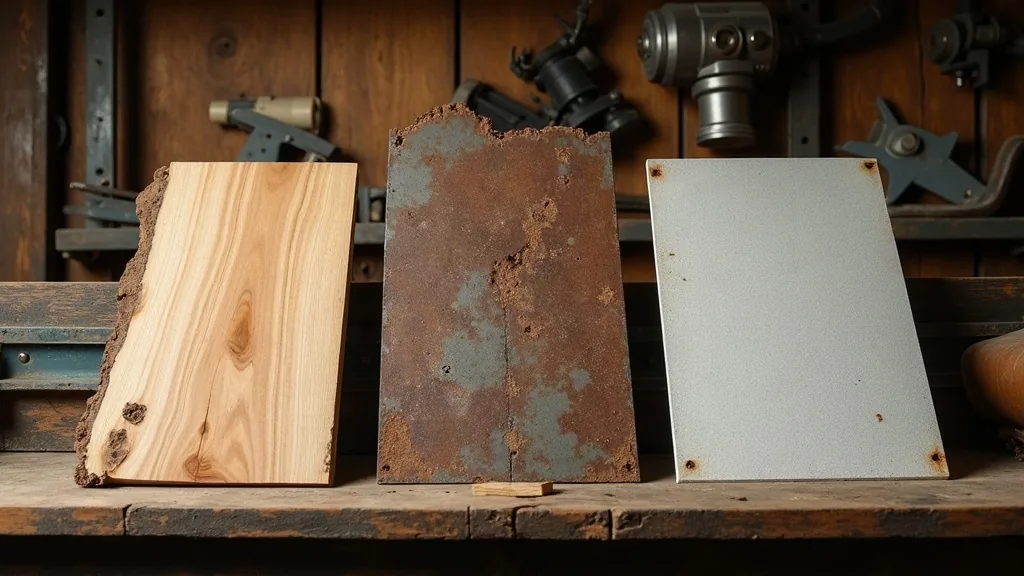
The wood vs steel vs fiberglass hull decision shapes a vessel’s costs for decades, far beyond the difference in build price. This article compares wood, steel, aluminum and fiberglass from the standpoint of real-world operation in eastern Indonesian waters: repairability near the operating area, maintenance demands and behavior when maintenance slips.
The criteria that actually decide
Debates about hull material often get stuck on strength, yet all four materials are strong enough when properly designed. Three other things matter more: whether the material can be repaired near the vessel’s operating area, how much maintenance discipline it demands, and how it behaves when that maintenance is postponed — because in practice, maintenance is always postponed.
Quick comparison
| Material | Main strength | Maintenance demands | Behavior when neglected |
|---|---|---|---|
| Steel | Strong, easy to repair anywhere | Regular coating & anodes | Gradual corrosion that is visible and repairable |
| Wood | Suits local tradition, easy to shape | Kalafat (traditional caulking), ventilation, drying out | Hidden rot, hard to detect |
| Aluminum | Light, fuel-efficient | Prevent electrolysis, inspect welds | Fatigue cracking, local galvanic corrosion |
| Fiberglass | Low routine maintenance | Check laminate & osmosis | Delamination; repairs need specialist skills |
Steel: the default for workboats
For tugboats, barges, cargo vessels and workboats in general, steel wins not because it is technically superior but because it is the easiest to restore. Welding shops exist in almost every coastal town. Damage is visible before it becomes critical. And ultrasonic thickness gauging (UTG) lets the condition of the structure be tracked quantitatively year after year — a capability no other material offers. How this applies to working fleets is on the tugboat and barge page.
The weakness is clear: corrosion never stops, and coating is an expense for the vessel’s entire life.
Wood: not a nostalgic choice
Wooden hulls are still a rational choice in eastern Indonesia for fishing vessels, inter-island vessels and phinisi-style liveaboards. The reasons are practical: the skills are available, the hull shape is easy to adapt, and repairs can be done without heavy equipment.
The risks are just as distinctive. Damage to wood develops where it cannot be seen, and its biggest cause is not seawater but trapped fresh water. Owners who choose wood must accept that ventilation, drainage and periodic inspection are not optional extras but requirements. The technical treatment is on the phinisi and wooden vessel page, and the risks of a hull left idle for a long time in the article on the abandoned wooden hull.
Aluminum: bought for speed
Aluminum makes sense when speed and fuel consumption drive the vessel’s economics — crew boats, fast passenger vessels, patrol boats. Much lower weight reduces the power required, and the fuel savings accumulate over the vessel’s life.
The trade-off is dependence on scarcer welding skills and sensitivity to galvanic corrosion when dissimilar metals are fitted without proper insulation. In areas with few aluminum welding shops, a small repair can mean a long voyage.
Fiberglass: low maintenance, high specialization
Fiberglass demands the least routine maintenance, which makes it a good choice for small vessels and tenders. The problem comes when damage occurs: laminate repair requires specific skills and materials that are unevenly available across the eastern region. For one-off production, the cost of a mold is also hard to justify.
Long-term cost of ownership
The difference in build price between materials is usually small compared with the difference in ownership cost over twenty years, and it is this second figure that is rarely calculated.
For steel, the largest recurring expense is the paint system and anode replacement, plus periodic replating in areas that have thinned. It is predictable if condition is tracked through regular gauging.
For wood, the largest recurring expense is caulking, plank replacement and fastener inspection. It is less predictable because damage develops out of sight, so periodic inspection is worth far more.
For aluminum, routine expense is relatively low but concentrated in events: repairing fatigue cracks and dealing with galvanic corrosion require specialist skills whose cost is out of proportion to the size of the damage.
For fiberglass, routine expense is the lowest, but structural repair requires materials and skills that are unevenly available across the eastern region.
How material affects resale value
Material also determines how easily a vessel can be sold, and to whom. Steel workboats have a broad and relatively rational buyer market, because their condition can be verified quantitatively through thickness gauging; buyers can assess the risk in numbers.
Wooden vessels have a narrower but sometimes more enthusiastic market, especially for traditional-style hulls sought after as accommodation vessels. What determines their value is proof of maintenance: dry docking history, caulking records and documentation of plank replacement. Without that proof, buyers assume the worst.
The practical conclusion applies to every material: condition documentation is part of the asset’s value, not mere paperwork. How to build it is explained on the vessel survey and valuation page, and how it feeds investment decisions in calculating the ROI of a vessel investment.
How to decide
The sequence of questions we work through with owners: where the vessel will operate and how far that is from the nearest workshop; how many operating days per year it will have and how expensive its downtime is; who will maintain the vessel and how disciplined they are; and whether the vessel will be sold soon, because the second-hand market treats materials differently.
The answers to those four questions usually leave one clear option. How this applies in a project is on the new vessel construction page, and the build sequence in the article on shipbuilding stages.
Frequently Asked Questions
Which material is cheapest to maintain in eastern Indonesia?
The cheapest is the material that can be repaired near the vessel’s operating area. Steel is generally the easiest to repair anywhere, while fiberglass requires laminating skills that are unevenly available.
Do wooden vessels have a shorter life?
Not automatically. A wooden hull that is caulked regularly, well ventilated and protected from trapped fresh water can last a very long time; failure almost always comes from maintenance, not from the material.
When is aluminum the right choice?
When speed and fuel consumption are the main deciding factors, for example on crew boats and fast passenger vessels. The trade-off is the need for specialist welding and attention to electrolytic corrosion.
Further reading
-
Boat Building Cost in Indonesia vs Vietnam vs Turkey: A Buyer’s Reality Check
Judging boat building cost — Indonesia vs Vietnam vs Turkey — by headline price is the fastest way to reach the wrong conclusion. Total delivered cost is determined by factors…
-
Shipbuilding Stages: From Keel Laying to Sea Trial
The shipbuilding stages run in a sequence that must not be reversed, and most delays come from a stage skipped to save time. This article sets out each stage, from…
-
Safe Shipyard Payment Terms: Milestones, Escrow and Retention
Shipyard payment terms are the strongest risk-control tool a vessel owner has, and also the one most often drafted carelessly. Safe terms tie every payment to physical, verifiable progress rather…