
Southeast Sulawesi Maritime Industry
Liveaboard Vessel ROI: An Honest Way to Calculate Charter Vessel Returns
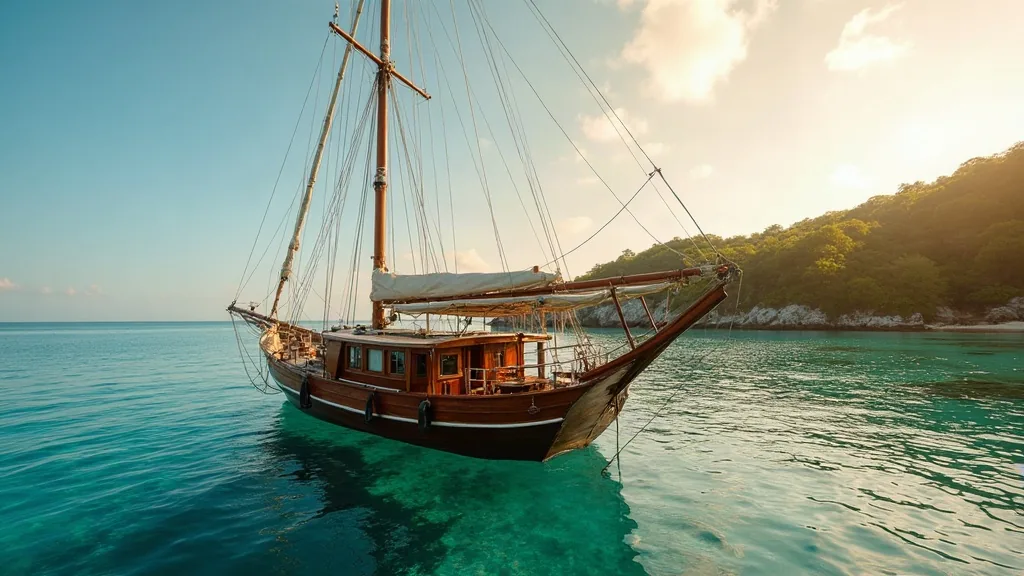
Charter vessel investments are often judged with models that are too optimistic on revenue and too light on costs. This article sets out a more honest framework for calculating liveaboard vessel ROI, highlighting the variables that most often determine the actual result and the costs most models leave out.
The revenue variables that matter
Charter vessel revenue is the product of three things, and an error in any one of them multiplies the error in the final result. The first is the day rate actually achieved, not the rate advertised. The two differ because of seasonal adjustments, agent arrangements and corrections for long trips.
The second is a realistic number of operating days. This is the variable most often overstated. Seasons, weather, maintenance periods and repositioning days all cut into the calendar. A model that assumes high utilization all year does not describe any real vessel.
The third is guest acquisition cost — agent commissions, marketing and distribution platforms. This item is often assumed to be small, and in practice it rarely is.
Costs missing from most models
| Item | Nature | Why it gets missed |
|---|---|---|
| Periodic dry docking | Recurring, large | Does not appear every month |
| Scheduled major replacements | Periodic | Happen only after several years |
| Off-season crew | Fixed | Assumed to apply only while operating |
| Certificates & compliance | Recurring | Treated as minor administration |
| Insurance | Fixed | Often underestimated |
| Depreciation | Non-cash | Not felt until the vessel is sold |
The first item is the easiest to plan for, and its budgeting framework is in our article on the annual dry docking budget. The last item is the one most often ignored entirely, even though it determines the final outcome of the investment at exit.
Buying new or secondhand
A new vessel gives you certainty of condition, a warranty and a specification matched to your operating plan, at the cost of a larger upfront outlay and a wait for construction. A secondhand vessel earns revenue sooner with a smaller upfront outlay, but it comes with a maintenance history you did not control.
What decides the outcome is not the choice but the verification. A secondhand vessel bought after a thorough condition survey is an informed decision; one bought without a survey is a bet whose cost shows up in the first year. The newbuild comparison is on our new vessel construction page.
Conversion as a third route
An often-overlooked route is to buy a vessel with a sound hull and convert it. For traditional wooden hulls, this route sometimes produces a vessel with a character a newbuild cannot replicate, at a lower total outlay. There is one condition: a weight and stability study must come before the accommodation design, because adding cabins and tanks fundamentally changes how the vessel behaves. The process is described on our refit and conversion page.
A simple model that is enough to decide
A vessel investment model does not need to be complicated to be useful. All it needs to do is separate four layers honestly.
Layer one, net revenue: the rate actually achieved multiplied by realistic operating days, minus guest acquisition cost.
Layer two, direct operating costs: fuel, crew, provisions, port charges and operating permits.
Layer three, ownership costs: insurance, periodic dry docking amortized per year, scheduled major replacements, certificate renewals and routine maintenance.
Layer four, cost of capital and residual value: interest if the vessel is financed, plus the estimated value of the vessel at the planned time of sale.
The most common mistake is stopping the model at layer two. A vessel that looks highly profitable at layers one and two often becomes ordinary after layer three, and a doubtful decision after layer four.
How vessel condition shapes investment returns
Two vessels with identical rates and utilization can deliver very different returns purely because of their condition. A vessel with a sound structure and documented systems produces predictable maintenance costs and little downtime. A vessel with an unclear maintenance history produces sudden expenses, and sudden expenses always arrive at the worst moment: when the vessel should be operating.
That is why the cost of a condition survey before buying should not be treated as a transaction cost but as part of the investment model itself. It is a small outlay that determines the accuracy of every calculation that follows, and the only way to know whether an attractive-looking price reflects value or simply reflects work that has not yet been done. Conversion as a way in is discussed on our refit and conversion page.
Testing revenue assumptions honestly
Revenue assumptions are the part of the model that is easiest to make optimistic and hardest to test. Three simple methods keep them realistic.
First, count operating days backward from the calendar: subtract periods of unfavorable weather, maintenance and docking periods, repositioning days and empty days between bookings. The number that remains is almost always far smaller than the original assumption.
Second, use the rate actually achieved, not the advertised rate, and include all guest acquisition costs, including commissions and marketing.
Third, test the model against the worst plausible year, not an average year. Vessel investments rarely fail because of an average year; they fail because one bad year coincides with one large expense that was never budgeted.
Three sanity checks for your model
Before you sign anything, test your model with three questions. First, what happens if operating days fall by a third from your assumption — does the vessel still cover its fixed costs? Second, what happens if one major unexpected repair comes up in year two? Third, what will the vessel be worth when you want to exit, and is that assumption reasonable for the vessel’s material and age?
A model that survives all three checks is usually worth pursuing. A model that only works on best-case assumptions is not an investment plan; it is a hope. For a technical assessment of a vessel you are considering, reach us through our contact page.
Frequently Asked Questions
What is the biggest mistake in a vessel ROI model?
Assuming high utilization all year. Seasons, weather and maintenance periods cut operating days significantly, and a model that ignores them produces figures that are never achieved.
Which costs are most often missing from the calculation?
Periodic dry docking, scheduled major replacements, certificate renewal costs and the vessel’s depreciation. All four are real but do not appear as monthly expenses, so they are easily missed.
Is buying a secondhand vessel more profitable?
It can be, if its condition is verified by a survey. Without a survey, a lower purchase price often just reflects work that has not been done yet and will show up as first-year spending.
Further reading
-
Southeast Sulawesi Tugboat and Barge Fleets in the Nickel Downstreaming Era
Most discussion of Indonesia’s vessel industry centers on tourism and passenger vessels. The Southeast Sulawesi tugboat and barge fleet tells a different story: its daily reality is working steel, with…
-
Southeast Sulawesi Shipyard Map: How to Read Locations, Capacity and Permit Status
There is no single Southeast Sulawesi shipyard map: shipyard activity is widespread but almost undocumented. This article is not a list of company names but a framework for reading the…
-
Kendari vs Batam vs Surabaya Shipyards (and Bira): An Honest Comparison
Comparing Kendari vs Batam vs Surabaya shipyards, plus Bira and its surroundings, shows that every Indonesian shipbuilding hub has real strengths and weaknesses that are rarely mentioned. This article compares…