
Annual Dry Docking Budget and Schedule: What Vessel Operators Must Plan For
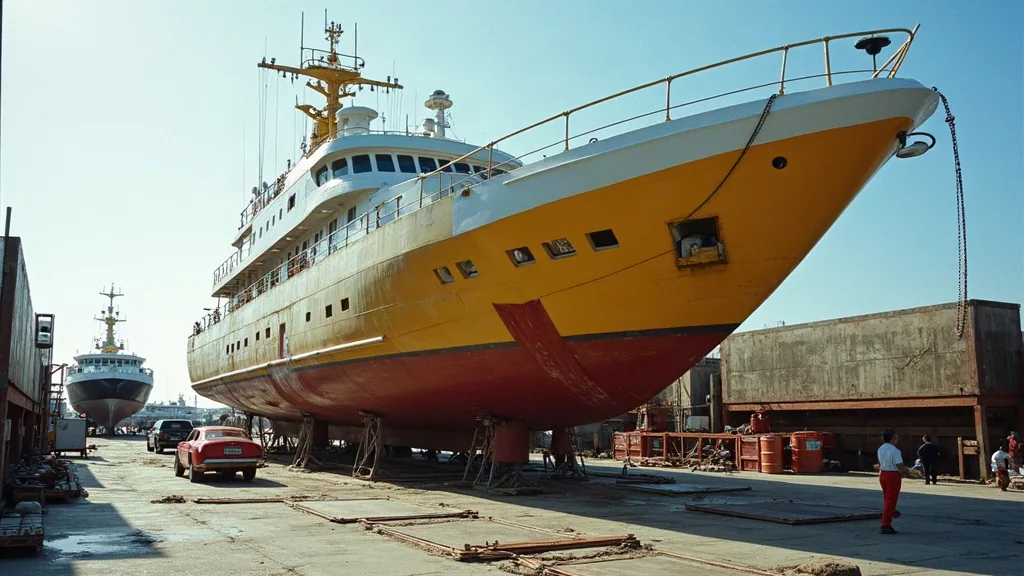
Dry docking is a predictable expense, yet most operators treat it as an annual surprise. This article sets out an annual dry docking budget framework that turns that spending into a planned cost, covering the line items most often missed and how to spread a fleet’s dock windows across the year.
Three layers of cost
A dry docking budget should be split into three layers, because each one behaves differently and mixing them is what causes surprises.
Layer one: fixed costs. Work that always happens: hauling out and refloating, setting the keel blocks, hull cleaning, surface preparation, painting, anode replacement and sea valve inspection. These items can be budgeted fairly accurately from year to year.
Layer two: condition-dependent costs. Plate or planking replacement, weld repairs, shaft and rudder work, system repairs. Their size depends on the vessel’s age and the quality of previous maintenance, and they can only be estimated when historical condition data exists.
Layer three: a findings reserve. Work that emerges after the hull has been cleaned and opened up. The less data you have on the vessel, the larger the reserve it is honest to include.
The line items most often forgotten
| Item | Why it gets missed | Consequence |
|---|---|---|
| Sacrificial anodes | Cheap, and the benefit is not visible | Hull & shaft corrosion accelerates |
| Sea chests & strainers | Hidden below the waterline | Engine overheats in operation |
| Lost operating time | Not on the shipyard invoice | Often exceeds the cost of the work |
| Inspections & certificates | Treated as an administrative matter | Unit held up even when physically ready |
| Transit to the shipyard | Treated as routine operations | Wipes out a distant yard’s price advantage |
The third and fifth items are the main reasons the cheapest shipyard is often not the cheapest choice, especially for workboat fleets, as discussed on our tugboat and barge page.
Why postponing always costs more
The temptation to postpone dry docking always arises while the vessel is earning, but three mechanisms make postponement almost always a loss. First, a hull fouled with barnacles and weed increases water resistance, and the extra fuel consumption runs every day without ever showing up as a docking cost. Second, corrosion spreads; a small area that could have been patched becomes a panel that has to be replaced. Third, damage that should have been found at inspection develops into a failure in operation, and a failure in operation is always more expensive than a scheduled repair.
Building a fleet calendar
For owners with more than one unit, scheduling is the biggest saving available without lowering the quality of the work. The principle is simple: spread dock windows across the year so that no two units are out of service at the same time; align certificate due dates with the docking schedule so underwater inspection and document renewal happen in a single haul-out; and place major work in the period of lowest transport demand.
This document alignment is explained on our BKI (Biro Klasifikasi Indonesia, the Indonesian Classification Bureau) class and Kemenhub (Indonesian Ministry of Transportation) certification page.
Preparing the vessel before haul-out
Most of the waste in dry docking happens before the vessel is lifted, in the form of preparation that was never done. These are the five preparations with the greatest effect on the final cost.
Send the work list early, so materials and labor can be arranged in advance instead of sought after the vessel is already ashore and the dock-hire clock is running. Order the spare parts you know you will need before the vessel hauls out. Empty the tanks and spaces that will be inspected, because cleaning them in dock is far more expensive than in the water. Prepare the vessel’s documents and survey schedule so inspections can be carried out in the same haul-out. And hand over the ultrasonic thickness gauging (UTG) report from the previous docking, so the inspection can focus on areas known to be thinning.
None of the five costs anything, and together they consistently shorten dock time.
When major work should be combined
A common question is whether major work should be done all at once or split over several cycles. The answer depends on one thing: whether the work requires the vessel to be out of the water.
Work that requires the vessel in dock — underwater plate replacement, shaft and rudder work, hull coating — should be combined in a single haul-out as far as possible, because the cost of repeated haul-outs and refloating far outweighs any savings from postponing.
Work that can be done while the vessel is afloat — most interior, electrical and machinery work above the waterline — should instead be taken out of the docking period so it does not extend the vessel’s time ashore.
Separating these two categories when drawing up the work list is one of the biggest savings available without cutting any scope. If inspection results show that major work is needed, the strategic options are discussed on our refit and conversion page.
Budgeting for a vessel with an unknown history
Owners who have just bought a secondhand vessel face a particular problem: there is no historical data to build a budget from. In this situation the safest approach is to treat the first docking as a baseline-mapping docking, not just a maintenance docking.
That means allocating time and money for a more thorough inspection than usual: a complete UTG pattern, opening up enclosed spaces, inspecting systems that cannot be assessed while the vessel is afloat, and comprehensive records to serve as a starting point. The findings reserve for the first docking should be much larger than for later dockings.
Once that baseline data exists, subsequent dockings become far more predictable, and the reserve can be lowered to a reasonable level.
The data that makes a budget accurate
A dry docking budget becomes accurate once the vessel has a history. The three most valuable sets of data to collect at every docking are a UTG map of the plating taken at the same points year after year, a record of the paint system including coating thickness, and a list of deferred findings with the reasons for deferring them. With all three, the next docking can be planned instead of discovered.
The full dry docking scope is on our dry docking and repair page, and if inspection results show that major work is needed, the options are discussed under refit and conversion. All our quotations are stated in USD.
Frequently Asked Questions
Which line items appear at every dry docking?
Hauling out and refloating, hull cleaning, surface preparation and painting, anode replacement, and sea valve inspection. These five are almost never absent and should be budgeted as fixed costs.
How large should the reserve for unexpected findings be?
Its size should reflect the vessel’s age and the quality of the condition data you hold. An older vessel with no gauging history needs a much larger reserve than a vessel whose condition is monitored every year.
Does postponing dry docking save money?
Almost never. Postponing increases fuel consumption because of a fouled hull, widens the corroded area, and turns small jobs into structural replacement that is far more expensive.
Further reading
-
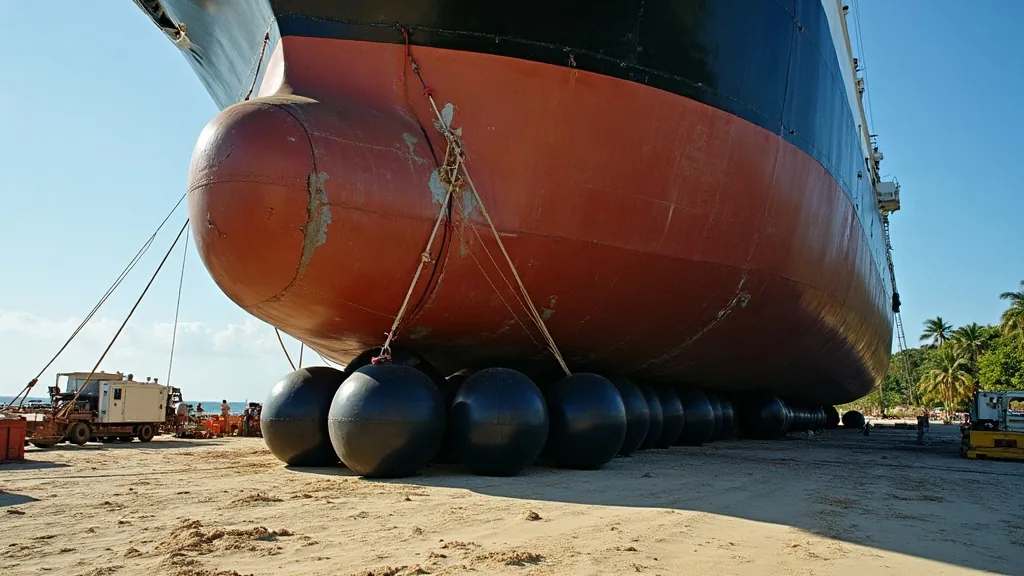
Airbag Launching vs Slipway vs Graving Dock: Which Suits Your Vessel?
Airbag launching vs slipway is really a three-way choice, because the graving dock is the third method widely used in Indonesia. How a vessel is brought out of the water…
-
Boat Building Cost in Indonesia vs Vietnam vs Turkey: A Buyer’s Reality Check
Judging boat building cost — Indonesia vs Vietnam vs Turkey — by headline price is the fastest way to reach the wrong conclusion. Total delivered cost is determined by factors…
-

Liveaboard Vessel ROI: An Honest Way to Calculate Charter Vessel Returns
Charter vessel investments are often judged with models that are too optimistic on revenue and too light on costs. This article sets out a more honest framework for calculating liveaboard…