
Southeast Sulawesi Maritime Industry
Southeast Sulawesi Shipyard Map: How to Read Locations, Capacity and Permit Status
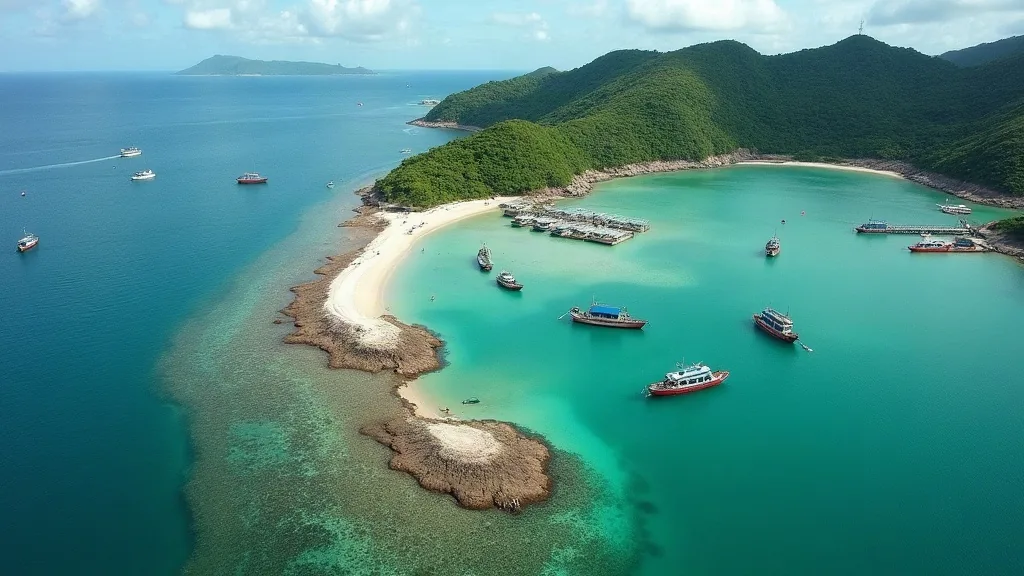
There is no single Southeast Sulawesi shipyard map: shipyard activity is widespread but almost undocumented. This article is not a list of company names but a framework for reading the industry yourself — where activity is concentrated, what types of facility exist, how to measure real capacity and how to verify permits officially.
Why there is no single list
Searching for a list of Southeast Sulawesi shipyards is almost always disappointing, and the reason is structural. Most shipyard activity in the region takes place at small to mid-size facilities scattered across many coastal sites, many of them serving local wooden vessels and fishing vessels. Facilities like these are rarely captured in national industry databases.
On top of that, the relevant information is split across several different institutions: business licensing sits with local government and the port authorities, vessel class status with the classification society, and industry statistics with the statistics agency. None of them brings it all together. Vessel owners looking for a facility therefore have to build the picture themselves.
Geographic spread of activity
Southeast Sulawesi province consists of a mainland peninsula plus a group of large islands. That structure produces a fairly consistent pattern of distribution.
| Zone | Character | Dominant type of work |
|---|---|---|
| Kendari & Kendari Bay | Provincial hub, sheltered waters | Dry docking, repair, mixed wood & steel work |
| Konawe & the industrial coast | Close to mineral processing activity | Tug & barge fleet maintenance |
| Kolaka & the west coast | Facing the Gulf of Bone | Cargo vessels & ferries |
| Muna, Buton, Bau-Bau | Strong seafaring tradition | Wooden vessels, fishing vessels, inter-island transport |
| Wakatobi | Tourism & conservation waters | Tourism vessels, liveaboards, small craft |
This pattern explains why wood and steel skills coexist in the same province — something uncommon, and what makes mixed-hull work possible in this region.
Four numbers that actually measure capacity
When a facility calls itself large, the claim means little until it is related to a specific vessel. These four parameters are what actually determine whether your vessel can be served.
- Maximum length and beam that can be lifted, set by the slipway cradle, the size of the dock basin or the airbag configuration.
- Maximum weight that is safe for that lifting method.
- Water depth in front of the facility, which sets the maximum draft of a vessel on approach.
- Working yard area, because a vessel that is hauled out occupies space for weeks, and a cramped yard means queues.
The lifting methods themselves are compared in the article airbag launching vs slipway vs graving dock.
How to verify permits and legal status
Verification only means something when it is done with the issuer. For port and operational matters, the reference is the local harbor master’s office and port authority, including KSOP (Port Authority and Harbor Master Office) in Kendari, under the Directorate General of Sea Transportation. For business licensing, the reference is the regional licensing agency. For your own vessel’s class status, the reference is the classification society that issued the certificate.
Copies of documents shown by any party should be treated as a starting point, not as final proof. The full path for vessel documents, including BKI (Biro Klasifikasi Indonesia, the Indonesian Classification Bureau) class and Kemenhub (Indonesian Ministry of Transportation) certificates, is set out on the BKI class and Kemenhub certification page.
Assessing a facility without an official list
Because no complete directory exists, practical assessment relies on direct observation. Five things are most informative when visiting a facility: whether the vessels being worked on are similar to yours; the condition of the keel blocks and supports in use; whether there are measurement records and written reports; how much work on site appears to have stopped; and how they answer difficult questions. The last point is often the most decisive, and is covered in the article on nine signs a shipyard is heading for trouble.
Three tiers of facility and what to expect
Shipyard facilities in this region can be grouped into three tiers, and recognizing the tier helps the owner set the right expectations.
Traditional beach boatyards. They work mainly on wooden hulls and rely on skills handed down through generations, with simple equipment and limited documentation. Very effective for wooden work; they require the owner to add a layer of supervision and record-keeping if the vessel needs to be certified.
Mid-size shipyards with a slipway or airbags. They serve mid-size steel and wooden workboats and can carry out plate replacement, basic machinery work and coating. This is the most relevant tier for most fleets in the region.
Integrated industrial facilities. They can handle large vessels to written standards with tiered inspections, at the cost of higher prices and longer queues. Their availability in this province is limited, so very large vessels often have to leave the region.
Building your own map
Because there is no official directory, owners who operate regularly in the region should keep their own records and update them over time. The most useful contents: the location and how to reach it from the vessel’s operating routes; the lifting method and the size limits actually served; the types of work previously done well; the typical waiting time for a slot; willingness to write a scope of work and accept a supervisor; and contacts who actually respond.
Records like these become a real operational asset. When a unit breaks down unexpectedly, an owner who has them can decide within hours, while one who does not spends the first days just finding out where to take the vessel. The link to fleet scheduling is covered in the Southeast Sulawesi tugboat and barge ecosystem.
The gap no one has filled
After mapping this region, one need stands out that almost no one serves specifically: completing vessels whose construction has stopped. Half-finished hulls are not a rare sight along the Sulawesi coast, yet no facility positions itself to complete them methodically. That is our main focus on the stalled vessel completion page, with the full industry background in the Southeast Sulawesi shipyard industry guide.
Frequently Asked Questions
Where can I verify a shipyard’s permit status?
Through the authorities that issue the permits, namely the local harbor master’s office and port authority and the regional licensing agency. Verifying directly with the issuer is the only method you can rely on.
Which measures of shipyard capacity actually matter?
The maximum length and beam of vessel that can be lifted, the maximum weight for the lifting method, the water depth in front of the facility, and the yard area available to hold the hull while the work is underway.
Why is there no complete directory of Southeast Sulawesi shipyards?
Because most facilities are small and scattered across many coastal sites, so they are not captured in a single public database. What is available is usually split between licensing data, classification data and statistical data.
Further reading
-
Liveaboard Vessel ROI: An Honest Way to Calculate Charter Vessel Returns
Charter vessel investments are often judged with models that are too optimistic on revenue and too light on costs. This article sets out a more honest framework for calculating liveaboard…
-
Southeast Sulawesi Tugboat and Barge Fleets in the Nickel Downstreaming Era
Most discussion of Indonesia’s vessel industry centers on tourism and passenger vessels. The Southeast Sulawesi tugboat and barge fleet tells a different story: its daily reality is working steel, with…
-
Kendari vs Batam vs Surabaya Shipyards (and Bira): An Honest Comparison
Comparing Kendari vs Batam vs Surabaya shipyards, plus Bira and its surroundings, shows that every Indonesian shipbuilding hub has real strengths and weaknesses that are rarely mentioned. This article compares…