
Eastern Indonesia Fleet Support
Southeast Sulawesi Maritime Economy: Nickel, Fish and Docks
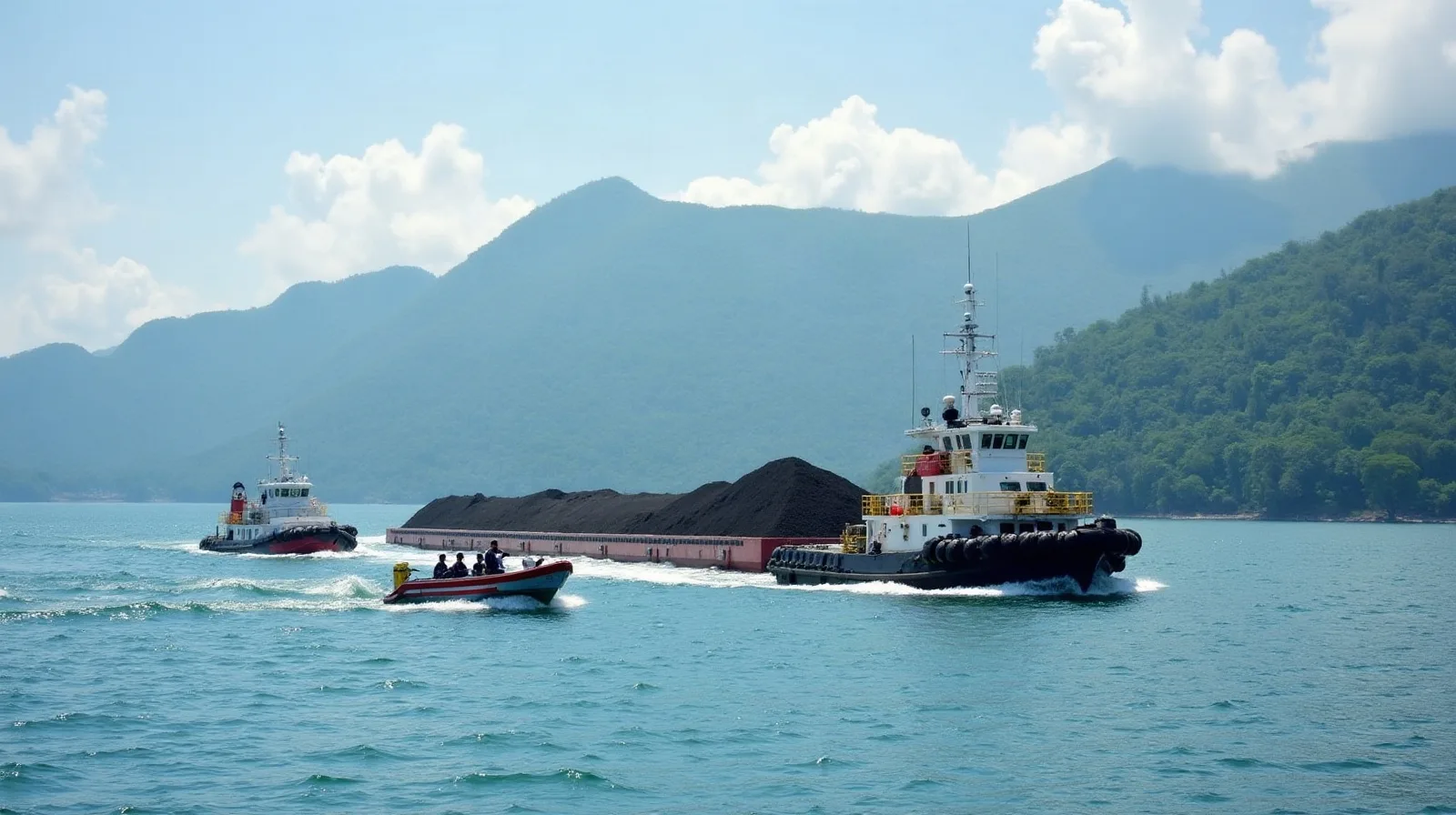
The Southeast Sulawesi maritime economy runs on two big engines: the nickel industry, which drives thousands of barge and workboat voyages, and fisheries, with a fleet base at the Kendari Ocean Fishing Port (Pelabuhan Perikanan Samudera, PPS Kendari). Both create one derived need that is growing faster than the facilities serving it: vessel dry docking and repair.
Understanding this economic map matters not only to observers — but to every vessel owner who wants to know where demand, queues and opportunities are heading. Kendari Shipyard Desk compiled this overview from our day-to-day position: coordinating vessel work at facilities in Kendari and across Southeast Sulawesi for the fleets those two economic engines have produced.
The first engine: nickel and its working fleet
Southeast Sulawesi is one of Indonesia’s main nickel regions. Its centers of gravity are spread out: the industrial estate and smelters in Konawe (Morosi), the long-established mining and processing operations at Kolaka–Pomalaa, and mining areas in North Konawe and the surrounding islands. The national nickel downstreaming policy is driving smelter construction inside the country — and every link in that chain runs on water: barges carry ore from mine jetties to smelters, tugboats tow them, workboats serve the jetties and small passenger vessels carry workers.
The technical consequences are significant: the population of tugboats and barges operating intensively in Southeast Sulawesi waters keeps growing, with heavy duty cycles — rough berthing at mine jetties, shallow waters, demanding schedules. A fleet like this consumes repair services faster than an ordinary commercial fleet: dented plates, eroded propellers, engines with high running hours. Most of its needs are afloat work — welding, engines, marine electrical — exactly the kind of work that can be served from the Kendari base.
The second engine: fisheries and PPS Kendari
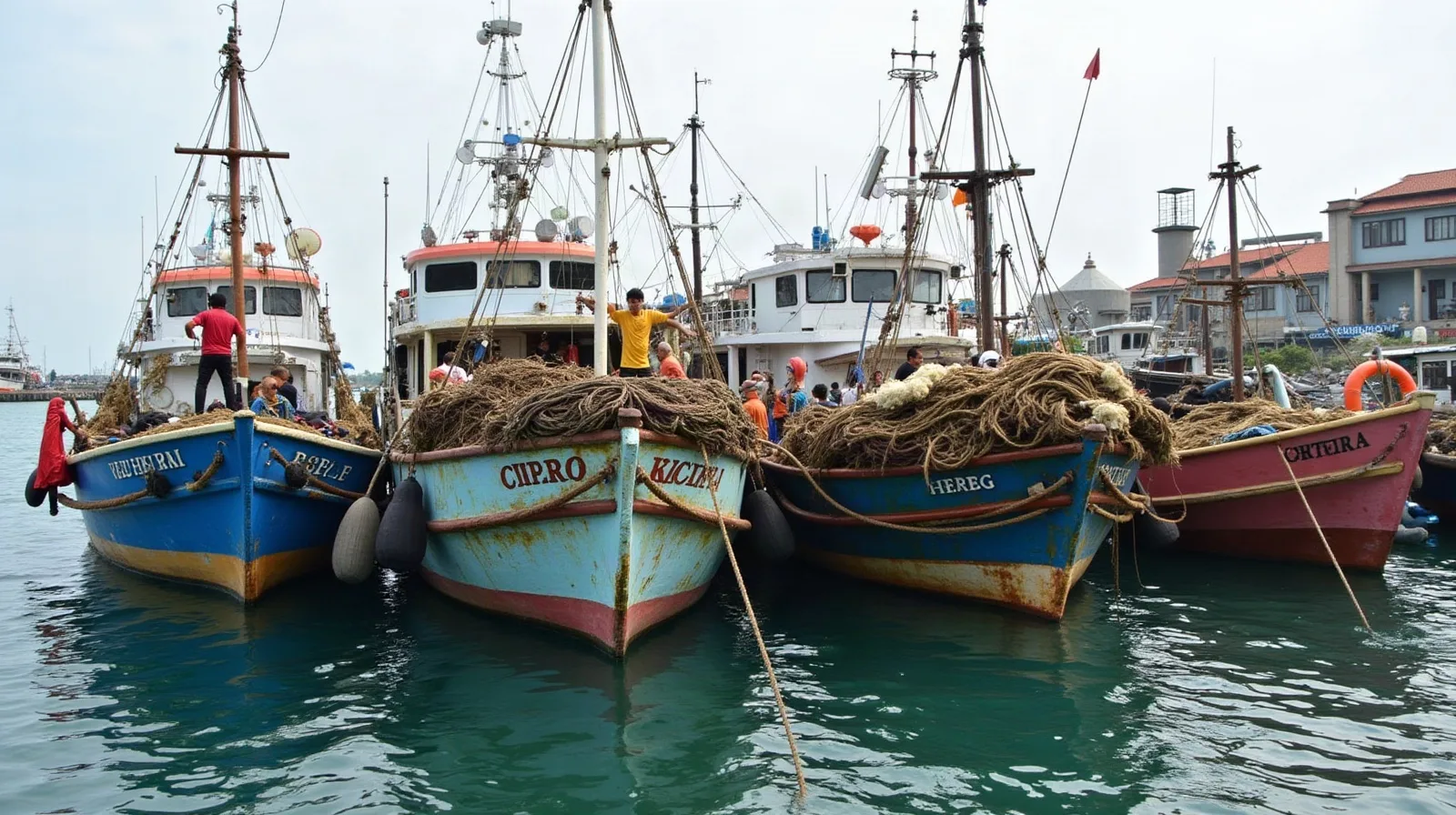
PPS Kendari is an ocean-class fishing port — the highest class in Indonesia’s fishing port classification — and is home to purse seine, pole-and-line and fish carrier fleets serving the Banda Sea and surrounding waters. Around it, downstream industries have grown: cold storage, processing plants, suppliers of fishing-trip logistics.
From a shipyard’s point of view, the fishing fleet is the most rhythmic customer: haul-outs scheduled around the seasons, with work dominated by wooden hulls, caulking, antifouling and engines. We break down its seasonal patterns in our article seasonal damage patterns in the Southeast Sulawesi purse seine fleet.
A third engine catching up: marine tourism
Wakatobi — a national park and one of Indonesia’s leading dive destinations — adds another layer of fleet: dive boats, passenger speedboats and tourism vessels. Their numbers are smaller than those of the two main engines, but the value per vessel is high and the standards are demanding: tourism vessel owners need tidy work, firm schedules and documentation — a demand profile that is pushing up the quality of repair services across the region.
A clearly visible gap: demand vs dock facilities
| Fleet segment | Main needs | Local availability |
|---|---|---|
| Wooden/fiberglass fishing vessels | Slipway, woodwork, paint | Fairly good — city slipways & Moramo–Lapuko |
| Tugboats & mining workboats | Afloat: welding, engines, electrical; periodic haul-out | Afloat work covered; haul-out limited by capacity |
| Barges | Replating, large dock | Limited — many referred outside Southeast Sulawesi |
| Tourism vessels | Tidy, scheduled work | Growing, needs quality supervision |
The gap in the barge and large steel vessel rows is why some of this region’s work still sails to large docks on the eastern routes — the referral map is in our article the nearest dry docks from the Banda Sea. The rest — and this is a far larger share than people expect — can be completed in and around Kendari when the facility is chosen correctly: the full map is in the Kendari shipyard & docking guide.
What it means for vessel owners
Three practical points. First, queues will follow the seasons of the two big engines — dock slots tighten when the fishing fleet comes in after the season and mining projects chase their targets; lock in slots early. Second, afloat work is Kendari’s real strength — workboats do not always have to leave the region for engine, welding and electrical work. Third, a growing fleet calls for contracts, not one-off transactions — owners of more than two vessels in this region are almost always better off locking in a full year of schedules and supervision; the scheme is on the fleet maintenance contracts page, and the vessel types we handle are summarized on the vessel types we service page.
Southeast Sulawesi is becoming one of the busiest working waters in eastern Indonesia. The vessels have already arrived; the only question left is who maintains them to the right standard — and that is where our desk stands, with USD quotations per item and supervision that can be audited.
The direction of the next few years: the signals we read
Several signals suggest that demand for maritime services in Southeast Sulawesi will keep growing. Nickel downstreaming keeps adding processing capacity inside the country, which means increasingly dense traffic of ore barges and support vessels in the waters of Konawe and its surroundings. On the fisheries side, the position of PPS Kendari as an ocean fleet base keeps up a steady flow of vessels that need scheduled maintenance. Meanwhile connectivity — the expanding Bungkutoko port and flights into Haluoleo — lowers the barriers to bringing in technicians, parts and materials from outside. For vessel owners, this direction means two practical things: competition for facility slots will intensify (locking in schedules matters more and more), and the quality standard of services will rise because commercial fleet customers demand it.
Our desk’s position in this ecosystem
Kendari Shipyard Desk sits at the meeting point of this ecosystem as a coordination and quality layer: we do not own a shipyard, and precisely because of that we can choose facilities purely on technical fit and actual readiness — city slipways for small vessels, Moramo–Lapuko for woodwork, wharves for afloat work, and referral to a large dock for anything beyond the region’s capacity. This neutral model works because the incentives are straight: we are paid for verified results, not for filling a particular facility’s slots. In a maritime economy growing as fast as Southeast Sulawesi’s, vessel owners need exactly that — one party that stands on the vessel’s side, holds the data, and safeguards quality from quotation to handover.
FAQ
What are the main drivers of vessel traffic in Southeast Sulawesi?
Two big engines: the nickel industry, with tugboat-and-barge fleets serving mine jetties and smelters in Konawe, Kolaka and the surrounding area, and fisheries, with a fleet base at PPS Kendari. Wakatobi’s marine tourism adds a layer of tourism vessels.
What kind of repair work does the mining fleet need most?
Mostly afloat work: welding, engines with high running hours and marine electrical, plus periodic haul-outs for tugboats. Large barges and extensive replating are generally still referred to large docks outside Southeast Sulawesi.
Are Southeast Sulawesi’s dock facilities sufficient for current demand?
For wooden and small-to-medium vessels, they are fairly good. The biggest gap is in medium-to-large steel vessels and barges, whose needs exceed local haul-out capacity; in this segment, planning and referral become important.
Prepared by Kendari Shipyard Desk — a specialist maritime brand under Juara Holding Group. Service contracts through PT Komodo Galangan Nusantara. Slot and estimate consultations: WhatsApp 6281139414563 or bd@juaraholding.com.
Further reading
-
Nearest Dry Dock from the Banda Sea: Eastern Route Map
The nearest dry dock from the Banda Sea, Wakatobi or the Buton coast depends on vessel size: small-to-medium wooden and fiberglass vessels have the closest options in Southeast Sulawesi (Kendari…
-
Purse Seine Fleet Maintenance: Seasonal Damage Patterns
Purse seine fleet maintenance in Southeast Sulawesi can follow a near-calendar damage pattern: engine and winch failures peak mid-season when vessels work flat out, hull damage and leaks surface at…
-
Kendari Bay Entry and Berthing: Draft & Port Guide
Kendari Bay is among Southeast Sulawesi’s most sheltered waters: a long bay whose narrow mouth damps open-sea swell, safe for berthing and anchoring almost year-round. For Kendari Bay entry and…