
What Is the Cost to Complete a Stalled Vessel? An Honest Estimating Framework
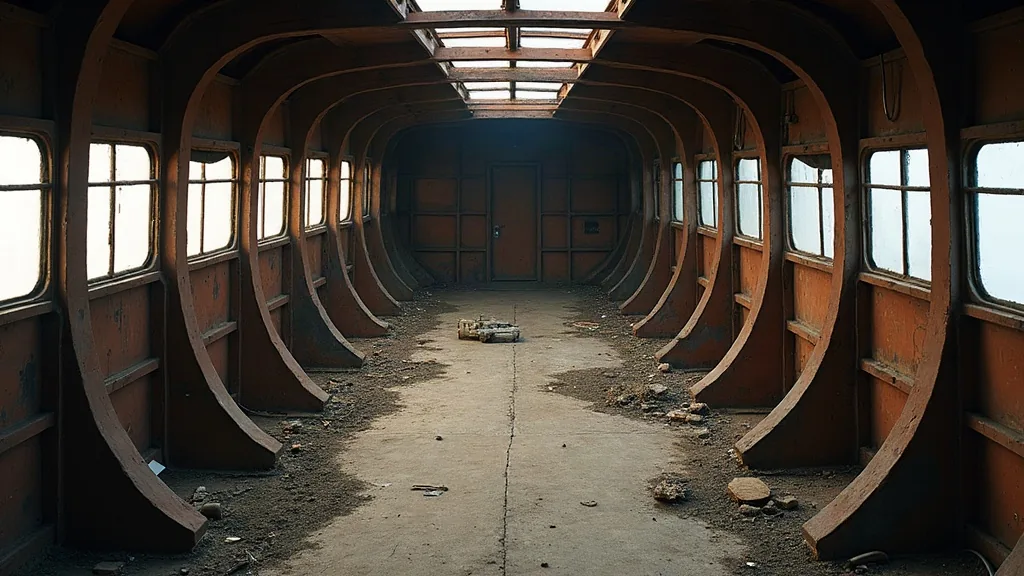
There is no standard rate for the cost to complete a stalled vessel, and anyone who quotes one before a survey is guessing. What can be standardized is the framework: the cost lines that must appear, and how to build them up so that the final figure can be trusted.
Why completion differs from a newbuild
In new vessel construction, costs move forward in one direction: materials are bought and installed, and the vessel takes shape. In stalled vessel completion, part of the budget is spent moving backward — removing work that does not meet the standard, opening up enclosed structure for inspection and correcting what was installed wrongly.
That is why estimates based on percentage complete are always misleading. A vessel that physically looks “70 percent complete” may well cost more to finish than the remaining 30 percent suggests, because part of that 70 percent has to be torn out first.
Six lines that must appear in every estimate
| Line | Contents | Note |
|---|---|---|
| 1. Assessment | Survey, measurements, reconstruction of drawings | Always done first, paid separately |
| 2. Removal & opening up | Opening enclosed structure, removing defective work | Most often underestimated |
| 3. Recovery of existing work | Weld repairs, plate/plank replacement, realignment | Largest variation between vessels |
| 4. Remaining construction | Structure that has genuinely not been built yet | Easiest to estimate |
| 5. Systems & outfitting | Engines, electrical, piping, interior | Largest number of items |
| 6. Documents & certification | Drawings, inspections, re-measurement | Runs in parallel, with its own queue |
Beyond those six lines, one more is mandatory: a risk contingency. Its size is not a courtesy figure but a reflection of how much of the structure could not yet be inspected when the estimate was prepared.
What drives the figure up or down
Three variables move the final figure the most. First, how long the hull has been abandoned and whether it was protected from rain — for timber, this is the decisive variable. Second, whether the earlier work was done with drawings and supervision; work without both must be treated as unverified until proven otherwise. Third, the availability of drawings and documents; without them, an as-built reconstruction is required, adding time and cost before any physical work begins. The documentation side, covering BKI (Biro Klasifikasi Indonesia, the Indonesian Classification Bureau) class and Kemenhub (Indonesian Ministry of Transportation) certificates, is explained on our BKI class and Kemenhub certification page.
The stop threshold
Every honest estimate must include benchmarks: what it would cost to build an equivalent vessel from scratch, and what similar vessels sell for on the second-hand market. When the completion cost approaches either of the two, continuing means paying a new-vessel price for a vessel with a questionable history.
We state this threshold up front, not after the owner has already signed. The newbuild benchmark is on our new vessel construction page.
Two vessels, same size, very different costs
To show why a standard rate cannot exist, compare two situations we often encounter. Both are hulls of similar size, and both stopped at roughly the same stage.
The first vessel stopped because its owner ran out of funds, but all the work was done to approved drawings, witnessed by a surveyor, and the hull was stored under a roof. In this case the completion cost is close to the value of the work that genuinely has not been done yet, because almost nothing needs to be removed or re-verified.
The second vessel stopped because the yard stopped working; it was built without approved drawings and without witnessing, and it stood exposed through several rainy seasons. Here the completion cost can multiply — not because more work remains, but because most of the existing work has to be opened up, inspected and partly redone.
This difference cannot be seen in photographs or in a percentage-complete figure. It only emerges after inspection, and that is why our work sequence puts the survey first.
Building a budget that survives surprises
A realistic completion budget has three features. It separates assessment costs from execution costs, so the owner can stop once the condition is known without already being committed. It states the contingency openly as a separate line rather than hiding it inside the price. And it includes a line for documents and certification, because this kind of work almost always needs additional verification, as discussed in our article certifying an unfinished hull.
A budget without all three is usually not a budget but an opening negotiating number. The contract structure that goes with it is set out on our costs, payment milestones and escrow page.
Why the first figure should be a range
An honest estimate for a stalled vessel is rarely a single figure, and owners who demand one figure too early usually receive a number that will not hold. A more useful form is a range with two ends whose causes are explained: the low end if inspection finds the existing structure in the expected condition, and the high end if opening up the structure reveals work that must be redone.
A range explained in this way gives the owner two things at once: a sense of the scale of the decision at hand, and an understanding of what will determine the final position within that range. A single figure that sounds convincing actually conveys less information, because it hides the uncertainty that still exists.
How to read a quotation from any shipyard
When you receive a completion quotation, check four things. Was it preceded by a survey, or is it based only on photos? Do the lines for removal and recovery of existing work appear explicitly, or are they hidden in a single lump-sum figure? Are the payment milestones tied to physical progress? And is there a written variation order (VO) mechanism for findings that emerge after the structure is opened up?
A quotation without all four is usually not a cheaper quotation, just an incomplete one. The difference will surface later as additional invoices. The contract structure that closes this gap is covered in costs, payment milestones and escrow, and the full process in stalled vessel completion. All our contract values are stated in USD.
Frequently Asked Questions
Why is there no standard rate for completing a stalled vessel?
Because what you are buying is not new work but the recovery of existing work, and the condition of that existing work differs on every vessel. Two hulls of the same size can differ enormously in what they cost to complete.
Which cost line is most often underestimated?
Removing and inspecting the existing work. This line produces no visible progress, so owners tend to treat it as minor, yet this is exactly where much of the budget is absorbed before any new work begins.
How large should a reasonable risk contingency be?
The contingency should reflect how much of the structure is still enclosed and cannot yet be inspected. The more that remains out of sight when the estimate is prepared, the larger the contingency that can honestly be included.
Further reading
-
Buying a Half-Finished Phinisi Hull: A Due Diligence Checklist
A half-finished phinisi hull can be an excellent purchase or an expensive trap, and the difference is almost never visible in photographs. This checklist covers what to verify before money…
-
What To Do When Your Indonesian Boat Builder Goes Bankrupt
When an Indonesian boat builder goes bankrupt or a yard simply stops work, the foreign owner faces two separate problems at once: protecting a physical asset thousands of kilometers away,…
-
Is an Abandoned Wooden Hull Still Worth Completing After 3 Years?
An abandoned wooden hull that has sat unfinished for years does not automatically have to be scrapped, nor is it automatically worth completing. The assessment depends on three structural elements…