
Fiberglass Hull Osmosis in the Tropics: Blisters and Gelcoat
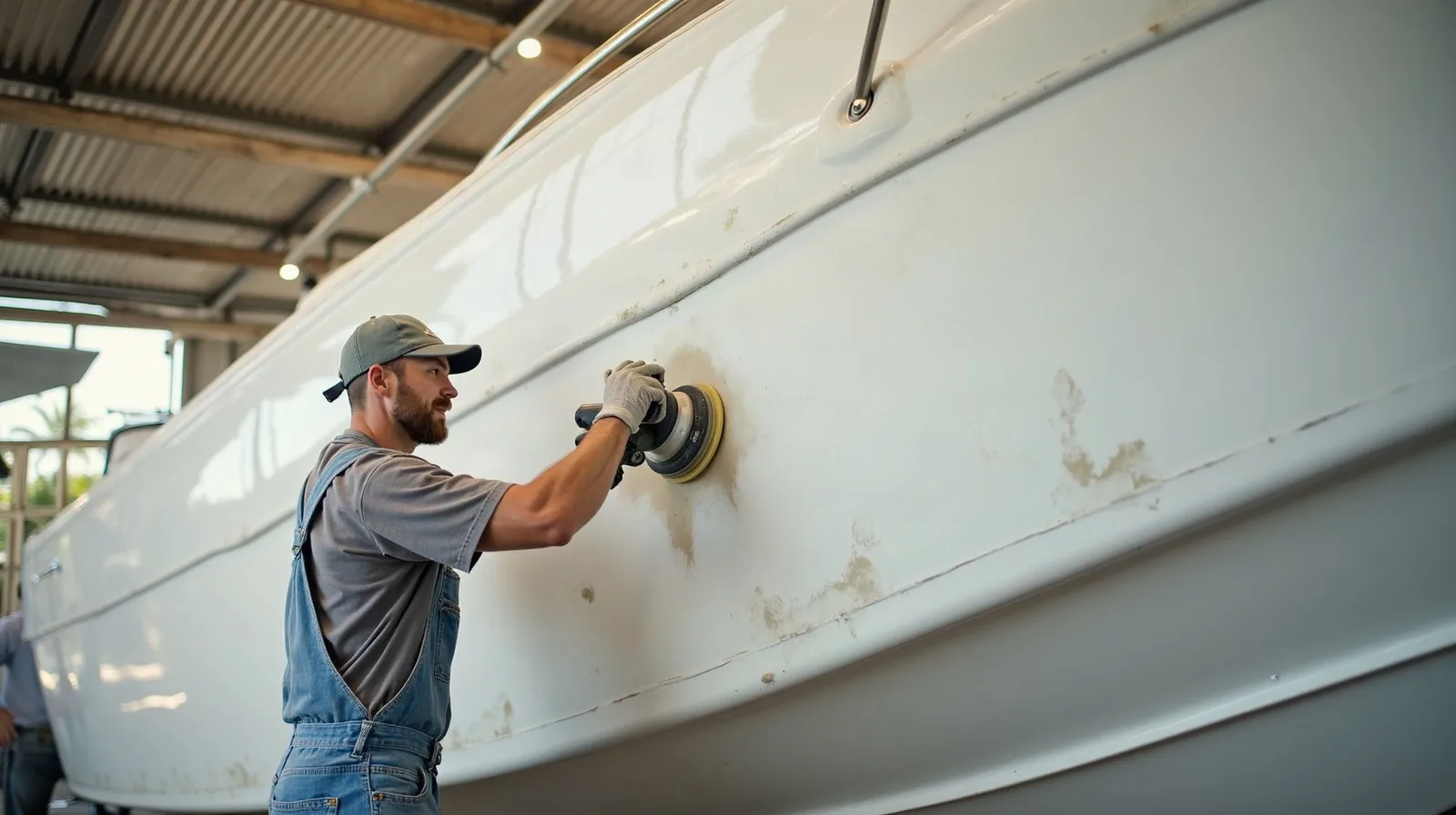
Fiberglass hull osmosis — water slowly soaking into the laminate and raising blisters — is one of three tropical enemies of a fiberglass boat, together with sun-degraded gelcoat and careless impact repairs. The basic rules: inspect underwater at every haul-out, treat blisters while small, keep the gelcoat covered (paint or polish) and never patch structural damage with filler alone.
A fiberglass hull is not eaten by shipworm and does not rust, and with those rules fiberglass speedboats and dive boats in warm waters can have a very long service life. Kendari Shipyard Desk prepared this guide for operators of fiberglass speedboats, dive boats and tourism vessels working in Southeast Sulawesi, Wakatobi and the eastern routes — a vessel class that is increasingly dominant and is often maintained with wooden-vessel know-how, even though the material demands different treatment.
Osmosis and blisters: what actually happens
Gelcoat is not a perfectly watertight layer. Over a period of years, water molecules penetrate it and react with residual compounds inside the laminate, forming an acidic fluid that pushes outward from within — it shows up as blisters below the waterline. Warm tropical water speeds the process up. Small, isolated blisters are a cosmetic problem that is cheap to fix; blisters that spread widely and are left for years can develop into delamination — the fiber layers lose their bond and the hull weakens structurally.
Detection during haul-out
Look immediately after the hull is washed — blisters are most visible while the hull is still wet and starting to dry: look for small bumps below the waterline, pierce any suspicious ones (the fluid has a characteristic acidic smell) and tap the surrounding area; a hollow sound indicates delamination. Photograph the spread from one docking to the next so the rate of progression can be read.
Tiered treatment
Single blisters: opened, dried, filled with epoxy filler and sealed. Widespread blisters: the gelcoat in that area is peeled, the laminate is dried out completely — this is the part that must not be rushed — and then coated with an epoxy barrier coat before antifouling. Structural delamination: relamination with the right fiber and resin, work that must be closely supervised because its quality cannot be seen from the outside once it is finished.
Gelcoat above the waterline: the sun is the main enemy
Tropical UV light turns gelcoat dull and chalky and eventually causes fine cracking (crazing). Beyond appearance — which matters for tourism vessels — fine cracks are an entry path for water. Maintenance is tiered: regular polishing and waxing; compounding once the surface has chalked; and once the gelcoat is exhausted, repainting the topsides with a polyurethane paint system gives better protection than old gelcoat that is polished over and over.
Impact repairs: tell cosmetic from structural
A speedboat that comes alongside jetties and beaches every day will collect damage. The distinction to make: gelcoat scratches (cosmetic — gelcoat filler is enough) versus cracks that run through the laminate or areas that flex when pressed (structural — they must be ground back to sound laminate and relaminated in stages). The sign of a bad old repair: thick filler that cracks again in the same place every season. Filler is not structure; it is only cosmetic over structure.
A realistic maintenance schedule for tropical operations
| Item | Interval | Notes |
|---|---|---|
| Haul-out + underwater inspection | 12 months | Together with antifouling |
| Antifouling | 12 months | Fouling grows fast in warm water |
| Topside polish + UV protection | 6–12 months | More often for commercial vessels |
| Check anodes & underwater metal | Every docking | Fiberglass is not immune to galvanic corrosion |
| Structural audit (transom, stringers, engine mounts) | 2–3 years | Especially for boats with large outboard engines |
The note in the fourth row matters: metal fittings, shafts and trim tabs on a fiberglass boat still interact electrochemically — the explanation is in our article galvanic corrosion on vessels: early detection & anodes.
Transom and stringers: the weak point of outboard boats
On speedboats with large outboard engines, the heaviest loads fall on the transom and stringers — and many of them are built with a wooden core that can rot if water enters through unsealed bolt holes. The symptoms: the transom feels like it moves when the engine is trimmed, cracks at the transom corners, or brown seepage stains from bolt holes. Transom core damage that is dealt with too late is one of the most expensive fiberglass repairs — resealing every bolt penetration is the cheapest prevention on this entire list.
We coordinate and supervise all of the work above — from blister repair to structural relamination — at facilities in and around Kendari; the technical scope is on our hull repair & painting page, and the vessel types we handle are summarized on the vessel types we service page. Estimates are always in USD per item, based on condition photos — send us photos of your hull and we will help you sort what is cosmetic from what must not be postponed.
Tools and materials: what is really needed
A durable fiberglass repair calls for the right material, not whatever is available. Polyester resin is adequate for cosmetic lamination; for structural repairs and an anti-osmosis barrier coat, epoxy gives far better adhesion and watertightness. The fiber must suit its function: mat for filling, woven roving for strength, and a combination of both for staged structural lamination. And one rule is non-negotiable in a humid climate: laminate only onto a completely dry surface — moisture trapped under new laminate is a future blister you pay for twice. A facility that does fiberglass work properly will have a work area sheltered from rain and direct sun; if the work is done in the open without cover, schedule the critical stages during dry hours and protect the surface.
The maintenance mistakes we most often redo
Four patterns recur on the vessels that come to us. First, blisters filled without being dried — they bubble up again within one season because the acidic fluid is still trapped inside. Second, antifouling applied straight over old, chalky gelcoat without primer — it peels off sheet by sheet. Third, impact damage patched only from the outside while the inner laminate is cracked — the strength never returns and the crack spreads. Fourth, bolt holes for new equipment drilled without being sealed with epoxy — a water path into the laminate core or the transom. All of these mistakes share one root: treating fiberglass as a surface that just needs tidying, when it is a layered structure in which every layer must be sound. With supervision that understands this, fiberglass repairs at Kendari facilities can reach a quality that lasts for years — and costs less than redoing the same work every season.
FAQ
What are the signs of osmosis on a fiberglass hull?
Small bubbles (blisters) below the waterline, most visible right after the hull is washed; when pierced they release a fluid with an acidic smell. Areas that sound hollow when tapped indicate more serious delamination.
Should small blisters be repaired right away?
Single blisters only need to be opened, dried, filled with epoxy and sealed during the same docking. The danger is letting them spread for years until they become structural delamination that requires peeling the gelcoat and relaminating.
Why does an outboard speedboat’s transom fail so quickly?
Many transoms have a wooden core; water enters through unsealed bolt holes and rots the core from the inside. Resealing every bolt penetration is the cheapest prevention against the most expensive fiberglass repair.
Prepared by Kendari Shipyard Desk — a specialist maritime brand under Juara Holding Group. Service contracts through PT Komodo Galangan Nusantara. Slot and estimate consultations: WhatsApp 6281139414563 or bd@juaraholding.com.
Further reading
-
Galvanic Corrosion on Vessels: Early Detection and Anodes
Galvanic corrosion on vessels occurs when two dissimilar metals are electrically connected in seawater: the more active metal corrodes to protect the more noble one. Steel hull plate, shafts and…
-
Top Overhaul vs Major Overhaul: Decide by Running Hours
The top overhaul vs major overhaul decision is safest made from engine running hours, not gut feeling. Rule of thumb for mid-size marine diesels: top overhaul (cylinder heads, valves, injectors)…
-
Realistic Antifouling Interval for the Banda Sea
In the warm waters of eastern Indonesia, including the Banda Sea and around Wakatobi, antifouling works harder than almost anywhere else: year-round warmth makes barnacles, algae and shipworm grow fast,…