
Eastern Indonesia Fleet Support
Building a Fleet Docking Calendar for Wakatobi and Banda
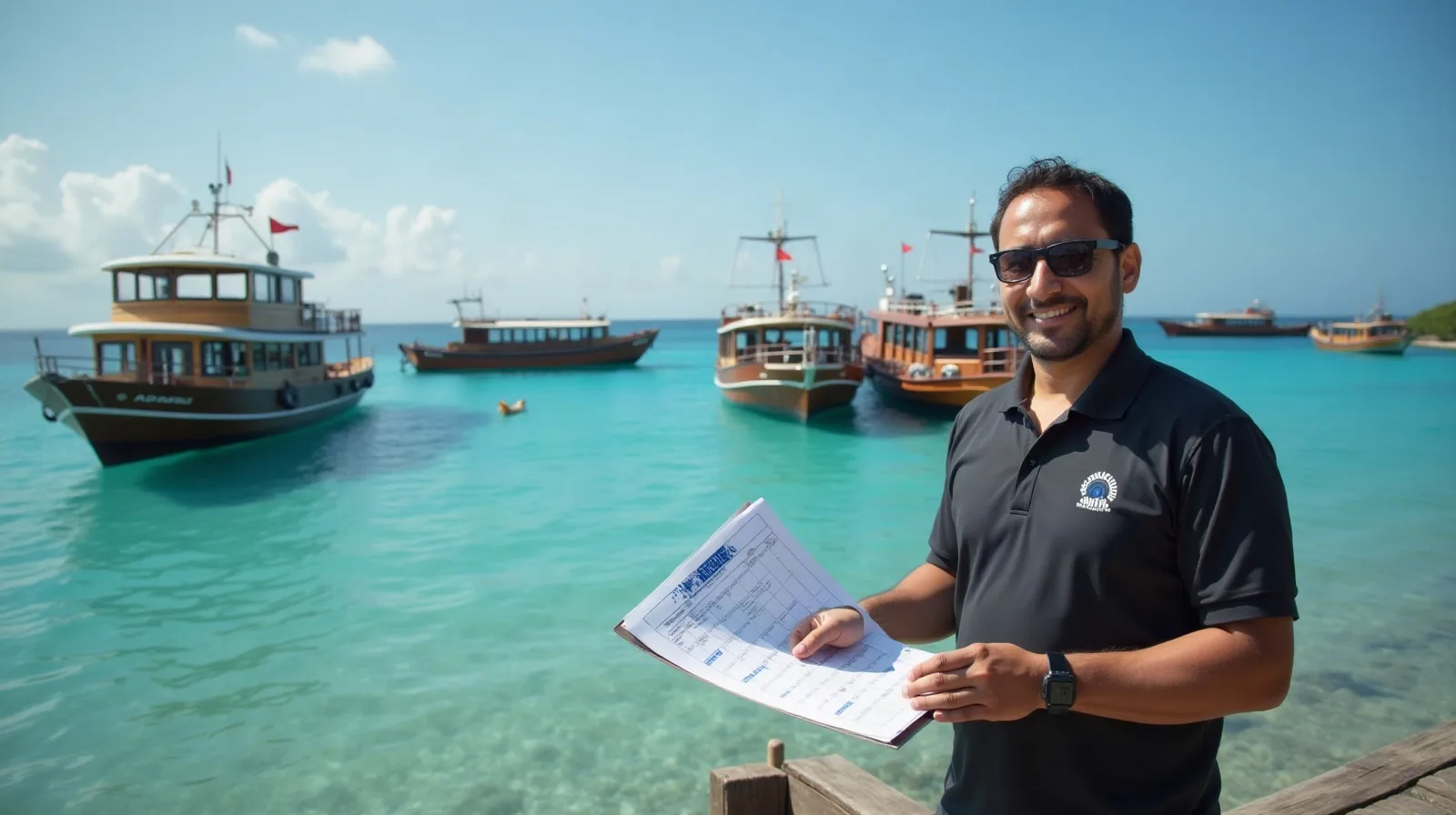
A good fleet docking calendar for Wakatobi and Banda Sea operators is built from two interlocking schedules: the revenue calendar (dive season, fishing season, charter contracts) and the technical calendar (certificate due dates, engine running hours, hull condition). The rule: a vessel docks in the month its time at sea earns least — not when damage forces it.
Kendari Shipyard Desk compiled this guide from the working patterns of the eastern-route fleets we coordinate: Wakatobi dive boats and charter vessels, fishing vessels based at Kendari Ocean Fishing Port (PPS Kendari), and workboats supporting coastal operations in Southeast Sulawesi.
Start with the Banda Sea weather window
The Banda Sea and the waters around Wakatobi have a clear seasonal rhythm. At the peak of the east monsoon — generally around June to September — the southeast wind strengthens and offshore seas build, making long crossings and mobilization riskier. The relatively calm windows usually fall in the transition seasons, around March–May and October–November. A fleet docking calendar should place mobilization to and from the dock facility in these transition windows and avoid forcing crossings at the height of the wind.
Important note: this pattern is planning guidance, not a forecast. The decision to sail still rests with the master, based on the latest forecast from BMKG (Indonesian Agency for Meteorology, Climatology and Geophysics).
Second layer: the revenue calendar
Wakatobi dive boats and charter vessels
Dive tourism operators generally enjoy the clearest water and the most guests in the dry season. As a result, the most logical docking slot is actually the low guest season — which usually overlaps the west monsoon rainy season, around December–February. The key is to book dock slots well in advance, because many operators think the same way and facilities are limited.
Fishing vessels
Fishing fleets follow the fishing seasons and the lunar phase; many purse seiners choose to haul out around the full moon or when catches decline. The seasonal damage patterns of fishing fleets — and how to schedule their repairs — are covered in a dedicated article, seasonal damage patterns in Southeast Sulawesi purse seine fleets.
Workboats and tugboats
For vessels tied to charter contracts, the docking calendar must be negotiated into the contract: an off-hire window agreed in advance is far cheaper than emergency off-hire in the middle of a contract.
Third layer: the technical and certificate calendar
Draw up a list of every vessel with columns for main certificate expiry date, current engine running hours, date of last docking, and deferred findings. This shows which vessels have hard deadlines (certificates and surveys) and which have soft deadlines (running hours approaching the overhaul threshold, underwater paint wearing thin). Hard deadlines are scheduled first, then soft deadlines are fitted into the remaining windows. For classed vessels, synchronize the schedule with the surveyor — we describe the technique for combining survey and docking in a single visit in our article a BKI (Biro Klasifikasi Indonesia, the Indonesian Classification Bureau) class survey in a single visit to Kendari.
Building the rotation: never dock two key vessels at once
The classic mistake in small fleets is two main vessels hauling out in the same month because both “happened to be free.” Our rule of thumb: at any one time, no more than one vessel per critical function is out of service. The ideal rotation for a fleet of 4–6 vessels usually takes the form of one vessel every 1–2 months in the low season, with one spare slot left open for emergencies. That spare slot is not waste — it is schedule insurance.
Example framework for an eastern-route fleet calendar
| Period | General conditions | Calendar priority |
|---|---|---|
| Dec–Feb | West monsoon, few dive guests | Docking for dive boats & charter vessels; major work |
| Mar–May | Transition, relatively calm seas | Inter-island mobilization; surveys; workboat docking |
| Jun–Sep | East monsoon, strong southeast wind | Avoid long mobilizations; afloat work at home base |
| Oct–Nov | Transition, calm window | Fishing vessel docking after the peak season; high-season preparation |
Execution: lock the slot, prepare materials, then move the vessel
A calendar is only useful if the dock slot is genuinely locked in and the main materials — paint, anodes, planking, engine spare parts — are confirmed before the vessel moves. This is where our desk comes in: verifying the facility, locking the slot, drawing up the scope and placing daily supervision until the vessel is refloated. We summarize this eastern fleet support model on our Wakatobi & Banda fleet support page, and for fleets that want their entire maintenance cycle contracted for a full year, see fleet maintenance contracts.
With a disciplined calendar, dry docking stops being an annual crisis and becomes a routine that can be budgeted in USD per vessel per year — a figure you can test against the cost bands in our Kendari dry docking cost guide.
A simple tool: one fleet calendar board
You do not need expensive software to get started. A single 12-month calendar sheet with one row per vessel already changes how a fleet is managed: red blocks for peak revenue seasons (do not disturb), blue blocks for planned docking windows, and certificate deadline markers in the month each one falls due. The rule for filling it in: hard deadlines (certificates, surveys) go in first, weather windows and guest seasons are drawn in next, and only then are docking slots chosen in the gaps that remain. Within thirty minutes, schedule conflicts that were hidden become visible — and can be resolved on paper, not at the quayside.
The calendar mistakes we see most often
First, scheduling two key vessels back to back too tightly: the first vessel overruns by three days, the second loses its slot, and the whole rotation for that year shifts. Always leave at least one week between vessels. Second, forgetting to count mobilization time as part of the schedule — a vessel from Wakatobi has to sail to the dock facility first, and that passage itself has to wait for a weather window. Third, a calendar that is drawn up but owned by no one: without one person responsible for updating it every month, the calendar becomes wall decoration. Fourth, no spare slot — when one vessel suffers unexpected damage, the whole annual plan collapses with it. Fleets we support with this kind of calendar discipline consistently cut unplanned downtime to well below the average for comparable fleets — and it shows directly in their annual revenue figures.
FAQ
When is the best time to dry-dock a Wakatobi tourism vessel?
Generally in the low guest season, which overlaps the west monsoon rainy season around December–February, with the vessel’s mobilization timed for the calm-sea windows of the transition months. Dock slots need to be locked in well in advance because many operators choose the same period.
How do you avoid two main vessels being out of service at the same time?
Draw up a written rotation: no more than one vessel per critical function in dock at any one time, ordered starting from the vessel with the nearest certificate deadline, with one spare slot kept free for emergencies.
Should the docking calendar follow the class survey schedule?
Yes, for classed vessels: the survey due date is a hard deadline that determines when the vessel must haul out. The survey and the dock work should be combined in a single visit so the downtime is not doubled.
Prepared by Kendari Shipyard Desk — a specialist maritime brand under Juara Holding Group. Service contracts through PT Komodo Galangan Nusantara. Slot and estimate inquiries: WhatsApp 6281139414563 or bd@juaraholding.com.
Further reading
-
Southeast Sulawesi Maritime Economy: Nickel, Fish and Docks
The Southeast Sulawesi maritime economy runs on two big engines: the nickel industry, which drives thousands of barge and workboat voyages, and fisheries, with a fleet base at the Kendari…
-
Nearest Dry Dock from the Banda Sea: Eastern Route Map
The nearest dry dock from the Banda Sea, Wakatobi or the Buton coast depends on vessel size: small-to-medium wooden and fiberglass vessels have the closest options in Southeast Sulawesi (Kendari…
-
Purse Seine Fleet Maintenance: Seasonal Damage Patterns
Purse seine fleet maintenance in Southeast Sulawesi can follow a near-calendar damage pattern: engine and winch failures peak mid-season when vessels work flat out, hull damage and leaks surface at…