
Move Unfinished Hull to Another Shipyard: Procedure, Risks and Costs
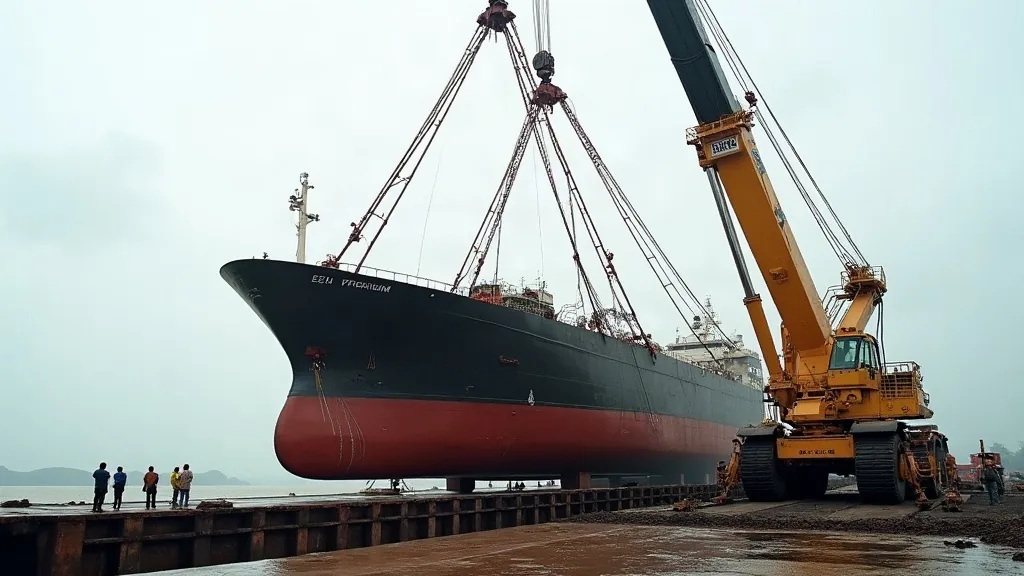
If you need to move an unfinished hull to another shipyard, the outcome is decided more by legal and documentation matters than by cranes. This article sets out the safe sequence, the risks most often overlooked and the cost components you will need to budget for.
When a move makes sense
Moving a hull always adds cost and risk, so there must be a strong reason. Three situations usually justify it: the original yard has stopped communicating or has lost the ability to finish; the original facility does not suit the next stage of work, for example the vessel needs a lift that is not available there; or the original site is unsafe, for example an unroofed wooden hull that keeps deteriorating every rainy season.
Conversely, if the original yard is still cooperative and the only problem is working capital, restructuring the contract in place is almost always cheaper. Judging this honestly is part of the assessment stage on our stalled vessel completion page.
The sequence that must not be reversed
Settle or secure the claims first
Shipyards generally have grounds to hold a vessel against unpaid invoices. Moving the vessel while this issue is unresolved risks creating a dispute far more costly than the value of the work itself. Settle it through a written agreement, or secure it through a mechanism both parties agree on, before a single line is rigged.
Document the condition before anything moves
The origin of any damage that appears after the move will be disputed. The only way to avoid that argument is thorough documentation before the vessel is touched: photos of every side, principal dimensions, the condition of the joints and a list of the loose materials moving with it.
Calculate the hull’s strength for lifting
This is the technical part most often underestimated. A finished vessel has complete decks and bulkheads that make it rigid. An unfinished hull often has neither, so it is far more flexible and prone to deformation when lifted. Lifting points must be calculated, and temporary stiffening such as transverse beams or auxiliary framing is often required. Permanent deformation from incorrect lifting is expensive damage and sometimes cannot be reversed.
Choosing the transport method
| Method | Suitable for | Main risk |
|---|---|---|
| Carried on a barge | Hull not yet watertight, long distances | Lashing & load distribution |
| Towed afloat | Hull already watertight and stable | Leaks, weather, stability |
| Overland transport | Small vessels, short distances | Road dimensions, support points |
| Airbags & push into the sea | Sites with a gently sloping beach | Point loads on the frames |
This choice is closely linked to the lifting method at the receiving yard; the comparison is in our article airbag launching vs slipway vs graving dock.
Permits and insurance
Moving a hull between regions requires a clear vessel status and notification to the relevant port authorities. An unregistered hull is often treated as cargo rather than as a vessel — and that changes the documents required. Transit insurance is a line that must not be skipped: the value of an unfinished hull is usually high, while the risk during the move is the highest of the project’s entire life.
Cost components to budget for
The cost of a move is not one figure but six lines: settling the original yard’s claims, temporary hull stiffening, lifting at the origin site, transport, lifting and positioning at the destination, and insurance. The most underestimated line is temporary stiffening, because it does not look like “vessel work” even though it decides whether the hull arrives in the same shape. How these lines fit into the overall calculation is explained in our article the cost to complete a stalled vessel.
Preparing the hull to survive the journey
Physical preparation decides whether the hull arrives in the same shape. Four jobs are almost always needed before a move.
Temporary stiffening. A hull without its full bulkheads and decks needs auxiliary framing or transverse beams so it does not deform under concentrated loads. The cost is small compared with the consequences of skipping it.
Closing openings. All holes and temporary openings are closed so that rain and spray cannot get in during the journey, especially on wooden hulls, which are the most affected by moisture.
Securing loose materials. Engines, equipment and materials moving with the hull are lashed down and listed separately so they do not shift or get mixed up with other parties’ property.
Marking the lifting points. The calculated points are physically marked on the hull so there is no improvising on site once the crane is ready.
What to record throughout the process
The move is the moment of highest damage risk in the project’s life, and therefore the moment with the greatest need for documentation. Record the condition before departure, after lifting, on arrival and after positioning — each stage with dated photos taken from the same angles.
This documentation is not a formality. If damage occurs, it determines who bears it; if nothing happens, it becomes a clean starting point for the completion contract at the new site. Combined with the survey report, it allows the scope of the remaining work to be drawn up without dispute, as explained on our stalled vessel completion page.
The most expensive mistakes during a move
Three recurring mistakes dominate the moves that end badly. The first is moving before the status of the original yard’s claims is clear, which turns a payment issue into a dispute over control of the asset and usually slows everything down by months. The second is lifting without calculating the support points, on the assumption that an unfinished hull is as strong as a finished vessel. The third is moving without documenting the condition first, so that every item of damage that appears becomes an argument with no resolution.
All three can be avoided through preparation that does not require a large budget — only a disciplined sequence and the willingness to delay departure until the preparation is genuinely complete.
After the hull arrives
The first step at the new site is not to resume work but to survey the hull again. The condition after the journey must be compared with the pre-departure documentation, and every change recorded. Only then is the scope of the remaining work finalized and the completion contract signed, with payment milestones tied to physical progress as described on our costs and payment milestones page.
Frequently Asked Questions
Is an unfinished hull strong enough to be lifted?
Not necessarily. A hull without its full bulkheads and decks is much weaker than a finished vessel, so the lifting points must be calculated and temporary stiffening is often needed before the lift takes place.
How long does the move take?
The physical work is relatively short; what takes time is settling the original yard’s claims, the permits, and preparing the stiffening and the lifting method. The preparation almost always takes longer than the journey itself.
Is moving always the best option?
No. If the original yard is still cooperative and its only problem is working capital, restructuring the contract in place is often cheaper than moving the hull along with all its risks.
Further reading
-
Buying a Half-Finished Phinisi Hull: A Due Diligence Checklist
A half-finished phinisi hull can be an excellent purchase or an expensive trap, and the difference is almost never visible in photographs. This checklist covers what to verify before money…
-

What To Do When Your Indonesian Boat Builder Goes Bankrupt
When an Indonesian boat builder goes bankrupt or a yard simply stops work, the foreign owner faces two separate problems at once: protecting a physical asset thousands of kilometers away,…
-
What Is the Cost to Complete a Stalled Vessel? An Honest Estimating Framework
There is no standard rate for the cost to complete a stalled vessel, and anyone who quotes one before a survey is guessing. What can be standardized is the framework:…