
Small Commercial Vessel Documents: Checklist & Validity
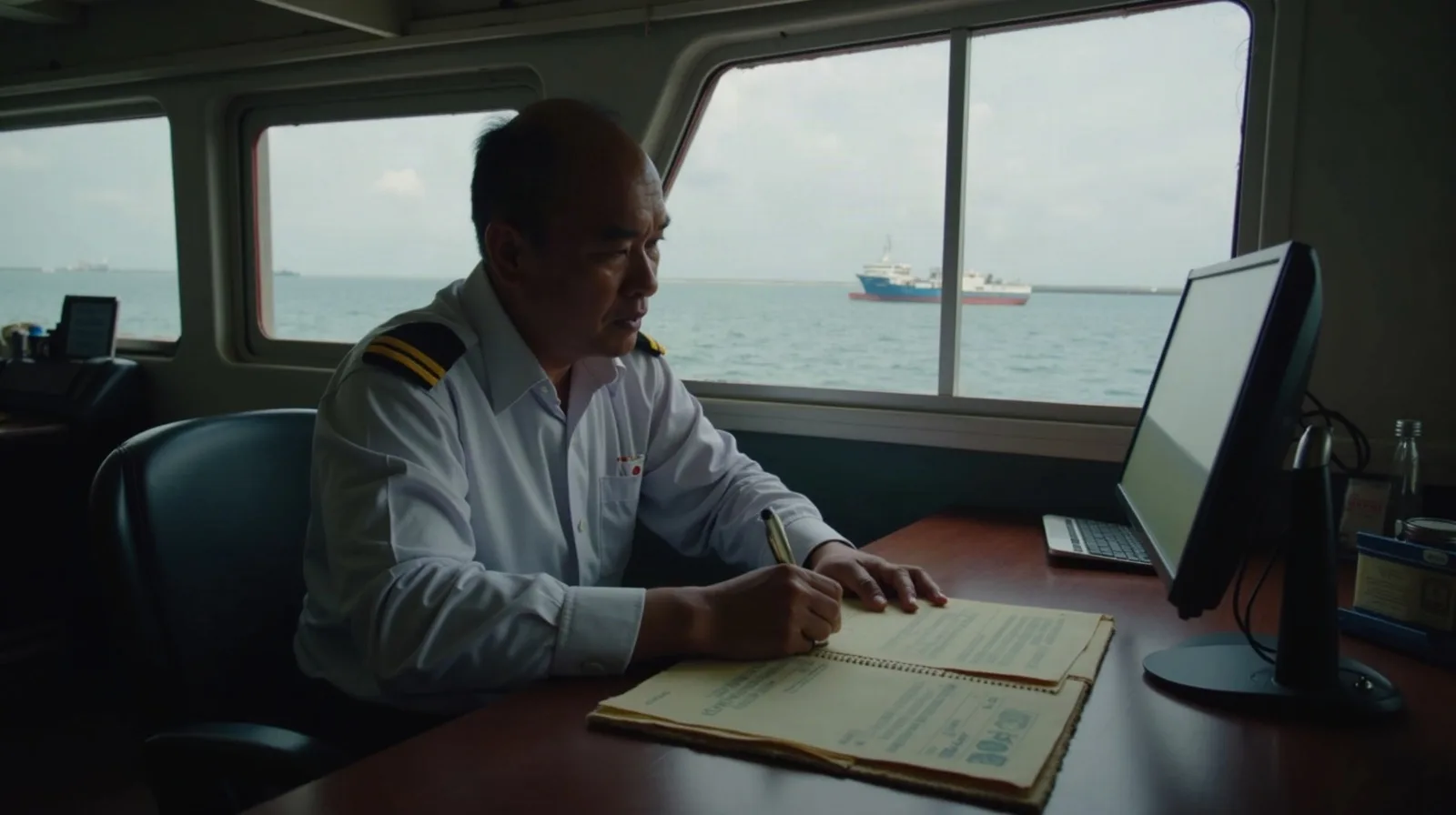
Small commercial vessel documents under the Indonesian flag form a core set that must always be current for legal operation: the Surat Ukur (tonnage/measurement certificate), nationality certificate (Pas), safety certificate, load line certificate where required, manning document and, for classed vessels, the class certificate. Each has its own validity period and issuer, and some are tied to the dry-docking schedule.
This article turns them into a single checklist that owners and masters can use. An important note from Kendari Shipyard Desk: we are not a document-issuing authority. This list is a practical summary for planning; the official and current requirements always follow the regulations of Kemenhub (Indonesian Ministry of Transportation), the local KSOP (Port Authority and Harbor Master Office) and the relevant agencies. Requirements can differ by size (GT), vessel type and navigation area.
Core documents and their validity periods
| Document | Purpose | Typical validity pattern |
|---|---|---|
| Surat Ukur | Establishes the vessel’s official tonnage | Permanent, as long as no conversion changes the vessel’s dimensions |
| Pas Besar / Pas Kecil (vessel pass for larger / smaller craft; certificate of nationality) | Proof of the vessel’s Indonesian nationality | Valid, with periodic renewal required |
| Safety Certificate | Fitness of construction, equipment & radio | Renewed periodically, usually annually |
| Load Line Certificate | Safe loading limit (where required) | Periodic, with annual endorsement |
| Manning Document | Minimum crew numbers & certification | Follows the crew’s current seafarer certificates |
| Class Certificate (classed vessels) | Class status of hull & machinery | 5-year cycle with annual/intermediate surveys |
| SPB (Surat Persetujuan Berlayar, sailing approval) | Permission to sail for each departure | Per voyage, issued by the Syahbandar (harbor master) |
The validity patterns in the table are a general picture for planning — always check the dates printed on your own vessel’s documents, because certification regimes differ between size classes and types of operation.
Which documents are tied to dry docking
Some certificates cannot be renewed through paperwork alone — the vessel must be physically inspected, in some cases out of the water on the dock. This is the link most often missed. The class certificate in particular requires a docking survey within a set interval, and the safety certificate requires an inspection of the vessel’s actual condition. In other words, the document calendar and the dry-docking calendar must be planned as one: certificate due dates determine when the vessel must be hauled out, not the other way round. We describe how to combine a BKI (Biro Klasifikasi Indonesia, the Indonesian Classification Bureau) class survey and a dock slot in one visit in our article BKI class survey in Kendari in a single visit.
A simple reminder system we recommend
1. One master sheet per vessel
Make one table per vessel: document name, number, issue date, expiry date, issuing body and the physical location of the document. Keep digital copies of every document — clear photos are enough — in shared storage that can be reached from shore.
2. Alarms at 90, 60 and 30 days before expiry
Renewals that involve a physical inspection come with queues: the dock slot, the inspector’s schedule, procurement of repair materials. A 90-day reminder gives room to lock all of that in without panic. Last-minute handling almost always costs more — not in official fees, but in days the vessel is out of service, yes.
3. One person responsible
In small fleets, documents are often “handled by everyone” — in other words, by no one. Appoint one named person — on shore, not the master — who holds the master sheet for every vessel.
Common mistakes that end with a detained vessel
First, assuming every document can be renewed administratively, then being caught out when a certificate requires a dock inspection with a two-month queue. Second, keeping the original documents in the office when the vessel is asked to produce them during an inspection. Third, modifying the vessel — an engine change, altered superstructure — without reporting it, so the document data no longer matches the physical condition; the mismatch surfaces at the next renewal and triggers re-measurement. Fourth, expired crew certificates even though the vessel’s documents are complete — the SPB is still not issued.
How our desk helps
On every dry-docking assignment, we review the vessel’s document calendar as part of scope planning: what work needs to be prepared so the physical inspection passes first time, and which surveys can be combined into the same dock slot. Full support for the survey process is on our BKI survey & docking support page, and an overview of dock facilities in the region is in our Kendari shipyard & dry docking guide. Our service fees are presented in USD per item; official government and agency fees follow the official tariffs in Indonesian rupiah (IDR) as regulated.
Orderly documents won’t make a vessel faster — but gaps in the documents can stop it completely. In operating-cost terms, this is the cheapest protection a vessel owner can buy.
Documents and insurance: a link you only feel at claim time
One more dimension that is rarely discussed until it is too late: almost every marine insurance policy requires the vessel to be seaworthy and its documents current at the time of the incident. A vessel that suffers a casualty with an expired safety certificate, or that sailed without an SPB, gives the insurer an opening to dispute the claim — and in disputes like that, the owner is almost always in the weaker position. So the document calendar is not just about administrative compliance; it is part of protecting the asset. The practice we recommend: every time you renew the policy, match the certificate dates against the policy period, and make sure there is no window in which the vessel operates with gaps in its documents.
Building a fleet habit of document discipline
For owners of more than one vessel, document discipline is a system, not memory. Three practices proven to work in the fleets we support: first, an internal document audit twice a year — half a day per vessel, checking the physical documents on board against the master sheet ashore. Second, one digital folder per vessel with disciplined file naming (document name, number, expiry date) so anyone can find a document within a minute, including during a surprise inspection in port. Third, make document status part of the monthly fleet report alongside the technical data — so document deadlines are visible to the same person who sets the dry-docking schedule. When documents, dock schedules and budgets are managed from one desk, a vessel stopped by paperwork becomes almost impossible.
FAQ
Which documents must always be current on a small commercial vessel?
The minimum core: the Surat Ukur, nationality certificate (Pas), safety certificate, load line certificate where required, manning document, class certificate for classed vessels, and an SPB for each departure. The exact set for each vessel depends on GT, type and navigation area.
Which documents cannot be renewed without dry docking?
Certificates that require a physical inspection: the class certificate requires a docking survey within a set interval, and an inspection of the vessel’s actual condition is needed to renew the safety certificate. That is why the document calendar and the dry-docking calendar must be planned together.
When should the renewal process start?
Set a reminder 90 days before expiry: renewals based on a physical inspection have queues for the dock slot, the inspector’s schedule and material procurement. Last-minute handling keeps the vessel out of service longer than necessary.
Compiled by Kendari Shipyard Desk — specialist maritime brand under Juara Holding Group. Service contracts through PT Komodo Galangan Nusantara. Slot and estimate inquiries: WhatsApp 6281139414563 or bd@juaraholding.com.
Further reading
-

BKI Class Survey Kendari: Surveyor & Dock in One Visit
The cheapest way through a BKI (Biro Klasifikasi Indonesia, the Indonesian Classification Bureau) class survey in Kendari is syncing the dock slot, surveyor arrival and vessel readiness into one visit.…
-
Boat Building Cost in Indonesia vs Vietnam vs Turkey: A Buyer’s Reality Check
Judging boat building cost — Indonesia vs Vietnam vs Turkey — by headline price is the fastest way to reach the wrong conclusion. Total delivered cost is determined by factors…
-

Liveaboard Vessel ROI: An Honest Way to Calculate Charter Vessel Returns
Charter vessel investments are often judged with models that are too optimistic on revenue and too light on costs. This article sets out a more honest framework for calculating liveaboard…