
Pre-Docking Inspection Checklist: A Supervisor’s 40 Points

A good pre-docking inspection checklist answers one question: what must be known, prepared and ordered before haul-out, so dock days go to work rather than finding problems and waiting for parts. Below are the 40 points Kendari Shipyard Desk supervisors check before every haul-out at facilities in Kendari and Southeast Sulawesi. Use it freely; your vessel will thank you.
Why inspect before, not on the dock
Every finding that only emerges on the dock triggers three costs at once: extra dock days while waiting for decisions, rushed material procurement that is always more expensive, and negotiating additional work from a weak bargaining position — your vessel is already up and cannot go anywhere. A pre-docking inspection moves as many of those findings as possible forward, to a time when everything can still be planned and negotiated calmly.
The 40-point checklist
A. Underwater hull — as far as it can be inspected afloat (8 points)
1. Leak history & daily bilge pump frequency. 2. Dive inspection if safe: general hull condition, fouling. 3. Propeller: entanglement, visible chips. 4. Shaft play when rocked with the engine off. 5. Rudder condition & stock play. 6. Sea chest & external strainers. 7. Visible anode condition. 8. Draft marks legible or in need of repainting.
B. Structure & deck (7 points)
9. Deck caulking & leaks into the spaces below. 10. Condition of timber/plate around the engine foundations. 11. Watertight bulkheads: cracks, unsealed cable penetrations. 12. Critical bolt bushings (wooden vessels) or plate pitting (steel vessels). 13. Masts, booms & winch mountings. 14. Railings, ladders & tie-down points. 15. Holds: hinges, rubber gaskets, covers.
C. Machinery (8 points)
16. Main & auxiliary engine running hours since the last overhaul. 17. Oil pressure & operating temperature recorded. 18. Visible oil/fuel leaks. 19. Engine mount condition & vibration. 20. Cooling system: pumps, impellers, scale. 21. Fuel system: filters, tanks, sediment. 22. Starting air compressor or starter batteries. 23. List of spare parts to be used during the docking.
D. Shaft & propulsion (5 points)
24. Packing/stern tube: normal or excessive dripping. 25. Vibration history by RPM. 26. Shaft withdrawal planned: yes/no (determines dock time). 27. Coupling & last alignment. 28. Availability of replacement bearings on the local market.
E. Electrical & safety (6 points)
29. Wiring in wet bilges: chafed cables, makeshift joints. 30. Main & backup bilge pumps tested. 31. Current leakage to the hull (simple test / multimeter). 32. Navigation lights & communications. 33. Fire extinguishers: charge & expiry date. 34. Safety equipment as required by the vessel’s documents.
F. Administration & planning (6 points)
35. Certificates falling due — which surveys can be combined with this docking. 36. Written defect list from the master & chief engineer. 37. Scope of work agreed per item, in writing. 38. Long-lead materials (large planks, plate, shafts) already ordered. 39. Dock slot locked in with haul-out date & target relaunch date. 40. Blocking plan (keel block positions) communicated to the shipyard.
How to use this checklist
Fill it in with the master and chief engineer two to four weeks before the haul-out date. Give each point a status: OK, needs dock work, or needs materials. The second category becomes the scope; the third becomes the shopping list that must arrive before the vessel is hauled out. In our experience, vessels that go through this process cut their dock days significantly on average compared with vessels that “haul out first, see later” — the full calculation is in our article how many days a vessel should reasonably spend in dry dock.
Next steps once the checklist is filled in
The inspection results drive three decisions: the right haul-out method (see our slipway and haul-out in Kendari page), which facility can handle the scope, and what the budget is — USD bands per type of work are in our Kendari dry docking cost guide. All three are our desk’s daily work: the full flow from inspection until the vessel is relaunched is explained on our how it works page.
This checklist is free for anyone to use — and if you would like our supervisor to run it directly on your vessel before its next docking, one WhatsApp message is enough to get started. The result: a clean defect list, a measurable scope and a USD per-item quotation before the vessel moves.
From checklist to a defect list you can get quoted
A completed checklist is only half the job; its value appears when it is translated into a formatted defect list: item number, location on the vessel, description of the finding, photo, requested action and required materials. This format fundamentally changes the conversation with the shipyard — from “please check it and do whatever is needed” (a blank check that invites cost overruns) to “do these 23 items; what is the price per item?” A quotation built on a defect list can be compared fairly between facilities, and additional work on the dock becomes a negotiated exception, not a habit. One hour spent tidying up this format saves more money than a day of haggling over price.
Three pre-docking findings that most often save the schedule
From our experience running this checklist in the field, these are the three findings that most often change the plan — and are the most dangerous if only discovered on the dock. First, shaft play that turns out to require bearing replacement, with parts that have to be brought in from outside the city; found early, the parts arrive before the vessel is hauled out. Second, planks or plate in areas that need large materials — long planks of special dimensions or plate of a specific thickness — whose procurement takes weeks. Third, certificates that turn out to be falling due soon, so the survey can be combined with the same docking instead of hauling the vessel out twice in one year. All three are worth thousands of dollars in dock days that are not wasted — and all three are found by a process that costs only a few hours of careful work.
Finally: make this checklist your vessel’s own. Print it, laminate it, keep it on the bridge, and fill it in every time a docking approaches — then keep the completed copies from year to year. Within three docking cycles, that archive becomes a valuable technical history of the vessel: damage trends become readable, budgets grow more accurate, and every shipyard you visit knows it is dealing with an owner who holds the data. Vessels with well-kept data always get better work at more honest prices — in Kendari, in Moramo–Lapuko, and at whatever dock your vessel hauls out at next.
FAQ
When should a pre-docking inspection be carried out?
Two to four weeks before the haul-out date, together with the master and chief engineer, so there is still time to order long-lead materials and lock in a written scope before the vessel moves.
What is the biggest benefit of inspecting before haul-out?
It moves findings from the dock into the planning phase: dock days are not wasted waiting for decisions and parts, procurement is not rushed, and additional work can be negotiated from a healthy bargaining position.
Who should fill in this checklist?
Ideally three parties together: the master, who knows the vessel’s history; the chief engineer, who holds the machinery data; and an independent supervisor who translates it into a scope, a materials list and a cost estimate.
Prepared by Kendari Shipyard Desk — specialist maritime brand under Juara Holding Group. Service contracts through PT Komodo Galangan Nusantara. Slot and estimate inquiries: WhatsApp 6281139414563 or bd@juaraholding.com.
Further reading
-
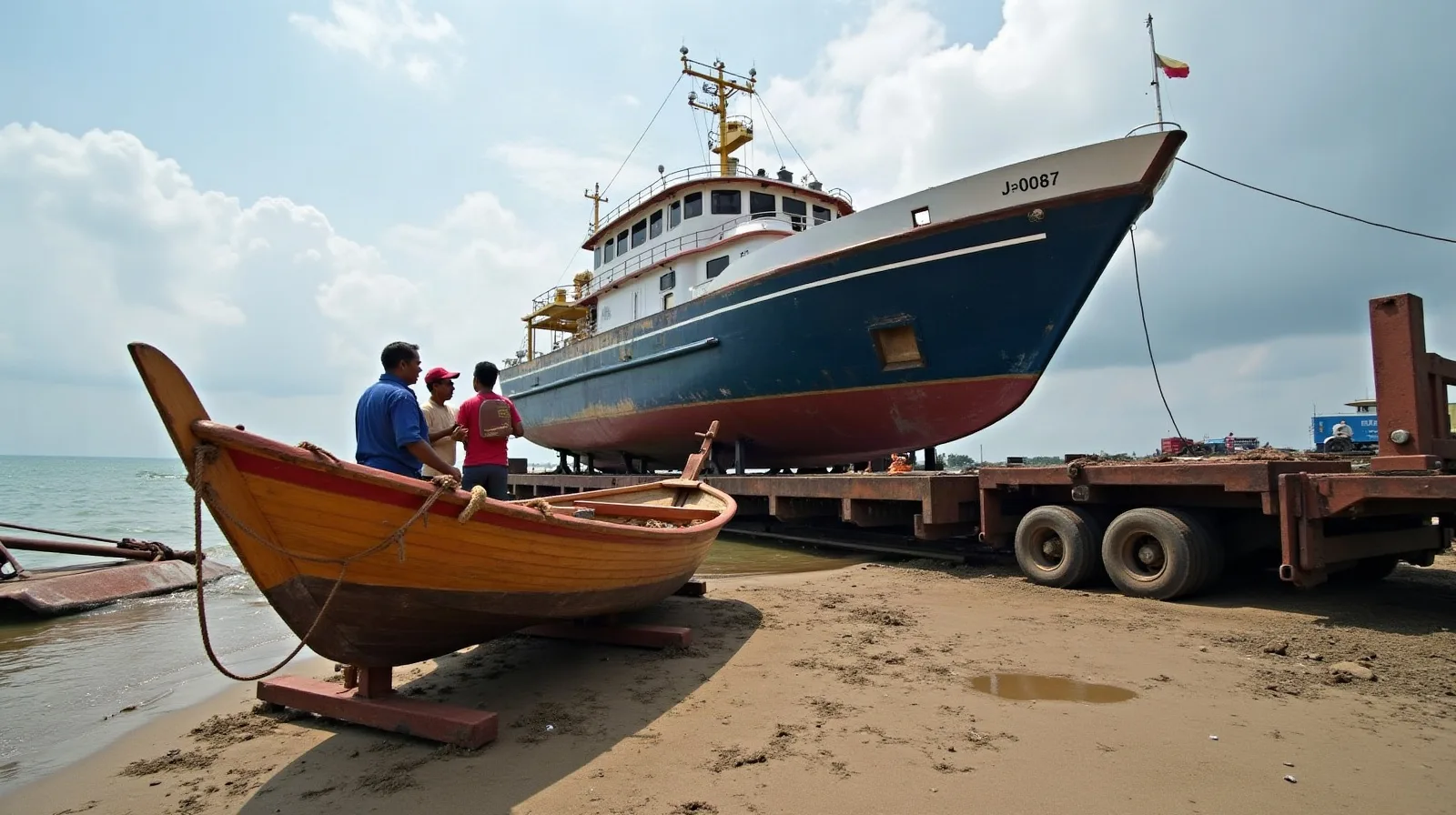
Vessel Size and Dock Options in Southeast Sulawesi
In Southeast Sulawesi, matching vessel size and dock options comes before price: small wooden and fiberglass vessels (below the 30–100 GT range) use Kendari’s coastal slipways; large wooden and light…
-
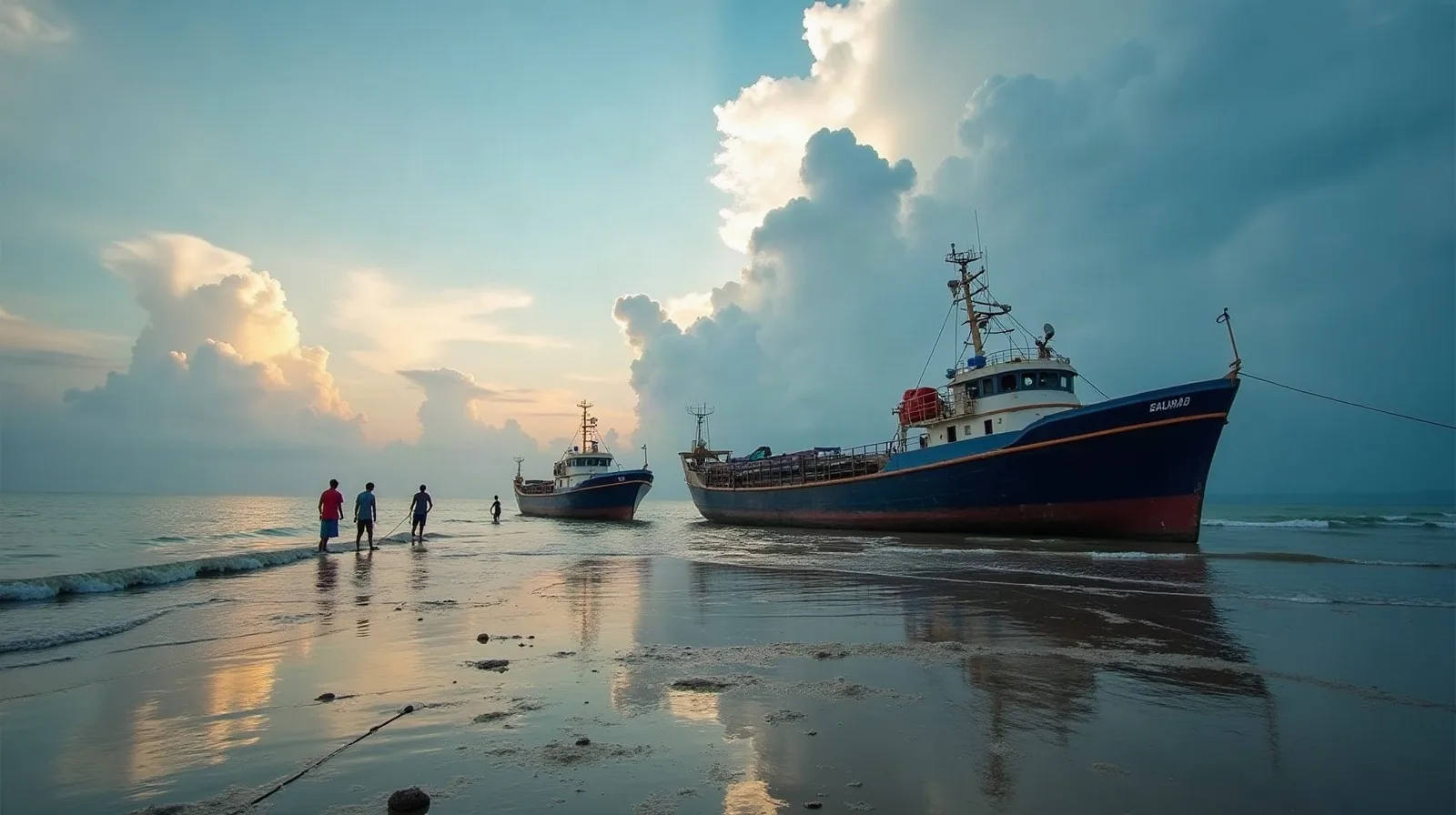
Grounded Vessel: First 24 Hours in Southeast Sulawesi Waters
For a grounded vessel, or one that is leaking, the first 24 hours follow an order of priorities that must never be reversed: save people → stop the water →…
-

Moramo-Lapuko Shipyard Cluster: Capacity and Services
The Moramo-Lapuko shipyard cluster is the largest concentration of traditional boatyards and marine workshops in Southeast Sulawesi, on the coast of Moramo District and its surroundings in South Konawe Regency,…