
Eastern Indonesia Fleet Support
Nearest Dry Dock from the Banda Sea: Eastern Route Map
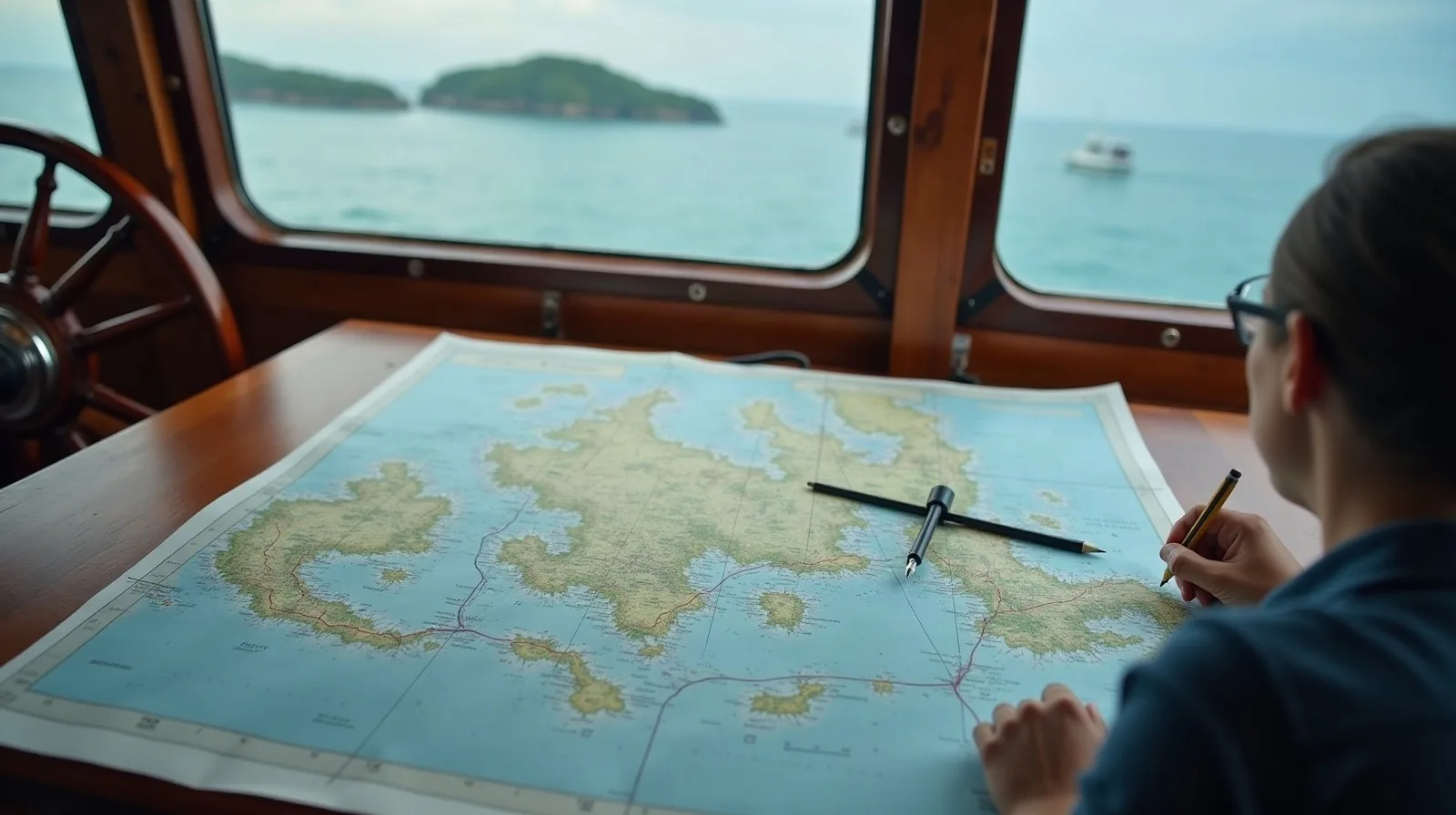
The nearest dry dock from the Banda Sea, Wakatobi or the Buton coast depends on vessel size: small-to-medium wooden and fiberglass vessels have the closest options in Southeast Sulawesi (Kendari slipways and the Moramo–Lapuko yard cluster); small steel vessels may be handled locally, depending on scope; medium-to-large steel vessels must sail to a large dock outside Southeast Sulawesi.
For medium-to-large steel vessels, that realistically means Makassar or another large shipyard outside Southeast Sulawesi. This article sets out that decision map, honestly and with all its limitations. Kendari Shipyard Desk wrote this guide because the question “where is the nearest dock from our position?” is one of the most frequent our desk receives — usually when time is short.
Reading the map from the vessel’s position
From Wakatobi
Kendari is the nearest repair base with big-city logistics: material supply, an airport and haul-out facilities for small-to-medium vessels. For Wakatobi’s dive boat and tourism vessel fleets, the route to Kendari Bay is the natural maintenance route. The details of our support for this segment are on the Wakatobi & Banda fleet support page.
From the Banda Sea and western Maluku
A position in the middle of the Banda Sea leaves a vessel with a choice: west to Kendari/Southeast Sulawesi (for the vessel classes that can be served there), to facilities in Ambon for some types of work, or a longer passage to a large dock. Distance is not the only deciding factor — the question is whether the destination facility can genuinely handle your vessel’s size and scope. Sailing two days to a facility that turns out not to be capable is a double loss.
From the Buton and Bau-Bau coast
The Buton area has a strong maritime tradition and traditional haul-out points for small wooden vessels. For larger work, the options narrow to facilities around Kendari or mobilization out of Southeast Sulawesi.
Decision table: vessel size × requirement
| Vessel class | Requirement | Nearest realistic option |
|---|---|---|
| Wood / fiberglass up to ±100 GT | Routine maintenance, hull, paint | Kendari slipways, Moramo–Lapuko yard cluster |
| Large wooden / light steel up to ±300 GT | Large plank replacement, welding, medium repairs | Moramo–Lapuko / Kendari facilities — verify capacity first |
| Small-to-medium steel | Afloat work (engine, electrical, welding above the waterline) | Kendari, without haul-out |
| Medium-to-large steel (>±1,000 DWT) | Dry dock, special survey, extensive replating | Large dock outside Southeast Sulawesi (e.g. Makassar) |
| Emergencies, all sizes | Leak / flooding, grounding, sudden damage | Stabilize first — see the emergency protocol |
For the last row: the first 24 hours after a grounding or leak are covered separately in our article grounded or flooding in Southeast Sulawesi waters: the first 24 hours — and emergency handling is on the emergency repair Kendari page.
The three most expensive planning mistakes
First: sail first, verify later. Capacity at small facilities changes — a winch breaks down, the cradle is occupied, the busy season arrives. One verification call before departure saves hundreds of liters of fuel. Second: choosing a dock on distance alone. The nearest dock that cannot handle your scope is not the nearest dock; it is just an expensive stopover. Third: waiting until it is an emergency. A vessel whose docking is planned can choose its facility and negotiate; a leaking vessel accepts whatever is available. Fleet calendar planning — which vessel goes where, in which month — is covered in our article on the Wakatobi & Banda fleet docking calendar.
Kendari’s honest role on this map
We present Kendari as it is: not a competitor to large docks for medium-to-large steel vessels, but the nearest technical base on the eastern routes for small-to-medium vessels and for all afloat work. Even when your vessel has to go to a large dock, planning from Kendari still adds value: the defect list is drawn up here, quotations from different docks are compared here, and our supervision follows the job until it is finished. The full map of Southeast Sulawesi facilities is in the Kendari shipyard & docking guide, and a detailed profile of the wooden-vessel cluster is in our article the Moramo–Lapuko shipyard cluster.
Keep this decision map on board. When it is needed, it saves the two most expensive things at sea: fuel and time — and our desk is ready to verify your destination facility before the anchor is raised, complete with a USD estimate for each scenario.
Prepare an information pack before contacting a facility
Verification goes quickly when you send complete data in a single message. The standard pack we recommend every vessel prepares and keeps on the master’s phone: the vessel’s main particulars (LOA, beam, draft, GT/DWT, estimated weight, hull material), photos of the vessel from the side and stern, photos of the damage or the area to be worked on, last position and estimated sailing speed, and the requested scope of work. With this pack, a facility — or our desk — can answer whether it can take the job within hours, not days of back-and-forth. In waters with limited signal, such as the middle of the Banda Sea, this one-message efficiency is not a luxury; it determines how quickly the vessel gets a firm decision on where to head.
Reading mobilization costs honestly
Every decision on this map ultimately comes down to a mobilization calculation: fuel per sailing day multiplied by the number of days, plus the value of lost operations, plus weather risk on the route. A vessel sailing from Wakatobi to Kendari makes a relatively short, partly sheltered passage; a vessel from the middle of the Banda Sea to any large dock pays for days of open-water sailing. Hence the golden rule: work that can be completed at the nearest capable facility should be completed there — save long-distance mobilization for work that genuinely requires it. The comparison method is the same one we use for the Kendari-vs-Makassar decision: the rate is only one component, and the largest component is almost always time. Our desk is glad to prepare a written comparison of two or three scenarios for your vessel — free at the planning stage, in USD — so the decision is made on numbers, not feelings.
We keep updating this decision map from the field — facility capacity changes, equipment arrives and breaks down, queues rise and fall with the seasons. So treat this article as the framework for thinking, and current verification as the mandatory step. Keep one contact who can do that verification for you whenever it is needed: our desk holds the current status of the facilities in this region because we work in them every week, and a single message with your position and vessel data is enough to get a directional answer you can rely on — complete with a USD estimate for every reasonable scenario.
FAQ
My vessel is in Wakatobi and needs a haul-out — where is the nearest option?
For small-to-medium wooden and fiberglass vessels, the nearest repair base with full logistics is Kendari: the city slipways and the Moramo–Lapuko yard cluster. Medium-to-large steel vessels need to plan a passage to a large dock outside Southeast Sulawesi.
What is the most expensive mistake when choosing a dock from a position at sea?
Sailing first and verifying later. Capacity at small facilities changes; one verification before departure prevents a wasted passage to a facility that turns out to be unable to handle the vessel’s size or scope.
Can the work be done without leaving eastern Indonesia?
Most afloat work can: engine, electrical and above-waterline welding are served from the Kendari base. Work that requires a dry dock beyond local capacity still has to be mobilized, with the planning done from Kendari.
Prepared by Kendari Shipyard Desk — a specialist maritime brand under Juara Holding Group. Service contracts through PT Komodo Galangan Nusantara. Slot and estimate consultations: WhatsApp 6281139414563 or bd@juaraholding.com.
Further reading
-
Southeast Sulawesi Maritime Economy: Nickel, Fish and Docks
The Southeast Sulawesi maritime economy runs on two big engines: the nickel industry, which drives thousands of barge and workboat voyages, and fisheries, with a fleet base at the Kendari…
-
Purse Seine Fleet Maintenance: Seasonal Damage Patterns
Purse seine fleet maintenance in Southeast Sulawesi can follow a near-calendar damage pattern: engine and winch failures peak mid-season when vessels work flat out, hull damage and leaks surface at…
-
Kendari Bay Entry and Berthing: Draft & Port Guide
Kendari Bay is among Southeast Sulawesi’s most sheltered waters: a long bay whose narrow mouth damps open-sea swell, safe for berthing and anchoring almost year-round. For Kendari Bay entry and…