
Shipyard Insolvency and Owner Rights in Indonesia: Where You Stand When a Yard Walks Away
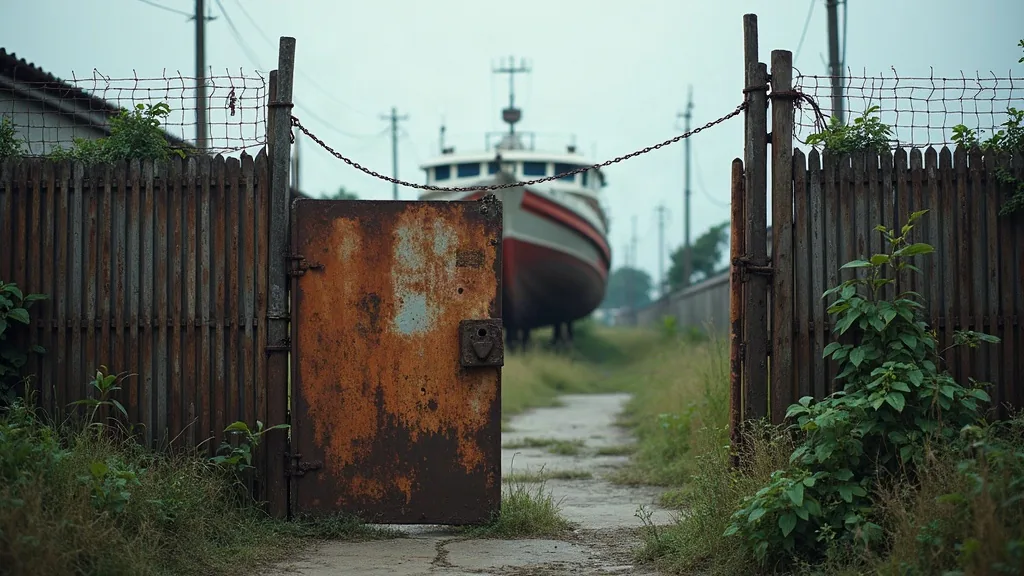
When a shipyard stops work, goes silent or goes bankrupt, the vessel owner faces two problems at once: securing the asset and securing the evidence. This guide to shipyard insolvency and owner rights in Indonesia explains how to protect both, without replacing the legal advice of your own counsel.
Two things to secure first
The first priority is the physical asset: the hull and all the materials you have paid for. The second priority is the evidence: condition records, payment records and the communication history. The order matters because assets can disappear or deteriorate within weeks, while the evidence will determine your entire position in negotiation and in any legal case.
The most common mistake is waiting for certainty before acting. Certainty arrives last, while deterioration continues every day — especially on an exposed wooden hull, as explained in our article a wooden hull abandoned for years.
The problem of uninstalled materials
This is the line most often lost. Engines, generator sets, plate, timber and equipment that have been paid for but not yet installed sit in a gray area: physically at the yard, economically yours. If the yard faces many creditors, materials whose ownership you cannot prove risk being treated as the yard’s assets.
That is why three pieces of evidence must be gathered together: proof of payment for the items, delivery documents showing they were shipped for your project, and dated photos of the items on site. Where possible, make a written agreement with the yard confirming the ownership status of those materials before the situation deteriorates.
Proving what was actually completed
The question that always comes up is how much work has actually been done compared with how much has been paid. That answer cannot come from either party to the dispute; it must come from an independent inspection. A condition survey that measures plate thickness, maps the completed work and documents its quality produces figures that anyone can check. The method is described on our condition survey and valuation page.
A report like this has a double value. It becomes the basis for negotiating a settlement, and at the same time the technical basis for calculating the remaining work if the project continues elsewhere.
When the scope was never written down
Many shipyard disputes in Indonesia are not really disputes about good faith but about interpretation. The owner assumes the price covers a ready-to-operate vessel complete with interior, electrical systems and certification; the yard assumes the scope ends at the hull with the engines installed. When the scope was never written in detail, both can feel they are right.
The practical lesson applies to the next contract: the scope must be written item by item, and payments tied to verifiable physical milestones. The structure is set out on our costs, payment milestones and escrow page, and the early signs of trouble in our article nine shipyard warning signs.
Running two tracks at once
Owners often feel they must choose between suing and continuing. In practice, the two run in parallel. The legal track pursues recovery of losses from the original yard; the technical track completes the vessel so the asset does not keep losing value. There is one condition: the status of the vessel and the materials must be clear first, because moving an asset whose status is unresolved will weaken your legal position. The safe procedure for moving is in our article moving an unfinished hull to another shipyard.
Building a useful case file
Whether for negotiation or for formal proceedings, the strength of an owner’s position depends almost entirely on how well organized the file is. The most useful structure has five parts.
The first part is a chronology: a dated list of payments, promises and key events, in order. The second is the contract documents with every amendment, including verbal agreements later confirmed by message. The third is complete proof of payment. The fourth is dated documentation of the physical condition. The fifth is the independent inspection report.
Owners who assemble all five usually find that their position is stronger than they thought, because much of what felt like a misunderstanding turns out to be documented clearly enough.
Calculating losses realistically
Losses in cases like this have several layers that are best kept separate. There is the gap between the payments made and the value of the work actually completed. There is the recovery cost: the additional work needed to repair or remove work that does not meet the standard. There is the cost of delay: lost operating time for a vessel that should already be earning. And there is the cost of relocation if the vessel has to be moved.
Separating all four makes a claim specific and verifiable, which is far more effective than one large figure with no breakdown. The framework for calculating recovery costs is in our article the cost to complete a stalled vessel, and the first technical steps in the nine first steps for a stalled boat build.
Keeping the asset’s value while the process runs
Resolving a dispute can take a long time, and throughout it the vessel keeps losing value if it is left alone. Simple protective measures should therefore start early, separately from the legal discussions.
For a wooden hull, fit a cover so rainwater cannot get in, open the drainage paths and make sure air circulates through enclosed spaces. For a steel hull, make sure no water is trapped inside and coat areas where the paint has gone with a temporary protective coating. For both, check the keel blocks or supports so the load does not shift to points not designed to carry it.
The cost of these measures is small compared with the loss of value they prevent, and they keep the owner’s options open until the other issues are resolved.
Important note
This article describes field practice for securing assets and evidence; it is not legal advice. The rules that apply to your case depend on the contract terms, the legal-entity status of the yard and any proceedings under way. Involve your own legal counsel for formal steps, and give them the technical documentation as source material.
For a technical assessment and scoping of the remaining work, see our stalled vessel completion page or reach us through our contact page.
Frequently Asked Questions
Can I take my vessel straight out of the shipyard?
Not necessarily. Shipyards generally have grounds to hold a vessel against unpaid invoices, so removing it unilaterally risks creating a new dispute. Settle or secure the claims in writing first.
How do I prove that specific materials belong to me?
With a combination of proof of payment, delivery documents and dated photos of the materials on site. Without all three, the ownership of uninstalled materials is very easy to dispute.
Does taking legal action mean work has to stop completely?
Not always. Many owners pursue legal action against the original yard while continuing the physical work elsewhere, provided the status of the vessel and the materials has been made clear first.
Further reading
-
Buying a Half-Finished Phinisi Hull: A Due Diligence Checklist
A half-finished phinisi hull can be an excellent purchase or an expensive trap, and the difference is almost never visible in photographs. This checklist covers what to verify before money…
-
What To Do When Your Indonesian Boat Builder Goes Bankrupt
When an Indonesian boat builder goes bankrupt or a yard simply stops work, the foreign owner faces two separate problems at once: protecting a physical asset thousands of kilometers away,…
-
What Is the Cost to Complete a Stalled Vessel? An Honest Estimating Framework
There is no standard rate for the cost to complete a stalled vessel, and anyone who quotes one before a survey is guessing. What can be standardized is the framework:…